The post HSK 3 Week 2: Words 306-310 appeared first on Written Chinese.
Enchanted Islands – The Galápagos
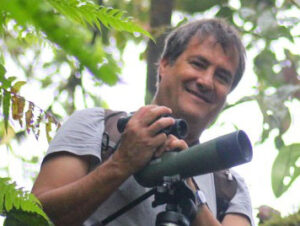
 Join us for an in-depth presentation on the amazing Galápagos Islands with Klaus Fielsch, Product Manager and expert naturalist for travel partner Metropolitan Touring. Klaus will provide a general overview of the Galápagos, as well as insights into the wildlife and natural habitats one might expect to see on a cruise to the “Enchanted Islands.” He’ll be introduced by David Lewey, Tour Architect for our small ship expeditionary cruises in the Galápagos archipelago.
Born in Quito to a German / Ecuadorian family, Klaus Fielsch has two passions – nature and design. He became fascinated with the study of nature when his father presented him with books by Alexander von Humboldt, Charles Darwin, Edward Whimper, Theodor Wolf (the unknown “Naturalist of Ecuador”), Konrad Lorenz and more – and he pursued his passion for design during studies at renowned US universities in the 1990s. Today, his career with Metropolitan enables him to share his passion for Galápagos and nature with colleagues to in turn bring to guests.
Recording Coming Soon
Exploring…
The post Enchanted Islands – The Galápagos appeared first on The Taucker Travel Blog.
Joy. Happiness. Adventure. Canada.
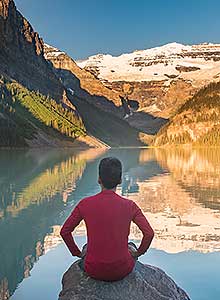
Canada. Unforgettable
Nature and the great outdoors. History. Arts. Rich Indigenous Culture (First Nations, Inuit and Métis). Multiculturalism. Cuisine. Wine. Everything that comprises Canada, describes Canada. In this edition of The Compass, we’re celebrating Canada – East and West, cities and national parks, the uniqueness of the Maritimes and the outdoor wonderland of the Rocky Mountains. And beyond.

Western Canada’s National Parks
Travels that defy convention

For all of us at Tauck, Western Canada’s national parks hold a special place in our hearts, and in the company’s history. It is an understatement to say that Banff, Jasper, Yoho, Kootenay, and Glacier are among the world’s most beautiful alpine playgrounds. Majestic, picturesque, vast and historic, they’re inspiring and revitalizing. We’ve got the story – and the videos – inside.
All about the national parks here

The Great Outdoors
Adventure awaits from the Maritimes to the Pacific

There are many definitions of “adventure” – but the essence of adventure is that it is an experience out of the ordinary. The status quo is definitely challenged when it comes to Tauck adventure throughout Canada, from river rafting to floatplanes, rail journeys, polar bear spotting on the tundra, whale watching – even an iconic adventure cruise at the base of Niagara Falls.
Canadian adventure found here

Riding the Rails
Alluring, compelling and just plain fun – Canada by rail
The story of 19th-century Western Canada – the Rockies, national parks and the advent of tourism – is intertwined with the history of the Trans-Canada Railroad. The remarkable rail journey between British Columbia and Alberta left visitors then, and leaves them today, awestruck. Take a look at two of our journeys featuring this route – and an insideTauck presentation on Alberta and Banff.
View our rail travels here


Cosmopolitan Cities of Canada
Montreal, Ottawa, Quebec City, Toronto, Victoria, Vancouver…

Canada’s cities appeal to the diversity of interests in each of us – offering a wealth of history, an artistic legacy (from music to literature, art, dance and theatre), cuisine, wine and a look at the multicultural urban face of the future. Join us for a virtual walk through some of our favorite Canadian cities with our Tauck Tour Directors Sydney Holmes, Genevieve Thibault and Felix Audet; learn more about the rivalry between New York City and Montreal bagels, and take note of a famed scone recipe from Vancouver, and discover a little more about these cities than you may have known before:
Take a look here

The Canadian Maritimes
Maritime – in, near, or of the sea

Nova Scotia, Prince Edward Island, New Brunswick – even the names of the three provinces comprising The Maritimes are beguiling. Within their shores they tell the stories of early Canada – of shipbuilding, fishing and the sea; multicultural influences, Acadian to Celtic; and legacies discovered in literature, music, crafts and culinary arts. We’ve put together a collection of music, videos, and podcasts that provide a closer look at one of our favorite – and first – destinations shared with guests.
Discover more

If You’re Ready, We’re Ready

Traveling with Tauck
As we head into the final months of 2021, you’ll find our collection of journeys and departures through the remainder of the year on our Open For Travel page – be sure to take a look at our latest travel updates, including a vaccination requirement, at tauck.com/travel-and-health. And for 2022 travels, go to tauck.com for up-to-the-minute departure date availability along with all of the details!
View journeys

Musings From Colin’s World
Voices From the Road

Colin is a professional journalist with a passion for travel – he has been examining the world of travel all of his life, and he’s Tauck’s very own roaming reporter. With a view to his own long-awaited return to traveling, he shares his friends’ insightful reflections following their return from “the road.”
Read more
The post Joy. Happiness. Adventure. Canada. appeared first on The Taucker Travel Blog.
Return to Travel: Voices From the Road

For most people who love to travel, it’s been a long dry spell, an extended period of being penned in and unable to do the kind of travel we have become accustomed to. It wasn’t only our vacations we lost, it was mobility itself. For a while, I barely went anywhere but the grocery store. For someone who had rarely seen a month go by for years at a time without getting on a jet, it was strange. But you can get used to almost anything if you have to. So, like millions of others, I accepted it. Stillness became my new normal. The First Law of Motion says an object at rest tends to remain at rest, and so it was. The inertia of my life changed from motion to stasis. Being stuck at home became my new normal.
Now things are getting moving again and people are traveling. The continuing twists and turns of this tenacious pandemic continue to create concerns. But for people who are vaccinated, there are sure ways to travel safely and put aside worry.
 I’ve been hearing from friends who are traveling about what it’s like out there. They say that after the initial jumpstart they quickly got back into the flow. The key is the safety protocols. When you are consistently in environments where safety guidelines are followed as a matter of course, you can put the worries out of your mind and go ahead and enjoy yourself.
A friend who recently returned from her first trip since the start of the pandemic told me that once she had crossed that initial threshold, she recovered her old groove.
“I completely overpacked for this first trip” she said, “and I’m a master packer. Usually, it takes me maybe an hour or two to pack my bags for a trip. This time it took an evening and a half, and I overpacked. It was like, ‘My God, I can’t believe I’m taking so much stuff with me.’ You get out of practice.”
The hardest part is just getting started.
“The most stress I had on the entire trip was waiting for my PCR test to come back to allow me to travel,” she said. “It was 24 hours of nail biting, thinking, ‘Oh my God! If I test positive right now, I am going to lose my mind. If I can’t travel, after I’ve been looking forward to this trip for so long, I will come unglued.’ But after that initial stressor, it was fine. We had to take a test when we went from country to country, but it was just the first one that really worried me.”
“Once you get out there, you can relax,” she said. “The restrictions don’t feel like a burden. They actually made me feel safer.”
Much of her trip took place in low-risk travel environments. In wilderness lodges and doing outdoor travel, she was never in enclosed environments with unfamiliar people. But safety can be achieved in cities too. With vaccinations, masking, ventilation, and spacing, we now have a diverse arsenal of weapons with which to protect ourselves. Countries of Europe have beefed up their safety mandates to make it safe to enjoy city life.
A friend who traveled on a river cruise in France told me that she had been able to travel in nearly perfect controlled environments. The ship had a mandatory mask policy in place. The only exceptions were when you were outside or were eating or drinking. She said that all guests and staff willingly complied.
Everyone on the cruise had to be vaccinated to join. That’s necessary for traveling in Europe because proof of vaccination is required to enter many restaurants and other public places. Knowing that the environment is controlled for safety creates an underlying sense of security which was refreshed periodically on the trip. Her cruise director arranged for everyone to get Covid-19 antigen tests at pharmacies at every major stop, and coordinated the tests to be in place within 72 hours of their individual departures from France.
The guests all got the French health pass, which gave them access to bars, restaurants and museums, as long as they were wearing face masks. Masks were required to ride on all the coaches and trains, and hand sanitizers were along the routes. The ship was specially arranged to make it easy to maintain social distancing in the dining rooms and other public spaces. People in the travel industry around the world are highly conscious that their livelihoods depend on maintaining safety. They are more than happy to contribute to making it happen.
Those changes in policy were easily incorporated into the routines of travel, and soon became as little trouble as carrying your passport and credit card. But they provided an undercurrent of security and a rational basis for putting anxieties aside and enjoying the trip.
For the most part, all the great sights and experiences that entice travelers from around the world are still there, just as they were before Covid, as they have been for hundreds, or even thousands of years. But there are some things I hear about traveling now that are different than before.
One difference is that places are not crowded now. People say they feel almost as if they have places to themselves, or share them with an exclusive group of people who are out there traveling now.
People at the destinations are happier than ever to welcome visitors. One in ten people globally are supported by the travel industry now. That’s a lot of people who will be happy to see you return. So, you experience so much gratitude just for being there, for being among the first to return after a long dry spell.
One friend who had been traveling told me, “It was amazing. It was good for the soul. For people traveling, it’s so much more than just going and seeing the destination. It’s the people there who really rely on this for their livelihoods. They’re providing an amazing service to us, you know, great food or great wine. We’re getting that from them and we’re actually giving as well. It’s nice. It feels good. People are so welcoming because they’re so pleased to have you back. And also it’s wide open. You’re not going to be in big crowds now.”
And there’s one more thing. I really believe that what we’ve been through over the last year and a half has changed the world in a way. It’s been a trying time for most people, and there’s never been an experience that has been more universal. So, when you get out there again, there are some common experiences and feelings you know that you share with everyone. It gives us a new sense of commonality. I think this period of trial has deepened our capacities for camaraderie, compassion and a greater appreciation for travel.
Of course there is no substitute for it. Once the world of travel has been opened to you, you can’t really close it off again, not if there is any way to do it. And now there is again.
I go forth to discover a new world.
Your humble reporter,
Colin Treadwell
The post Return to Travel: Voices From the Road appeared first on The Taucker Travel Blog.
What Makes Canada Canada?
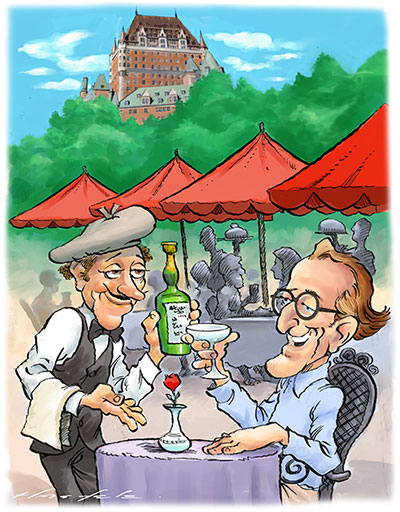
As an American, I suppose it’s not unusual that my knowledge of our neighbor to the north feels unsatisfyingly incomplete.
I’ve traveled to different parts of Canada at various times of my life, for a variety of purposes. But I don’t have a simple definition of what binds it all together. The problem is too much, not too little. I would have trouble answering the question: What is it that distinguishes Canada from America? What makes Canada Canada?
I am reminded of the Indian parable of the blind men and the elephant. My impressions have been so widely varied that each could give me a completely different picture. It’s like having a few pieces of a jigsaw puzzle that don’t seem to fit together.
The similarities to America are easy to see. But what lies outside the similarity is harder. For example, some of my favorite music came from Canadians. Before I discovered that they were Canadian, I just assumed they were American. Even after I knew they were Canadian, I couldn’t pinpoint what about them was different from Americans.
What makes Joni Mitchell, Gordon Lightfoot, Neil Young, The Band, Oscar Peterson, The Guess Who and Celine Dion “Canadian”? They seem more different from each other than they are from Americans. And yet, I know they know the difference. Why is it so hard for me to discern?
The same could be said of Jim Carrey, Elon Musk, Mike Myers, Keanu Reeves, Sandra Oh, Ryan Gosling and Steve Nash.
 I do like Canadians. When I meet someone who says they are Canadian, I expect to like them. And they never disappoint. Canadians seem to know things we Americans don’t, as if they harbor some national secret.
Just this morning I asked a native Canadian, who is now a dual Canadian/American citizen, how she would define the difference between Canada and the U.S.
“That’s a complicated question,” she said. “When I was growing up in the ‘60s and ‘70s our popular culture was so dominated by American culture that I wasn’t sure what our culture was. Of course, Canada has a population of 38 million and America has 328 million, so it dominates by sheer numbers. But since the ‘70s, we’ve developed more of a sense of our own culture.”
The conversation was interrupted before I could learn much more. But though I’m intrigued about the question, I don’t have to define Canada to enjoy it, and to be drawn to it. There is much to love. It’s vast.
Ninety percent of Canada’s population lives within 100 miles of the U.S. border. More than half live in two of Canada’s 10 provinces, Ontario and Quebec.
That means Canada, the second largest country in the world after Russia, is mostly wilderness. Even in the southern strip where the big cities are, the wilderness is never far away.
That appeals to me. Growing up in small town suburbia at the edge of the open country, I hungered for the excitement and cultural richness of the big cities. But after living for decades in Greater New York City, I increasingly long for the wide open, natural areas. Canada has those in abundance.
The Breakout
My first experience of Canada was one of those fortuitous incidents that breaks into your life out of nowhere and changes everything. It was one of the luckiest moments in my life, one of those times when the phone rings and nothing is ever the same again.
I had been working in nightclubs as a piano player in a small combo. Someone who had seen me thought of me when their band needed a new piano player while touring in Canada. The call from Canada was an offer to join them and go on the road playing music. It was a dream come true for me, to get paid to travel and play music. Two of my greatest loves in one package.
The band was traveling west across the strip where most Canadians live, just north of the U.S. border. I accepted their offer, packed up and hit the road. As they traveled west, I went north, and we converged in Thunder Bay, Ontario. Just the name of that place, which I had never heard of before, set off explosions of romance and adventure in my mind. A whole new world opened to me.
The band picked me up at the bus station, took me to the hotel and we jumped into the work of integrating me into their band. I never looked back. My life would never return to what it had been. Thunder Bay was my jump-off perch to a new life, and for that it will always hold a special place in my heart.
There wasn’t much time for sightseeing. Most of my memories are of being in a hotel, practicing. But I did get out a bit to look around. It was exciting to me, the thrill of the new everywhere around me.
Thunder Bay is on the shore of Lake Superior, the largest body of freshwater in the world. It feels like a coastal city, though it’s hundreds of miles from any ocean.
In between rehearsals I got to explore the downtown area and the waterfront. I was ecstatic just to be in a foreign country. I felt liberated from my dead-end hometown. It ignited a joy of travel that has never waned.
Our tour continued across Ontario and Saskatchewan, culminating in the city of Winnipeg, which I developed a deep fondness for, before returning to the States.
A couple of years later when I was based in New York City still playing in bands I got my second chance to experience Canada. It was a two-week stint in Montreal. Again, I experienced the ecstasy of international travel, but it was very different from the middle provinces.
I had never been out of North America, but Montreal felt like a European city. It was founded in 1642, and the tiny cobblestone streets felt more like Europe than any city I had known.
It had the strong French cultural element alongside the British culture. The American influence was conspicuously low key. Everything was new and fresh. It was two weeks of fascination and euphoria.
I returned to Canada years later to attend a conference at the Banff Springs Hotel in Banff, Alberta, in the glorious Canadian Rockies. It was like some kind of fairytale magical realm, or perhaps a province of heaven. The beauty of the snow-covered peaks was breathtaking. And it had little in common with my previous experiences in Canada.
I’ve visited other areas, including Calgary, Vancouver and Toronto. There are other places I particularly long to see, such as the Maritime provinces on the North Atlantic coast, and Quebec City. And I wish to explore further some places I have seen, such as the national parks of Alberta and British Columbia; and Toronto, which is one of the most international cities in North America; and Vancouver, which is one of the world’s most beautiful cities. I still can’t define what makes Canada Canada, but that’s okay. I’ll keep working on that.
As diverse as Canada is, one thing that is consistent throughout my Canadian travels is beauty, from the cities to the Rockies to the wilderness.
And it’s right there, so close, so accessible, yet still so exotic. I need to go back, to explore further. This is a good time for it.
Your humble reporter,
Colin Treadwell
The post What Makes Canada Canada? appeared first on The Taucker Travel Blog.