
True tests still coming as Jets’ bubble players battle for spots

WINNIPEG — Paul Maurice didn’t come right out and say it, but he didn’t have to.

If you read between the lines of the comments from the head coach of the Winnipeg Jets after his team earned a 5-1 decision on Wednesday night over an Edmonton Oilers team that was mostly made up of players ticketed to play for the Bakersfield Condors of the American Hockey League, the message was abundantly clear.

If you’re a player on the bubble and in the running for a roster spot, the competition officially starts now.

That’s not to say you wouldn’t be able to bank some goodwill in the opening two games of the exhibition season, but those were nothing more than a dress rehearsal against inferior lineups.

The true tests are coming this weekend when the roles will be reversed and the Jets will be icing a mostly youthful lineup against the Oilers in a rematch on Saturday and then in a date against the Vancouver Canucks on Sunday.

“It’s just so early,” said Maurice, whose squad improved to 1-0-1 in exhibition play. “The games will be a little different here, the next four than the first two for sure. You want them to play against a bigger defence and faster opponents. And then you can tell. We’re not getting too excited with what we got done here. We’re looking at the good pieces of our five-on-five game that we liked. But bigger tests come up.”

Given that the Jets are expected to be one of the contenders in the Central Division and Western Conference, it’s not surprising there aren’t a lot of jobs available on the roster.

With 2017 first-rounder Kristian Vesalainen getting the reps on the third line with Adam Lowry and Paul Stastny, it’s basically down to a battle for fourth-line roles — where the only player basically guaranteed a spot is veteran forward Riley Nash.

Although Nash could shift to the wing if necessary, the open competition is going to revolve around who plays on his left and his right.

“It’s (not) going to be easy calls… but usually, almost always, it gets sorted out by the final exhibition game,” said Maurice. “You find that they usually separate themselves.”

Two of the primary candidates in that battle made a strong impression on Wednesday, with Jansen Harkins (two goals, one assist) and Evgeny Svechnikov (one goal, two assists) pacing the offensive attack on a highly entertaining line with Cole Perfetti (one assist).

Both Harkins and Svechnikov showed good finish in the contest, with Harkins burying a pair of shots and Svechnikov delivering a deft redirection on his backhand side after a smart set up and a great scoring chance in tight that was stopped but led directly to the opening goal of the contest.

Harkins has the inside track on a job, but he’s taking nothing for granted after riding a roller coaster of emotions during the past two seasons.

During the 2019-20 campaign, Harkins made tremendous strides, working his way up the depth chart and earning a couple of cameo appearances on the second line with Jets captain Blake Wheeler.

But just when it looked he was on his way to becoming an NHL regular, Harkins suffered a lower-body injury during training camp and never really got into the groove as he had trouble getting into the lineup with regularity and managed only one goal and two points in 26 games last season while earning mostly fourth-line duty.

That wasn’t how Harkins envisioned things going and now he’s back to prove that he’s ready to take the next step in his development.

So far, so good.

Sign up for NHL newsletters

Get the best of our NHL coverage and exclusives delivered directly to your inbox!

NHL Newsletter


*I understand that I may withdraw my consent at any time.

“Pretty tight, obviously. We’ve got a lot of young guys fighting for spots, a lot of good players,” said Harkins. “We’ve generally been a pretty veteran team the last few years so there’s a couple spots right now everyone’s really chasing for it. Competition is pretty good.”

Coupled with an assist in the 3-2 shootout loss to the Ottawa Senators on Sunday, Harkins is feeling confident with the puck on his stick.

He’s shown an ability to make plays, but he’s also been responsible defensively — something Maurice was quick to point out when asked about Harkins.

“Right now, Jansen is going to get on the ice thinking about the next good thing that could happen, not ‘I hope I don’t make another mistake.’ And that’s a completely different perspective and mind shift,” said Maurice. “You see a different player when they’re confident and hopefully he can keep building on this as he has been from the start of camp. It’s not just about being able to score some goals, but he’s a little faster here, he’s got a little more jump on some plays because of that.

“He made a really, really good read in the defensive zone on the switch off down. We got the puck and out it went. So it goes into other parts of the game too. That, really for those guys, might be the most important thing. We’re not asking Jansen to score 30 this year to make the team. That can’t be the qualifier for him making the team. There are lots of other parts of the game that he has to do consistently.”

As for Svechnikov, he remains one of the most intriguing players in training camp and he’s basically forcing the coaching staff to take notice of him.

His powerful shot has stood out in practices and on Wednesday, he always seemed to be around the puck and was often making things happen for himself and his linemates.

There’s plenty of creativity to go along with his heavy shot and he also brings some size to the equation.

Although his offensive game hasn’t translated to the NHL level yet, Svechnikov is a player that Jets had on their radar going into the 2015 NHL Draft and it’s easy to see why he was chosen 19th overall by the Detroit Red Wings — four spots after Kyle Connor (who rounded out the scoring on Wednesday) ended up with Winnipeg.

Svechnikov falls into the low-risk, high-reward category of players — even if his most likely path to an NHL contract includes fourth-line duty, at least coming out of the gate.

This fresh start is treating Svechnikov well and it won’t take long to see if he can sustain that momentum against stiffer competition.

“Every day has been better. Go to the rink every day, see the guys and talk, get more comfortable,” said Svechnikov. “I’ve loved every single day here.”

On defence, the vacancies are also limited.

The top-six is mostly set and provided they can make the cap hit work with some LTIR relief, Nathan Beaulieu figures to be the seventh D-man.

With Dylan Samberg sidelined for six-to-eight weeks with a high-ankle sprain he sustained on the first day of training camp, Ville Heinola remains in the battle on the back end, but he’ll have to basically steal a job from one of the incumbents.

While it was a tough start for Heinola on Sunday — as he got beat on the Sens’ opening goal from Ridly Greig and then got caught chasing Greig and took a penalty during the first period — the Finnish blue-liner got more comfortable as the game went on.

He followed that up with a better showing in his second game, chipping in an assist with a smart outlet pass to Mikey Eyssimont on the goal from Austin Poganski.

Heinola also made a smart play at the offensive blue line on Harkins’ first goal, getting the puck into the quiet zone in the right-wing corner for Perfetti, who found Svechnikov alone in the slot for a glorious scoring chance.

But when it comes to Heinola making the jump, the offensive part of the game is not a concern. He’s already got the mobility, vision, passing ability and hockey sense.

How he defends and moves the puck this weekend while under duress is where he should be able to make his mark.

“That’s why we didn’t spend a whole lot of time thinking about his first game,” said Maurice. “There are lots of layers to this young man and he’s going to keep getting better and better. I thought he was a little better tonight.

“There is a value to him playing against faster guys, against more skill, I think his game gets easier to play at that level. He’s going to keep playing. We’re going to play the heck out of him and see where he’s at.”

With the Jets planning to get down to much smaller numbers following the games on consecutive days, the pressure is about to ramp up for those players trying to stay in this competition.

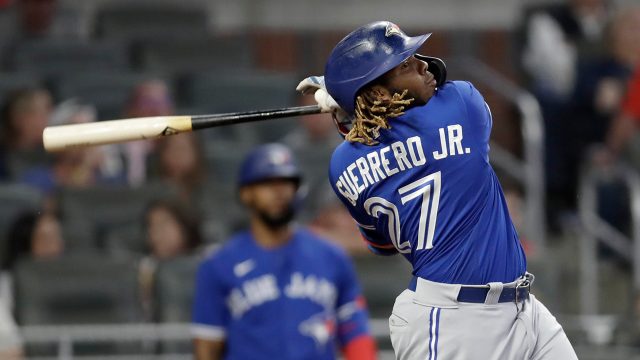
Biggio returns to Blue Jays for second playoff push of season

TORONTO — Called up Tuesday and thrust into the most important series of the Toronto Blue Jays‘ season, the most important series Rogers Centre has seen in five years, a playoff series for all intents and purposes, Cavan Biggio doesn’t feel much has changed. He’s been playing playoff-style baseball with the triple-A Buffalo Bisons for weeks.

“Yeah, it’s been a lot of fun,” Biggio said Tuesday, standing in front of his sort-of new, sort-of old home dugout before the Blue Jays fell, 7-2, to the New York Yankees. “Down there everyone cares and pulls for each other just like they do up here. It’s definitely a similar feel.”

Similar in a couple ways. The Bisons began their season playing in Trenton, NJ while Buffalo’s Sahlen Field underwent a substantial renovation prior to hosting a portion of the Blue Jays’ home schedule in June and July. When the Blue Jays returned to Rogers Centre, the Bisons shifted home themselves and eventually won the franchise’s first division title since 2005, finishing the regular season with a 71-46 record and +144 run differential.

In non-pandemic times, that would have qualified Buffalo for a traditional postseason tournament culminating in a championship series. But this season’s playoffs are structured as a 10-game “Triple-A Final Stretch” in which each club plays a five-game home series and five-game road series. The team with the highest winning percentage over those 10 games is named champion.

So far, the Bisons are tied for second place with a 4-1 record through their first five-game series — three of the wins being walk-offs. And Biggio’s been right in the middle of it. Last Thursday, he walked to load the bases in the bottom of the 10th before Gregory Polanco won the game with a single. The next night he walked in the bottom of the ninth, this time ahead of Polanco’s walk-off homer. Sunday, he scored one of two runs on Christian Colon’s game-winning, ground-rule double.

“I can’t say enough about (Bisons manager) Casey Candaele and the rest of those players on that triple-A team,” Biggio said. “That clubhouse that they have down there, they keep it loose. … They have a lot of fun when they play the game. And the No. 1 thing down there is to win. And when you play like that, it just makes everything that much better.”

TD & Blue Jays MVP Spotlight
This season, TD and the Blue Jays celebrated off-the-field MVPs who embody the spirit of the game.

Playing part in a pair of postseason pushes is a bright-side reward for Biggio at the end of a trying season, the toughest he’s had since turning professional in 2016. Over 290 plate appearances with the Blue Jays, Biggio’s hit .215/.316/.350, good for an 82 OPS+ that stands in stark contrast to the 122 he posted in 2020 and the 113 he put up a season prior as a rookie.

And his peripherals don’t play a nicer tune. His strikeout rate is up, his walk rate’s down. His .293 wOBA is higher than what would be expected (.278) based on the quality of contact he’s made. After featuring a patient, selective approach over his first two MLB seasons — Biggio swung at the lowest rate of pitches outside the zone of any qualified hitter in 2020 — his chase rate increased five percentage points in 2021. Pitches he once took on his way to walks became ones he whiffed at on his way to strikeouts.

Of course, context matters. Biggio’s 2021 began with multiple balls in play deflecting off his right hand during spring training, bending his pinkie finger “the way it shouldn’t bend” and causing a blood blister that had to be drained. He carried those hand injuries into the season, playing through pain until it became too much and sidelined him for several days in mid-April.

A month later, he took his first of two trips to the injured list due to neck and back issues — a cervical spine ligament sprain, officially — that plagued him throughout the summer. And while on a triple-A rehab assignment during the second IL stint, Biggio collided with Josh Palacios as the pair chased a sinking liner, suffering a Grade 1 UCL sprain in his left elbow.

It’s not so easy to rediscover an approach and find consistency at the plate when you’re spending that much time off the field and everything hurts when you’re on it. Biggio has tinkered with a few approach adjustments and mechanical tweaks throughout the season, as most players do. But he hasn’t had much of an opportunity to find something that works or let an adjustment take because his playing time’s been so sporadic.

“It’s definitely challenging. But that’s a big part of this game. And it’s a big part of this game that I’ve never really had to deal with before,” Biggio says. “If you want to look at the silver lining, I’m glad I went through it the way I did. I was able to learn a lot about myself and about my body. And I’m going to use that later on in my career as I go.

“I think the biggest thing was just finding a good routine — not only for my body, but also in the cage, as well. Making adjustments; the ability to make adjustments game-to-game. I feel like my routine that I developed down there has been pretty good. And I’m going to continue that here.”

Sign up for Blue Jays newsletters

Get the best of our Blue Jays coverage and exclusives delivered directly to your inbox!

Blue Jays Newsletter


*I understand that I may withdraw my consent at any time.

The good news is Biggio’s healthy enough to play and squeeze a few more afternoons of batting cage work out of his season. Although he hit .197/.308/.318 with 10 walks and 23 strikeouts over the 19-game rehab assignment he just completed with the Bisons, the Blue Jays have been encouraged by the quality of his plate appearances, particularly over his last four games when he walked four times and came up with a couple hits.

“He’s back physically healthy — I think that’s first and foremost. And he’s had really good at-bats. He’s continued to have better at-bats with the team in triple-A,” Blue Jays general manager Ross Atkins said. “His versatility, the handedness, the plate discipline — they’re good complements to us.”

For now, Biggio says he’s been told to expect to play the outfield if he gets into any of Toronto’s remaining games. That’s where he spent five of his final eight games with the Bisons before being called up. But this is late-September baseball, so it’s probably best not to expect anything. And Biggio’s ability to play any position on the diamond save for shortstop and catcher could make his a useful, late-game puzzle piece as manager Charlie Montoyo plays matchups and optimizes his defence.

“The expectation is to contribute in any way possible. And I could play pretty much every position out there,” Biggio said. “Anything can happen in this game and over the course of a game. In a big situation, whatever it calls for, I’ll be ready for it.”

Streaming Home of the Blue Jays
Livestream Blue Jays games all season with Sportsnet NOW. Plus, get marquee MLB matchups, Home Run Derby, All-Star Game, Postseason and World Series.

More than anything, Biggio’s merely happy to go from one playoff push to another. Toronto’s postseason chances may have taken a significant hit with Tuesday’s defeat to the Yankees. But they’re still alive. Still capable of landing one final, improbable punch at the end of a season of improbabilities. And if asked, Biggio will be ready to play his part in it.

“The past couple of months, it’s been tough. Whether I was here rehabbing, watching the games from the dugout. Or if I was watching from my bed in my hotel room in Buffalo. You can see the energy and the amount of fun that everyone’s having — and there’s a little bit of FOMO there,” Biggio said. “But this means a lot, just to be here, be a part of the team again. I’m just looking forward to contributing any way possible. We’ve got a special team here. And hopefully we can keep it going.”

How the Blue Jays can make the playoffs: Wild-card tiebreakers, scenarios

TORONTO – The scenarios for the American League wild card remain wild heading into the final weekend and the Toronto Blue Jays still have realistic pathways to the post-season, even after losing two of three to the New York Yankees.

To get there, though, they’re going to need some help, as even a sweep of the Baltimore Orioles won’t be enough on its own. The Yankees, at 91-68, are the closest to securing a berth, holding a two-game lead for the first wild card over the Boston Red Sox and Seattle Mariners, who are tied for the second spot at 89-70, with the Blue Jays a game behind them at 88-71.

Boston closes out at the Washington Nationals while Seattle hosts the Los Angeles Angels, so those should be the primary out-of-town focuses for Blue Jays fans this weekend. The Yankees, meanwhile, will hope to clinch against the AL East champion Tampa Bay Rays, although they can still miss the playoffs, too.

Here’s what the scenarios look like.

TD & Blue Jays MVP Spotlight
This season, TD and the Blue Jays celebrated off-the-field MVPs who embody the spirit of the game.

Four-team tie for two wild card spots

This is still possible and, strangely, is actually a good outcome for the Blue Jays if they can’t win a wild card spot outright. For it to happen, the Blue Jays would need to win out, the Yankees would need to lose out, and the Red Sox and Mariners would each need to go 2-1 to finish up 91-71.

The teams’ winning percentage against one another is the first tiebreaker and the Red Sox, at .533, would get first choice of the Team A, B, C or D designation, followed by the Blue Jays at .500 (22-22), the Yankees at .489 (22-23) and the Mariners at .450 (9-11). Team A would then host Team B in one tiebreaker with Team C hosting Team D in the other, with the winners then meeting in the wild card.

The Red Sox, presumably, would host one game as Team A, the Blue Jays the other as Team C and then the Yankees would be left with the intriguing choice of who to play.


Cumulative records for wild card contenders against one another, along with head-to-head records


Three-team tie for two wild card spots

This can happen a few different ways, both with or without the Blue Jays. If the Yankees go 1-2 while the Red Sox and Mariners go 3-0, they’d all finish 92-70; If the Yankees go 0-3, the Red Sox and Mariners go 2-1 while the Blue Jays go 2-1 or worse, the first thee would all finish 91-71; If the Blue Jays go 3-0, the Yankees go 0-3 and one of the Red Sox or Mariners goes 2-1 and the other does no better than 1-2, the first three would all finish 91-71.

In this scenario, a team’s head-to-head against the others would be weighed first and the club with the best mark selecting to be either Team A, B or C. Next, the club with the better head-to-head mark chooses second. Team A would then host Team B, with the winner advancing to the wild card game and the loser going to play Team C in the second tiebreaker.

The intriguing call is made by the second-place team, choosing between two shots on the road or one at home. Boston, having won the season series against each of the others, is best positioned for this.

Three-team tie for the second wild card spot

This is a more likely tiebreaker to occur, potentially set up by the Blue Jays going 3-0 while the Mariners and Red Sox each go 2-1 to all finish 91-71, although any three of the four clubs could end up in this situation. In this case, the same three-team tiebreak formula as above is used to decide the designation selection order, with Team A hosting Team B, and the winner of that game then hosting Team C to determine the wild card.

Streaming Home of the Blue Jays
Livestream Blue Jays games all season with Sportsnet NOW. Plus, get marquee MLB matchups, Home Run Derby, All-Star Game, Postseason and World Series.

Blue Jays win first wild card outright

This is also still in play, incredibly, if the Blue Jays win out, the Yankees lose out and the Mariners and Red Sox go no better than 1-2. In that case, home-field in the wild card game would be determined by season series and the Blue Jays hold the tiebreaker over the Yankees.

Blue Jays win second wild card outright

For this to happen, the Yankees would need to go at least 1-2, the Blue Jays would need to sweep the Orioles while the Mariners and Red Sox could go no better than 1-2. The Blue Jays would then visit New York for the wild card game under this scenario.

Two-team tie for the second wild card

This can happen in several ways, with head-to-head records deciding who hosts a Game 163 and the winner advancing to the wild-card game.

Breaking down the Robbie Ray vs. Gerrit Cole 2021 Cy Young race

Not only was Thursday’s game against the New York Yankees enormously consequential for the Toronto Blue Jays, it also represented the closing argument for Robbie Ray’s Cy Young case.

It’s safe to say that it didn’t go as planned for the southpaw as he allowed five earned runs on four home runs in a six-inning stint. It was his season high for earned runs allowed.

Ray came into the year as the ultimate wild card, and he’s finishing it as a pitcher his team specifically lined up for a Wild Card Game. He’s been nothing short of spectacular, and from his simplified two-pitch repertoire to his internet-famous pants, he’s put up his eye-popping numbers in style.

The question for the southpaw is whether that will be enough, and the answer to that will depend on how voters feel he compares to Yankees ace Gerrit Cole. Although a tortured FIP-based argument could be made for Nathan Eovaldi to factor into the race, the reality is that this is Cole vs. Ray.

So, how do the two stack up?

Streaming Home of the Blue Jays
Livestream Blue Jays games all season with Sportsnet NOW. Plus, get marquee MLB matchups, Home Run Derby, All-Star Game, Postseason and World Series.

The WAR war

Although not everyone agrees on which version of WAR is the best, or how much weight the metrics should carry, the reality is that Wins Above Replacement will be the first port of call for many awards voters.

This how it breaks down:

There’s a significant difference between how the two models see Ray — we’ll circle back on that — but there isn’t a big enough advantage for either pitcher to establish a frontrunner on this basis.

Edge: Push

The narrative game

There’s an argument to be made that MLB awards are being given more on merit in recent years than they have in the past — no one is winning a Gold Glove based on just 28 games in the field like Rafael Palmeiro did back in 1999 — but that doesn’t mean voters are immune to a good narrative.

This aspect of the race is somewhat unresolved due to the Blue Jays’ unknown playoff fate, but there are some components that are resolved.

Cole has name recognition and a superior win total in his favour, but he doesn’t have too much more to recommend him. The 31-year-old did much of his best work early in the season, and if the Yankees make the playoffs, which is extraordinarily likely at this point, the perception will be that Aaron Judge and Giancarlo Stanton got them there — not their ace. It doesn’t help Cole’s case that he laid an egg in his biggest start of the season on Wednesday night, and his September ERA sits at 5.13.

Ray, on the other hand, has the underdog story working in his favour considering that disastrous 2020 he had, and if the Blue Jays reach the Wild Card game there will be no doubt they couldn’t have gotten there without him. Even if Toronto misses the playoffs, he probably has more narrative goodwill with the voters — especially considering Cole became a face of the “sticky stuff” controversy earlier in the season.

Edge: Ray

There’s a case to be made for leaving it at that. The total value numbers are relatively similar and Ray bests Cole when things get less tangible. However, there is still a debate to be had between the two and it comes down to the best way to value pitchers.

Fielding-independent numbers

If you think the best way to determine pitcher value is to focus your analysis on strikeouts, walks, and home runs, Ray’s case weakens significantly.

Not only does he have the tendency to get victimized by the long ball, none of his other fielding-independent stats match Cole’s:

This looks a little bit grim for Ray, but it requires some context.

Valuing FIP over ERA has some logic behind it, but it also originates from an era before contact quality statistics were readily available. When a pitcher’s ERA used to be higher or lower than their peripherals would indicate, the assumption tended to be that luck was the primary factor at play. Luck still plays a role that we should acknowledge, but now we have Statcast numbers that give us a precise idea of the quality of contact a pitcher is allowing, making it less wise to ignore balls in play.

That’s exactly what FanGraphs’ version of WAR does, which is why it favours Cole by a solid margin.

Edge: Cole

Run prevention and contact management

The number that those who see Ray as the Cy Young favourite cite the most is ERA, where the southpaw has a significant advantage, beating out Cole 2.84 to 3.23. For many voters that will be an unbridgeable gap. The job of a pitcher is to keep runs off the board and there’s no disputing that Ray has done that better than Cole.

Where things get a little sticky is when you look at how that happened. If we establish that Cole has done better than Ray on fielding-independent measures, that means the Blue Jays ace’s advantage comes when the ball is put into play. However, there’s significant evidence to suggest the ball is hit with more authority off Ray than Cole:

That information leaves you a tough spot for Ray because Cole’s got him beat on strikeouts and walks, suppressing home runs, and managing contact with balls in the play.

Based on that information, you wouldn’t expect Ray to have the better ERA, but he does for two reasons. The first is that he’s been supported by better defence. We don’t think of the Blue Jays as a top-tier defence — and they aren’t — but the Yankees have been brutal in the field this year and Toronto has them beat by 70 runs according to DRS and 11.8 by UZR. That’s a massive difference, but the bottom line is that they’ve been better.

The second factor suppressing Ray’s ERA is his incredible rate of stranding runners. The left-hander has left a MLB-leading 90.1 per cent of runners on base compared to Cole’s 77.9. That’s a tricky stat to parse because Ray deserves some credit for performing better with runners on base, and his strikeout ability plays into that, but there’s also some luck and sequencing as well.

For instance, the left-on-base numbers there might have you believe that Ray has performed far better with runners on than Cole has, but they’ve allowed hitters to produce almost identical lines in those situations:

This category is where voters’ preferences will come into play because there are multiple ways to interpret it.

Edge: Ray (in most voters’ minds)

It’s probably safe to say that Cole has pitched better than Ray this year. It’s also reasonable to assert that Ray has gotten better results. The race between the two is close enough that a vote for either is valid — but Cole’s case is more esoteric while Ray’s seems more likely to resonate with the voters.

How Stars’ Montoya is helping hockey embrace underrepresented communities

From the very beginning, Álvaro Montoya could feel there was something particular about his presence in the hockey world, something special.

It started early on, in Michigan, as his Wolverines won two CCHA titles. It continued with Team USA, when he helped the Americans claim the first world juniors gold in the country’s history. He felt it especially once he graduated to the NHL, during a near-decade that took him through Montreal, Edmonton, Winnipeg, Long Island, Phoenix and Florida.

It wasn’t the titles or the wins or anything else that transpired on the ice, though. It was something more. It was the signs he’d see dotted among the crowd, the shirts with his name scrawled across, that endless love from Hispanic fans that followed him from city to city. It was that feeling he had in June 2004, when the New York Rangers called his name with the sixth pick at the NHL Draft, and in doing so, made him the first-ever Cuban-American NHLer, and the League’s first native Spanish speaker.

The impact of that historic step, and the attention and responsibility it brought, might’ve been overwhelming to other teenagers with big-league dreams. But Montoya never saw it like that.

“I get asked, ‘Did you feel the pressure, or did it weigh on you?’ And the honest truth is it was such an honour,” he says, looking back on it now. That appreciation has only grown with retirement, the time away granting Montoya the chance to see his career from afar. “I go back to when my grandparents and my mother fled Cuba in 1963 from that communist government, you know, left behind everything they knew for future generations, for their grandkids — I really got to see my grandfather’s dream, my grandparents’ dream, come full circle.”

He’ll now look to ensure others get that same chance.

Three years after suiting up for his last NHL game, Montoya is back in the league after being named the Dallas Stars’ director of community outreach, a role that’ll see him help the organization reach out to underrepresented communities in North Texas. It was a long time coming for the 36-year-old, after a couple years spent speaking to different teams gauging who was most willing to help him roll up his sleeves and do the real work, and a career that showed him long ago that this would one day be his calling.

Really, the path that led him to this opportunity started in his earliest days at the rink, his own younger years granting him a firsthand understanding of how different life looks for players and fans who come from communities rarely represented in the sport.

“I grew up in kind of two worlds,” he says of those days back in Chicago. “We grew up in a Spanish-dominated household, which was so beautiful. [But] there were times in our life that we didn’t know if that was right, at least personally — I would leave the house at eight years old and be like, ‘Oh, maybe I shouldn’t speak Spanish anymore, because nobody else around me speaks Spanish.’

“Sport really allowed me to develop and navigate these worlds. … It’s sport that really allowed me to express myself when I was confused, whether it was what path should I follow or who should I listen to — I truly believe that sports transcend all that. It’s that universal language.”

It was in Florida that Montoya truly had his eyes opened, his run with the Panthers bringing him the closest he’d ever been to bridging the gap between those two worlds.

“I mean, the Freedom Tower that’s down there [in Miami]… that’s where my grandparents got off the boat, and where their first apartment was, and where my cousins brought my mom and my uncles sandwiches, you know? They still tell the stories to this day,” he says. “Whether it was doing interviews with the Latin community on a weekly radio show, whether it was speaking to Telemundo or Univision, whether it was helping out in the Spanish broadcasting that we were a part of, it was amazing.

“And it wasn’t something that felt forced — it’s something that helped me, selfishly, connect with those that I grew up around. You know, whether it was going to my favourite restaurant, Versailles, at Calle Ocho in Miami, in Little Havana — these were traditions that happened before hockey and that I was able to bring together with hockey.”

While that run in Florida allowed him to bring his hockey career to his community, it made room for the reverse, too — an early preview of the work he’s since devoted himself to.

“It was bringing my madrina — which is a godmother in Spanish — it was bringing her to her first game in South Florida. What does she do? She shows up with pastelitos, which are Cuban pastries from the local bakery that I had been having since I was a kid,” Montoya remembers. “She shows up with 20 people that I hadn’t seen since, you know, 1990 at a Christmas that we celebrated down in Miami.

“It was their first game, and their cousins were able to come. And it was just that chance to really connect and bring the game.”

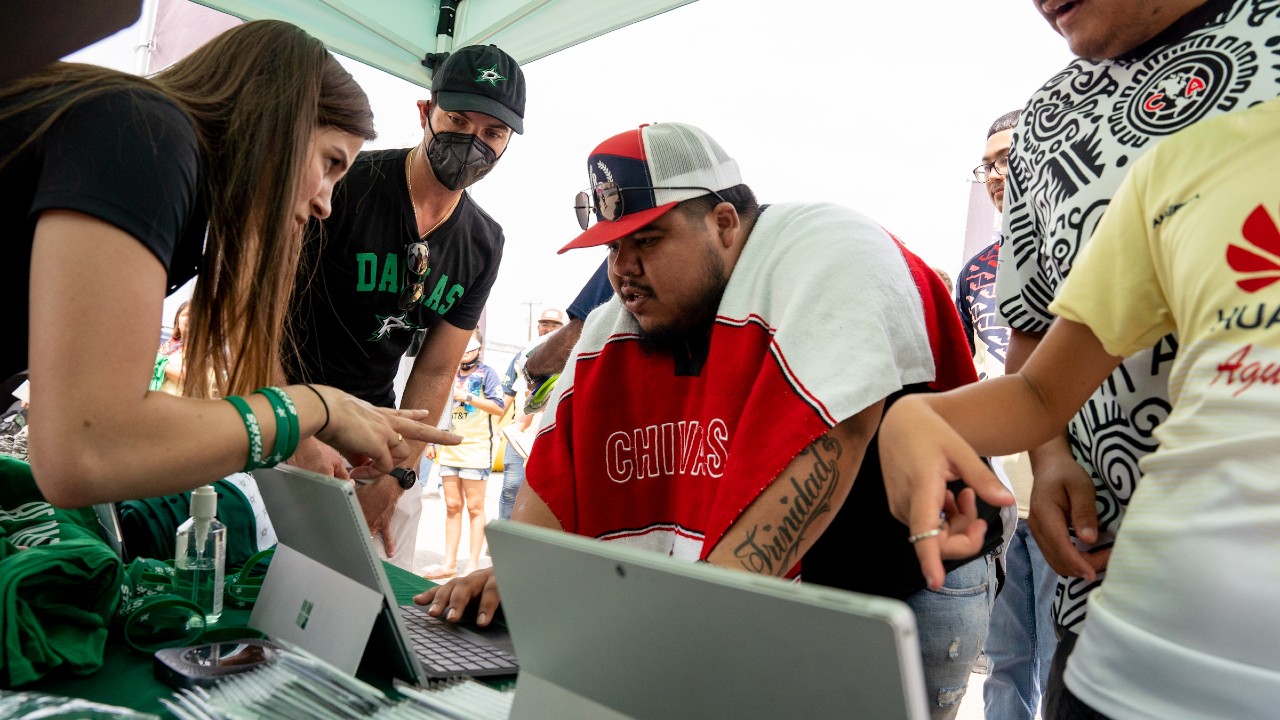
Montoya representing the Stars at El Súper Clásico. (Courtney Kramer/Dallas Stars)

Growing the sport and its surrounding culture is going to require more of that, Montoya says. More connections, more bridged gaps, more branching out and taking hockey into communities it’s rarely ever engaged with or embraced.

“I think in hockey, we’ve always relied on the fact that this is such a fantastic game, and ‘Come see us soon and you’ll see why,’ right? And I think nowadays, no matter what you’re doing, no matter what industry you’re in, there’s just too many things out there for people to be entertained by,” he says. “I think the best way to do it, to grow hockey, is to go where hockey isn’t. Not rely on the fact that we have the best game on earth, because we know we do, but the best way to go about it and make people feel more included is to go to events or be in touch with communities that aren’t part of the game.”

Montoya’s vision of what’s needed is clear, because he’s been there himself. He’s confronted those early moments of awkwardness that come with mixing the culture at home with the culture at the rink. For him, the way through came from the luck of simply being the best athlete of the kids around him, he says. But that’s not always how the situation shakes out.

“As a minority in sport, why do we have to be so tough to make it through?” Montoya says. “Why aren’t there more minorities in hockey?… I think all of us in these underrepresented communities had to go through some tough periods in our life early on in hockey or whatever sport you’re playing, to bypass it. And there’s a lot of kids that’ll say, ‘If you’re going to treat me like that, I don’t even want to be a part of this sport.’

“So, what I want to do, and what we’re trying to do, is pave the way so now kids have someone to look up to and they can see that maybe their path doesn’t have to be as difficult.”

Letting those kids see the name ‘Montoya’ as part of an NHL front office is a step in itself, he says. The next ones will come slowly and steadily, by putting in the time to bring about legitimate change in the North Texas hockey community. Maybe not tomorrow, or the week or month after that, but some time down the line.

“You know, we’re going to be at the front of these things now. We’re going to be seeing what’s important — we’ve built a relationship with the Mexican consulate here to understand where we should be,” Montoya says of his plans with the Stars. “I think building these relationships with business owners in the community, and aligning ourselves with them, will help show what we’re doing is honest work. And not only that, we want to be consistent. I think having me here, I’ll make sure that we’re consistent and it’s not just a flash in the pan, and I think that’s the best way to make a difference.

“You’re really trying to build up for the long term and make it something that feels genuine. I feel like we’re starting pretty close to the ground level and the only way is to go up. So, the best way to do that is being consistent, and going to the people.”