‘Home Cooking’ Concerns Revealed in Corruption Prosecutions Outside Texas Capital

For our full collaborative investigation “Justice For Some” on the Texas Rangers with KXAN, and the Fort Worth Report, go here.

Massive floods tore through Central Texas on Memorial Day weekend in 2015. Rivers spilled over their banks and ripped waterfront homes from their foundations. Towns were inundated.

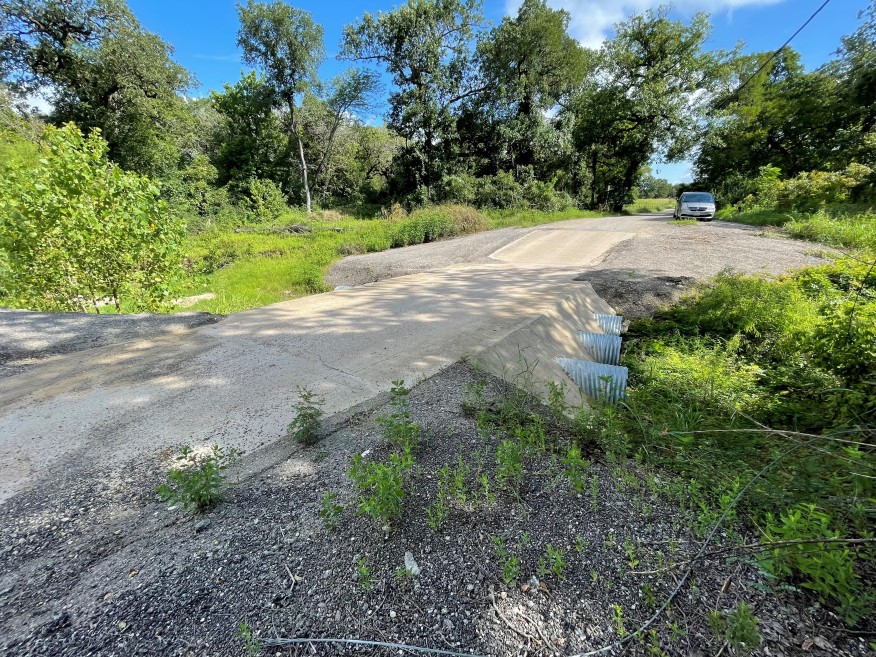
While tragic deaths on the Blanco River and a ruptured dam in Bastrop State Park captured headlines, few noticed the damage to a low water crossing on Wilbarger Creek Drive — a private dead-end road south of Elgin.

Nobody knew then how that broken bridge would brew a political storm of its own. Two years later, Bastrop County Commissioner Gary “Bubba” Snowden would be charged with three counts of abuse of official capacity. Two of the charges were felonies for misusing public dollars and county resources to resurface part of the road without county commissioners’ approval.

A new low water crossing sits on Wilbarger Creek in northeast Bastrop County. County commissioners approved funding the bridge following 2015 flood damage. The legality of resurfacing 0.8 miles of the connecting private road later became a focus in a public integrity indictment against Precinct 4 Commissioner Gary “Bubba” Snowden. KXAN Photo/Josh Hinkle

Snowden’s case was investigated under the state’s redesigned Public Integrity Unit. The previous state-funded Public Integrity Unit housed in the Travis County District Attorney’s Office was dismantled in 2015, following allegations it was politicizing prosecutions. State lawmakers aimed to reform the system by moving state public corruption investigations to the Department of Public Safety’s Texas Rangers and prosecuting accused officials in their home counties rather than Travis County.

Though the sea change in Public Integrity Unit prosecutions didn’t fundamentally alter how Snowden’s case was handled, the former Bastrop County commissioner’s indictment and prosecution do exemplify most public corruption cases processed under the new system.

Now six years later, an investigation by the Texas Observer and KXAN has found prosecutions of statewide public officials for corruption are nearly non-existent. Since 2015, the Rangers have investigated a handful state-level elected leaders, but few have been charged.

From 2015 to 2020, the Texas Rangers completed more than 560 public corruption case investigations, but only 67 of those cases have been prosecuted, according to DPS data analyzed by the Observer. DPS said in an email to the Observer there were hundreds more inquiries and complaints beyond those investigated. No officials with DPS or the Texas Rangers would agree to speak with KXAN for this report.

The prosecutions that have taken place are mostly against lower-level local officials or government employees and typically end with light sentences. Several Central Texas cases have followed that pattern.

In 2015, critics of reforming the Travis County Public Integrity Unit said a legislative overhaul would have the opposite effect. They said prosecuting public officials in their home territory and giving local prosecutors the option to oversee cases — and drop charges — would invite a new type of corruption and reduce accountability.

Read the full story on KXAN.com to explore high-profile Central Texas and statewide cases, learn what led to the change in how corruption is investigated and the solution critics say will work better than the current system.

The post ‘Home Cooking’ Concerns Revealed in Corruption Prosecutions Outside Texas Capital appeared first on The Texas Observer.

What’s the Status of Public Integrity Cases in Tarrant County and Across the State?

For our full collaborative investigation “Justice For Some” on the Texas Rangers with KXAN, KTEP, and the Fort Worth Report, go here.

For two days in a row, Doreen Geiger joined a handful of others holding signs demanding a forensic audit in front of the Tarrant Regional Water District headquarters. Some cars slowed. Some honked. 

Each day, they went inside the building to reiterate this demand as the board considered setting its tax rate and other matters.

“My comments today are not about the tax rate, but they are about money,” Geiger told the board during the public comment portion of the meeting. “TRWD does need an audit done every year like most other organizations have. This year, in particular, it needs a forensic audit so this board can make sure the new general manager makes all the needed changes to put a stop to waste and fraudulent spending of taxpayers’ money.” 

Geiger felt this was necessary after the district’s previous general manager almost retired with what amounted to an additional year’s salary without the full board’s approval

A statewide public integrity unit based out of the Travis County District Attorney’s Office used to investigate and prosecute cases such as the one Geiger is protesting at the water district.

Since the Texas Rangers took over that responsibility in 2015, 564 public integrity and corruption investigations have resulted in 67 prosecutions, according to a Texas Observer analysis.

Experts interviewed by the Austin-based publication said that this is because the Rangers often have to get permission from a local DA before they can launch a probe. The experts said some local DAs knew the accused and shielded them.

Only three of the 564 public integrity cases the Texas Rangers investigated involved officials from Tarrant County. 

Because the Tarrant cases did not result in prosecutions, there are few public details about them.

Tarrant County District Attorney Sharen Wilson, who took office in in 2015, but after the change, said she has never turned away the Texas Rangers. Her office has a white collar/public integrity team that accepts cases from the Rangers and other law enforcement agencies. The team has been around since the 1980s and consists of three attorneys, three investigators and two financial analysts. It has about 211 pending cases, 15 of which involve a current or former elected official or person in a place of public trust.

When asked to cite a public integrity case that she thought her office handled well, Wilson pointed to one where a handful of Arlington police officers were accused of falsifying a government record. Specifically, the officers indicated they had conducted traffic stops when they had not. Court records show the officers’ cases were dismissed in 2017 a few days after they were indicted, though. They reached a plea agreement.

“When they resigned and surrendered their licenses, that was a win because we don’t need jails lined with nonviolent offenders. Not everybody has to go to prison to find justice, so justice was done in this case,” said Anna Tinsley Williams, a DA’s office spokeswoman.

When the Report asked Wilson if she’d recuse herself if her fellow county leaders were ever accused of a crime, Tinsley WIlliams said, “She makes every decision based on the law and facts in individual cases, so there’s just not a uniform umbrella answer for your question.”

Wilson has been the subject of a Texas Rangers’ public integrity investigation. In 2016, she was accused of breaking the law by emailing her employees and asking for their personal email addresses, cell phone numbers and home addresses. She was accused of then sending them an email invite to a campaign fundraiser. Then Wichita County DA Maureen Shelton declined the case, according to numerous media reports, including in the Appeal and the Fort Worth Star-Telegram.

Wilson has rescued herself in at least one public integrity case, too. It involves former deputy medical examiner Dr. Marc Krouse, who was suspended and then fired after his superior audited his work and found numerous errors. Wilson asked Dallas County DA John Creuzot to determine whether Krouse should be charged with falsifying a government record.

“We’re not handling that case because we’ve sponsored him as a witness for 30 years and, by all accounts, he was a very good deputy medical examiner for almost all of that time,” Wilson said in an interview with the Report.

Her office has also helped smaller counties that have said they do not have the resources to prosecute public integrity cases or need to recuse themselves because of a conflict of interest. For example, it is prosecuting two Ellis County Auditor’s Office employees charged with theft.

“We always say ‘yes’ because we just can’t be in a position to not help somebody else,” Wilson said.

The Texas Rangers appear to have investigated only one other case similar to what is alleged to have occurred at the Tarrant Regional Water District. 

In 2018, the Rangers launched an investigation into abuse of official capacity at the Agua Special Utility District. This came after local media reported the general manager there had approved severance payouts worth half a million dollars to two employees. The employees, who also served on a school board, had become ineligible to work for the water district under a new law that barred the Agua SUD board from hiring elected officials from other taxing entities.

Wilson did not respond to follow-up questions about whether her office was working with Texas Rangers to investigate and prosecute anyone associated with the water district, and Texas Rangers Spokeswoman Ericka Miller told the Report it had not received a complaint about it.

But that hasn’t deterred people like Geiger from continuing to seek accountability.

The night before a recent Tarrant County Commissioners Court meeting, she typed what she planned to say to them about the water district and emailed it to friends for their feedback. 

In her first draft, Geiger wrote that the commissioners should direct Wilson to order the water district undergo a forensic audit.

“Then, I had to revise it because one of my friends called me afterward and said, ‘You don’t understand how the government works. Even though the DA’s office is a county department, the commissioners court can’t really direct the DA to do anything.’ I didn’t really understand that,” Geiger said.

Geiger then tried asking Wilson. She printed out hundreds of pages of public records and news articles that she thought proved wrongdoing at the water district and brought them to Wilson’s office downtown. 

“I highlighted everything I wanted to jump off the page at them,” she said.

But an employee wouldn’t accept the parcel, instead directing her to the sheriff’s office. Now, Geiger is skeptical anything will be done.

“I’m one of the ones now that says it probably won’t be tried in court so it needs to be tried in the court of public opinion,” she said.

This story was originally published in The Fort Worth Report.

Top image: From left: Robert Vann, Linda Hanratty, Lon Burnam and Kit Jones protest outside the Tarrant Regional Water District on Sept. 20.

The post What’s the Status of Public Integrity Cases in Tarrant County and Across the State? appeared first on The Texas Observer.

How Public Corruption Investigations Can Fail

For our full collaborative investigation “Justice For Some” on the Texas Rangers with KXAN, KTEP, and the Fort Worth Report, go here.

Chris Callaway served as a Texas Ranger from 2012 to 2018 and worked on public integrity cases, including investigating both local officials and a legislator. Statewide, Rangers like him handled more than 560 cases involving corruption by local and state officials from 2015 to 2020. But few ended in prosecutions, a Texas Observer investigation found. Over the years, Callaway spotted problems in how some cases were handled. “I did the best I could, but a lot of obstacles were in the way,” he says. Callaway left DPS in 2020.

Texas Observer: In the last five years, more than 500 public corruption cases have been investigated by the Rangers all across Texas. How many Rangers and supervisors outside of the Rangers’ public integrity unit in Austin have expertise in these kinds of cases? 

Callaway: Most don’t. The Rangers are a small group and the public integrity working group was even smaller. There’s three or four in Austin who do it full-time. The rest do it on an as-needed basis.

Why is a Ranger supervisor and often a district attorney asked to approve a public integrity or public corruption investigation before a Ranger can open one?

That policy was put into place by the Rangers division so we don’t find ourselves involved in taking out political adversaries. We’re not going to investigate an allegation of voter fraud in the middle of an election. They try on the investigative side to be objective. They’re ultimately concerned with their image—above all else. That’s the reason the [supervisors] started to vet some of those complaints.

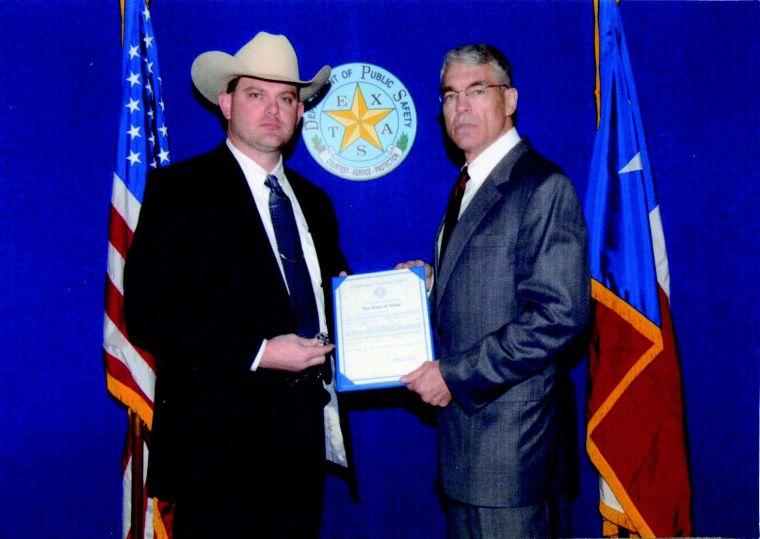
Chris Callaway (left) receiving his promotion to sergeant with the Texas Rangers in Austin in 2012.

Did you think sometimes that vetting process went too far? Did the screening by Rangers or DAs get in the way of legitimate complaints?

 Yes. I remember one case involving an official in a little bitty podunk town. We knew a guy was stealing money and drugs. He was depositing stolen money in his personal bank account, but I couldn’t investigate that guy because he was an elected official. I had to go through a bureaucratic process. The answer I got was no. So the bureaucratic process sometimes prevented investigations in cases involving public officials. 

What’s the role of a DA in screening public integrity investigations? 

Once we got the blessing from the chain of command, then often we had to get a letter from a DA saying that if the investigation produced evidence of a prosecutable criminal act, he or she would proceed. The way the rangers look at it, if the DA doesn’t want to prosecute, we’re not going to waste our time investigating. 

Isn’t that process backward? How do you know you’ll find a prosecutable offense if you can’t investigate?

That’s the part of the thing I struggled with. Because when we start looking at [a complaint] we don’t know what else we’re going to find.  

In the last five years, public integrity complaints made against legislators and statewide office holders all seem to have died quietly—with the exception of the long-running prosecution of Attorney General Ken Paxton in Collin County. Did you think more public integrity reports should be released?

 Yes. In high-profile cases, I think that all cases that are closed—even if no prosecution was ever done—the reports should be made public. You should be able to look at them. One prosecution [against Paxton] is ongoing, so that report should be withheld. But there have been other complaints made against him that were investigated, and those reports should be released.

  I did an investigation into a legislator involving a business transaction that occurred between him and a family friend.It involved air conditioners and a hunting trip. I can tell you that what he did may have been unprofessional or even immoral. But it wasn’t illegal. I came to believe that the complaint against him had been motivated by political disagreements over border security initiatives. I think that report should be released.

In some public integrity cases, DAs have said Texas ethics laws are too weak. For example, a Kaufman County prosecutor declined to proceed on a Ranger’s investigation of how Paxton accepted $100,000 from a businessman whose company was simultaneously being investigated by the AG for Medicaid fraud. Texas law against giving an illegal gift to a public official is only a misdemeanor and she said that law has loopholes.

Look at the state statues—the statutes for the majority of those kinds of offenses are misdemeanors. So, you’ve got a bunch of attorneys writing laws in Austin and attaching punishments to them, so that in the event one of them violates the law, it’s a misdemeanor and it doesn’t keep him or her from practicing law… you just don’t get much results.  

For example, you can violate the civil rights of a person in custody; that’s a Class A misdemeanor, as are other official oppression crimes. But if you falsify your school attendance records, that’s a third degree felony. What’s wrong with that picture?

If nothing changes in Kaufman County, that gift case will never be prosecuted and you’ll never even get to see the Ranger’s report.

Rangers are supposed to be investigating public integrity, public corruption, in-custody deaths, serial killers, cold cases, and conducting border security. Is it possible for the Rangers to carry out all of their missions with the number of officers they have?

It is completely impossible to carry those duties out effectively. One of my biggest regrets of my Ranger career is that my frustration and aggravation led to an alcohol addiction problem. That’s what started my descent into unemployment. The expectations placed on those guys and gals is just outrageous. It’s completely unsustainable for an extended period of time. How can you be a top-notch public integrity investigator or a top-notch murder investigator if you’re not allowed sufficient time to develop those skills?

Can you talk more about why you left DPS in 2020?

In law enforcement, there’s rampant alcohol and drug abuse, PTSD. It’s more widespread than anybody talks about. They don’t want those kinds of stories to be told. I went three times asking for help. I finally ended up in a treatment program specifically for first responders and veterans. It’s called the Warrior’s Heart. I talked about that publicly. After that, I got fired. I have a lawsuit in Hidalgo County court—a 2019 civil rights case that alleges that DPS  discriminated against me because I admitted to a disability. 

Can you get a copy of the report on the public integrity/internal affairs complaint that you made about your supervisor?

No. It’s not public. I made a public information act request and I was told by the AG that it’s not public because no disciplinary action was taken by DPS. 

This interview has been edited for length and clarity.

The post How Public Corruption Investigations Can Fail appeared first on The Texas Observer.
‘Trigger Warning: Time’

Everything happens in time
but Time still sometimes
wants a body

a stalk like an asparagus
a golden eye
that opens slow and misty

maybe a scar or two
to prove its memories

the mirror of a quiet pool
or nakedness before another

Time dreams a trunk
and leaves and branches 

reaches down beneath the dark
for some kind of hold 

Before this world started
Time drank heavily
of empty and of dark

It gladdened Time’s heart
when first it came upon
starshine on the waters

and found things watchful 
to observe its changes
and keep it company
until they had to go

Its favorite travel spot so far
is right here in the Holocene

It likes the insects
and going to the movies 

The bad news is
even Time feels
it’s moving faster now

What can be next

when the whole show
becomes a window
closing too fast
for Time’s taste 

The post ‘Trigger Warning: Time’ appeared first on The Texas Observer.

Promoting Equity

San Antonio has a history of electing young, fresh faces to city council—think Henry Cisneros and Julián Castro. In June, voters picked a 26-year-old math teacher named Jalen McKee-Rodriguez to represent the city’s historically Black East Side, making him not only one of the youngest politicians ever elected in the city, but also San Antonio’s first openly gay city council member.

With backing from the Democratic Socialists of America and the Texas Organizing Project, he also represents what some see as an emerging progressive block in San Antonio politics. The Observer spoke with McKee-Rodriguez about his election, discrimination he faced as a former city staffer, gentrification in his district, and other issues facing the city’s East Side.

Texas Observer: You’ve called Barack Obama’s election and Trayvon Martin’s killing eye-opening and defining moments for you growing up. How did those events influence you? 

When I was young, it was uncommon to see anyone who looked like me on TV or in politics and in major positions of power, even educators. I never had a teacher who looked like me. I was in eighth grade when Obama was elected, and I remember my mom crying. She was so excited that someone who looked like me, half-Black and half-white, could be president. The election was an early symbol of progress and hope for me. 

Fast-forward a few years: When Trayvon Martin was killed, I saw how someone just like me—we were the same age could be villainized and made to look threatening even though he was just a young boy. It felt like a back-to-reality sort of moment, like society was saying, “Yes, we’ll elect a Black man to office, but if you’re a regular, everyday Black person, this is what we’ll do to you.” 

You’re San Antonio’s first gay city council member and the first out Black man ever elected to public office in Texas. You’ve also been vocal about discrimination you faced working at city hall. What can be done to strengthen protections for LGBTQ people at the local level?

The chief of staff in the office where I worked was older, religious, and I would describe him as homophobic. He wasn’t comfortable with my hair or my clothes. He would say that my outfit wasn’t manly or that I wasn’t masculine enough.

If something like the discrimination and harassment that I faced can happen at city hall, then really who is our nondiscrimination ordinance protecting? I’ve been asking for an office of civil rights, with a legal team and a civil rights coordinator to investigate claims of discrimination within the city. Right now, San Antonio’s ordinance only applies to city employees. I believe I have the support in the community to expand the discrimination ordinance, but I think that other city council members are hesitant. And that’s a sad reality. Workers in Texas can still be fired for being gay. Educators in Texas can still be fired for being gay. Opposite-sex couples don’t get in trouble when they talk about their partners at work, but that still happens to same-sex couples in this state.

What have crises like the pandemic and winter freeze revealed about the needs in your district? 

In the beginning of the pandemic, people thought there could be lockdowns and started stockpiling food and resources, but on the East Side, we already have a food desert. On the North Side, where it’s predominantly white and middle-class, they have abundant resources. Often we have to leave the district or leave our side of town to have access to things that other people have in their neighborhoods. 

During one of my first city council meetings, we talked about the pain felt during the freeze. The pain was real for
my colleagues and their constituents on the North Side, but when you have communities that are already marginalized, where houses aren’t winterized or don’t have insulation, the pain is real but the impact is definitely not the same. 

In San Antonio, we use a lens of equity when we allocate city resources, specifically funding for infrastructure. I think we need to commit to that further and look into all departments, all city resources, all development plans that we’re promoting and incentivizing as a city and seriously ask ourselves: Is this promoting equity? We need policies that allow the East, West, and South sides to catch up to where everyone else is. 

San Antonio has been a poster child for police union protections that shield rogue cops, yet a recent ballot measure to limit the union’s negotiating power failed. What can be done now to increase police accountability and oversight? 

When you look at which sides of town supported that measure, the May election showed that communities like mine—the sides of town that are the most heavily policed—are also areas of town where people most want police reform and accountability. It’s frustrating because the city and police union are often fighting for reforms and solutions that are just Band-Aids. As we saw during this election, people who oppose reform will demonize it as defunding or abolishing police. When we want to allocate more money to domestic violence prevention or substance abuse counseling in order to get at root causes of crime, it’s turned into, “Oh, they’re trying to get rid of the police.” Sadly, I think we’ll see a lot of meaningless debate on that front. 

San Antonio’s East Side has been a flashpoint for gentrification in recent years as the city tried to spur downtown development. How do you limit predatory development? 

For the past several decades, city council members from all across San Antonio have been hand-picked by developers. Developers are really the major funding sources for campaigns here. There are usually dozens of developers contributing the max dollar amount, which can get someone through an entire campaign. That has made campaigns very lazy. They don’t reach out to the community. They don’t really solicit funds from other sources. It’s very much a pay-to-play situation. That’s led to luxury apartments being built next door to a house that should really only cost $70,000 or $80,000. Then more investors come in and flip the house for $400,000, or they get council to rezone the area even when the community doesn’t want it. 

I’m committed to working with everyone—developers, community members, all stakeholders—but developers are never going to be the priority for me. A lot of development that I’m now being briefed on, projects that my predecessors approved or encouraged, it’s just dropping luxury apartments in the middle of a community with high poverty that desperately needs more affordable housing. It’s very clear that my community is not the population these projects seek to benefit. I want whatever development keeps the community intact and benefits the residents who are already there, not development designed to draw people in from out of town or out of state for the purposes of a wealthier tax base.   

This interview has been edited for length and clarity.

The post Promoting Equity appeared first on The Texas Observer.