The preliminary investigation revealed that some sort of altercation occurred, and a shot was fired. The investigation also revealed the male subject had a history of domestic violence. Homicide detectives are investigating this incident and will be presenting the case to the Broward County State Attorney’s Office for review.
OAKLAND PARK, FL – A shooting at a home in Oakland Park on Monday morning left one man dead, and Broward Sheriff Homicide Unit detectives are investigating the circumstances of this domestic incident.
According to authorities, at approximately 11:16 a.m., on September 27, Broward County Regional Communications received a call regarding a shooting in the 4400 block of Northwest 19th Avenue in Oakland Park. Broward Sheriff’s Office Oakland Park district deputies and Oakland Park Fire Rescue responded.
Once at the scene, deputies located an adult male suffering from a gunshot wound to the head. Paramedics transported the man to Broward Health Medical Center where he died from his injuries. The female subject was also transported to a nearby hospital for medical evaluation.
The preliminary investigation revealed that some sort of altercation occurred, and a shot was fired. The investigation also revealed the male subject had a history of domestic violence. Homicide detectives are investigating this incident and will be presenting the case to the Broward County State Attorney’s Office for review.
Both names of the subjects involved were withheld. The adult female remains in custody.
Felicia Singh, a teacher who triumphed in the Democratic Party’s crowded primary in June, will square off with Queens Republican Party Chairwoman Joann Ariola on Nov. 2. The district includes parts of the Rockaway peninsula, Howard Beach, Belle Harbor, Woodhaven, and South Ozone Park.
Courtesy of the Ariola and Singh campaigns
Joann Ariola and Felicia Singh are competing to replace Eric Ulrich in the City Council.
The election for Queens Council District 32—which includes parts of the Rockaway peninsula, Howard Beach, Belle Harbor, Woodhaven and South Ozone Park—is, by many measures, one of the most contentious races on the November general election ballot.
On Nov. 2, voters there will likely elect Queens Republican Party Chairwoman Joann Ariola or Felicia Singh, a teacher who triumphed over five other Democrats in the party’s crowded primary in June. Kenichi Wilson, chair of Queens Community Board 9, is also running on the Community First line.
“It is historic: No matter what the outcome is in the 32nd, a woman will be going from the 32nd to City Hall,” Ariola, who is from Howard Beach, told City Limits.
District 32 is a critical, final stronghold for the Queens GOP: While Democrats have represented it in the Council before, it is the only district in the borough currently represented by a Republican, term-limited Councilmember Eric Ulrich. It’s also one of just three current Council districts citywide with a GOP rep, with the other two located on Staten Island.
Read more elections coverage here.
Available data suggest that the race could be close: The number of active Queens Republicans increased nearly 14 percent—from 122,888 to 139,699—between November 2016 and November 2020. The party’s growth in Queens outpaced that of the Queens Democrats, which increased their enrollment around 11 percent. Only Staten Island saw a greater increase in the number of Republicans enrolled during the four-year period.
And voting data from last year’s borough president election, which Ariola lost to former Councilmember Donovan Richards, show she performed well in the Assembly district that contains most of District 32, ultimately earning 43 percent of the vote to Richards’ roughly 46 percent share, the Queens Eagle reported in January. A considerable share of the district also supported former President Donald Trump, a Queens native, in the 2020 presidential election, according to an analysis of certified election results by the CUNY Graduate Center.
“I’m running in one of the most competitive general elections in the city,” Singh, who has netted endorsements from both the New York Working Families Party, the Sunrise Movement, and many labor unions, said in a recent interview. “In fact, it’s probably more competitive than the mayoral election.”
Still, Democrats still heavily outnumber Republicans in Queens, with 807,187 active members across the borough. And Singh, a lifelong resident of Ozone Park who would be the first South Asian representative in the Council, has pulled in more in contributions, campaign finance records show, with $74,965. Ariola has raised $43,231.
Several weeks ahead of the start of early voting, both candidates said they are focused on what is at stake: An ethnically and culturally diverse district, one uniquely vulnerable to the accelerating impacts of climate change. Affordable housing, education, infrastructure and resiliency are critical voter concerns, both agreed.
Fewer major felonies were reported in the community districts that compose District 32 compared with many other parts of the city, according to NYPD complaint data. Queens Community District 9, which includes Ozone Park, Richmond Hill, and Woodhaven, for example, ranked among the five community districts with the lowest number of reported crimes in 2019.
Still, in conversations she’s had throughout the district, Ariola said community members remain concerned about crime. “One of the other differences between my opponent and myself, is that I’m more community-based and motivated when choosing a position on a particular issue, where my opponent really kind of follows the leader on the movement.”
The growing South Asian and Indo-Caribbean population in the district has been largely excluded from local politics, Singh said, and has not benefited from the status quo.
“A lot of our community members have felt erased in the way that they’ve received services from the city,” she said. “The thing that I envision the most about winning this election and what I hope we’re able to give back to our community is centering equity and justice in District 32.”
The same week Ariola and Singh spoke to City Limits, the Republican candidate criticized Singh’s support of extending municipal voting privileges to lawful permanent residents who live in the city, calling Singh, who testified in support of the measure, a “radical.”
“Voting is a sacred right that must remain tied to citizenship,” Ariola said in a Sept. 21 press release. “This bill would chip away at the value of citizenship and the incentive for new Americans to make the commitment to become citizens. Not surprisingly, my radical opponent wants this and testified in favor of it in the Council hearing.”
“When you’re to the left of Bill de Blasio, then you know you’re a radical,” Ariola said, elaborating on the comment in an interview with City Limits.
“Despite Grillo’s alleged role in the insurrection,” the Daily News reported, “he still serves as the Queens Republican Party’s leader for the borough’s 24th Assembly District, according to its website.” Ariola told the paper she wasn’t the one who deleted the online images.
Singh called Ariola’s “radical” comments “ironic.”
“What’s heartbreaking about what my opponent said about non-citizens, and calling me a ‘radical,’ is that she goes to spaces where non-citizens celebrate, and pray, and live and have small businesses,” Singh said. “And she asks them for their vote. And that is heartbreaking to me, and actually disrespectful, because now she’s calling me a radical for wanting those same people to support her, to be able to participate in municipal elections. So it’s ironic and hypocritical.”
“I’m the first Guyanese and Punjabi person to win the Democratic primary for City Council,” Singh added. “Our communities have run before but we’ve never won a primary. This is a really huge race in so many ways.”
City Limits, a nonprofit news organization dedicated to investigative journalism that has informed and empowered New Yorkers for four and a half decades, invites the public to join us at our 45th anniversary celebration this fall.
The event, to take place with both in-person and virtual attendance options on November 18, will also mark the launch of the City Limits’ Hall of Fame, honoring four New York community leaders for their contributions to justice, media, housing, and economic development.
Our distinguished inductees are:
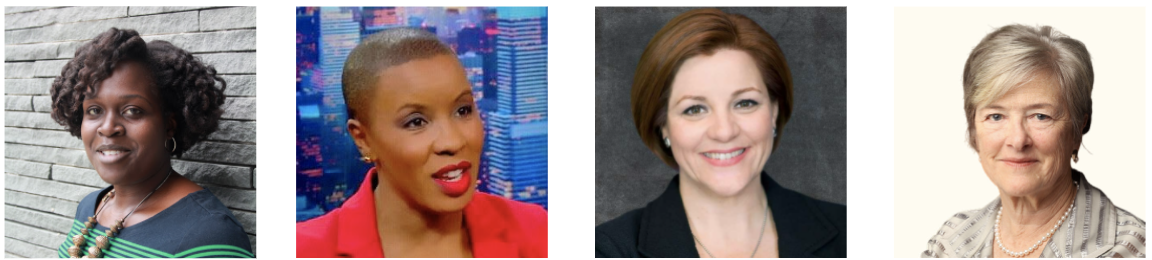
Afua Atta-Mensah, former executive director for the grassroots organizing group Community Voices Heard (CVH)
Jenna Flanagan, journalist and host of The WNET Group’s award-winning news program MetroFocus
Christine Quinn, president & CEO for family shelter and supportive housing provider Win
Kathryn Wylde, president & CEO for the business advocacy nonprofit Partnership for New York City
Previous City Limits honorees: Wayne Barrett, Preet Bharara, Adam Blumenthal, Richard Buery, Angela Fernandez, Laura Flanders, Henry Garrido, Elizabeth Cooke Levy, Gabe Pressman, Tom Robbins, and Sean Straub, are also members of the City Limits’ Hall of Fame.
“We are delighted to welcome our previous City Limits honorees into the City Limits’ Hall of Fame,” said Executive Director Marjorie W. Martay.
City Limits 45th Anniversary Celebration & Hall of Fame Inductionticket sales, donations and sponsorships will go directly to supporting the probing, in-depth journalism thatCity Limitsproduces each day. This year we are also raising funds to launch fellowships of $25,000 each, named in honor of two remarkable City Limits contributors:
The Jarrett Murphy Fellowship in Climate & Health Reporting will support a journalist’s work in those two important subject areas, named for City Limits’ longtime editor Jarrett Murphy, who led our newsroom for more than a decade.
The Mark Edmiston Fellowship in Media & Business Innovation willsupport an emerging business leader to focus on City Limits’s new product initiatives on strategic business development. It is named for media veteran Mark Edminston, longtime chair of City Limits’ Board of Trustees.
“For decades, City Limits’ reporters and editors have had the privilege of telling New Yorkers’ stories, examining our city’s policies and holding our local leaders accountable,” said Executive Editor Jeanmarie Evelly. “Your support is essential to our future, and to ensure we can keep doing that important work.”
Founded in 1976 in the midst of New York’s fiscal crisis, City Limits exists to inform democracy and empower citizens to create a more just city. What began 45 years ago as a newsletter for housing organizers has grown into an award-winning newsroom with a full-time staff of eight.
In addition to in-depth coverage of housing, homelessness, climate resiliency, aging, government policy, and more. City Limits runs a journalism training program for high school students, operates the Voices of New York project, as well as Una Ciudad Sin Límites, a Spanish-language reporting initiative.
As a non-profit, City Limits relies on foundation support, sponsorships, advertising, and donations. We must meet our $300,000 fundraising goal with this celebration in order to continue serving New York City for the next 45 years and beyond.
For more information about the anniversary celebration, please contact Greis Torres at Greis@citylimits.org.
Jamaica Bay is a critical habitat for birds, supporting some 325 species.
Caroll Forbes has spent much of her life swimming and fishing in Jamaica Bay. Up until the pandemic, she made weekly visits to the nearby beaches she’s been familiar with since childhood. And for more than 40 years, she’s plucked flounder and fluke from the bay alongside her children and grandchildren.
But she’s yet to extend her tradition of teaching fishing to her great-grandchildren because in recent years, she’s become concerned about the level of pollutants in the waterways near her Queens home.
Her distress over the current state of the bay motivated Forbes to join a lawsuit, filed by New York Lawyers for the Public Interest and the Super Law Group on behalf of residents and the NJ/NY Baykeeper and the Riverkeeper—environmental groups focused on restoration and stewardship of waterways in the New York City area—taking aim at multiple waste-transfer facilities in Queens, alleging the companies are polluting Jamaica Bay in violation of the federal Clean Water Act.
The Baykeeper, Riverkeeper, Forbes and another Queens resident, Crystal Ervin, filed a 60-page complaint last week in the U.S. Eastern District of New York Court claiming that American Recycling, Inc. and Royal Waste Services, Inc., along with its subsidiaries, are allowing “stormwater associated with industrial activities” and polluted wastewater, including water that has come into contact with garbage—called leachate—to enter the Jamaica Bay via public storm drains.
“Stormwater runoff is one of the most significant sources of water pollution in the nation—comparable to, if not greater than, contamination from industrial and sewage sources,” the complaint says.
Jamaica Bay is one of the Northeast’s most biodiverse regions, with more than 325 bird species, 100 fish species as well as butterflies, reptiles and small mammals, according to Brooklyn College’s Science and Resilience Institute. Its ecosystem is also in danger, due in part to pollution and the city’s sewage treatment plants, which lead to the release of nitrogen into the bay, which can be damaging to its marshlands and increase algae blooms.
The two waste transfer facilities identified in the lawsuit are located on Douglas Avenue, in a residential area of Queens, adjacent to Detective Keith L. Williams Park and just blocks away from Forbes’ and Ervin’s homes.
Douglas is an unpaved dirt road that allows for large pockets of puddles to accumulate near the sites, which process large amounts of garbage and recycling that are carried in and out of the facility by trucks. Dirt and gravel roads are a major source of pollutants, including dust and sediment, entering streams, according to the Environmental Protection Agency.
Dominic Susino, the chief financial officer of American Recycling, said in July that he and the neighboring company have offered to pay to pave Douglas Avenue but that the Department of Transportation does not allow private companies to pave city roads.
When asked about the status of paving the road in July, a DOT spokesperson said that the agency “is currently evaluating the roadway reconstruction needs of this area, as conditions cannot be remedied by simple resurfacing.” The spokesperson added that the Department of Environmental Protection had recently improved the infrastructure of drainage and made sanitary sewer repairs there.
The Clean Water Act stipulates that when certain types of industrial companies have stormwater runoff from their facilities, they must obtain permits from the Environmental Protection Agency showing that they are preventing it from polluting waterways.
“Rain’s going to happen, storms are going to happen and some water is going to be discharged,” said Doug McKenna, the regional chief of the EPA’s water compliance branch. The permit governs how the companies “to the best extent possible prevent stormwater from carrying pollutants from their facility to waterways in the United States,” he added.
The complaint alleges that the companies do not have such permits. The EPA did not immediately respond to questions of whether the companies have the permits named in the complaint, but McKenna confirmed that waste transfer facilities would fall under the category of a company that would require such permits. A search for the companies on the EPA’s permit search function returned no results.
Mike Dulong, an attorney with Riverkeeper, said that although he cannot comment on this specific case, for cases like these, the end goal is for the court to implore those companies to stop polluting via hefty penalties and to address past contamination, through, for instance, an environmental benefit payment toward a local group.
Susino, of American Recycling, said he cannot comment in detail on the lawsuit, but offered the following statement: “The attorneys are only beginning to look through and evaluate the case that was filed. American Recycling has always sought to maintain the highest quality environmental compliance and operational efficiency to serve the needs of Queens businesses and its residential communities.”
The owners of Regal Recycling and its subsidiaries did not respond to a request for comment.
Liz Donovan
American Recycling in Jamaica, Queens, is one of the facilities named in the lawsuit.
A spokesperson for the state’s Department of Environmental Conservation, which oversees the state’s Environmental Conservation Law, confirmed in July that both companies have valid and current permits to operate as solid waste management transfer facilities and as construction and demolition debris handling and recovery facilities. Both companies have previously been subject of enforcement actions but are currently in compliance with DEC regulations, the spokesperson said.
Earlier this summer, the companies were embroiled in a controversial legislative battle during which City Councilmember I. Daneek Miller attempted to pass a bill that critics say would effectively roll back the city’s long-fought Waste Equity Law. The law, which passed in 2018 following nearly 10 years of advocacy, reduced the capacity of waste that such companies could accept unless they agreed to export a majority of the waste by rail. The companies had a plan in place to do that, Susino said, but ran out of time to begin the several-year-long project before the law became effective.
Miller’s sponsored bill, Intro. 2349, would allow the two companies named in the suit, which are adjacent to a Long Island Rail Road line, to reinstate their original capacity if they agreed to make the switch to rail exporting within four years. The bill was scheduled for a committee vote in July but was abruptly canceled minutes before the meeting due to a dispute over wording, council staffers told City Limits. Miller’s office did not have an update on the status of the legislation as of last week.
Susino said in July that American Recycling is eager to make the switch to rail transport but would need to be functioning at full capacity to be able to finance the project. As it stands, the building is outdated and not fully enclosed, resulting in dust, putrid odors and noise from trucks that the plaintiffs in the complaint allege create a nuisance that interferes with their ability to use and enjoy their own property.
“Longtime residents of the neighborhood have had to take numerous steps to try and adjust to the many impacts of the Facilities,” the complaint says. “For example, they dare not open their windows, and end up having to pay for extra air conditioners and purifiers during the summer months; they decide against taking their grandchildren to the nearby, otherwise-enjoyable park; they decide against waiting for the bus at the closer yet nausea-inducing smelly bus stop and either walk further to another transportation option, or are required to pay for cars; they no longer host events or guests in their outdoor spaces.”
Susino said in July that the company’s plans to switch to rail transport would also involve funding a full renovation of their facility, which he said would resolve the issues neighbors have complained about. The state-of-the-art building would feature rooftop solar panels, an education room to teach local children about recycling and a more aesthetically pleasing enclosed exterior that would prevent odor and dust from blanketing the neighborhood.
Without approval on restoring their capacity of the waste they can accept, the company cannot afford to do the renovation, he said previously.
But neighbors are looking for relief in the meantime.
“The smell is very, very bad,” lawsuit plaintiff Caroll Forbes told City Limits. “It smells like spoiled food all the time or a dead person, and it’s constant. It’s like you can’t get a break. I can never open the front windows.”
Elizabeth McDonough, la parlamentarian, escribió en su fallo que este caso “supera sustancialmente el impacto presupuestario”. Entonces ¿qué opciones quedan para presionar por una reforma que abra el camino para la ciudadanía a millones de indocumentados?
Adi Talwar
El 17 de septiembre, la parlamentaria Elizabeth McDonough, encargada de determinar si la legalización de millones de inmigrantes indocumentados podía incluirse en el paquete presupuestario del Congreso, dijo que el plan no cumplía los requisitos del proceso de conciliación presupuestaria.
En este caso, tuvo que analizar y luego dictaminar sobre cuestiones de procedimiento, es decir, establecer lo que está permitido incluir en el proceso de reconciliación presupuestaria y si la propuesta tenía un efecto presupuestario. McDonough escribió en su fallo que este caso “excede sustancialmente el impacto presupuestario”.
“La cuestión que tenemos ante nosotros es si una serie de enmiendas propuestas a la Ley de Inmigración y Nacionalidad (INA) que eliminan las barreras existentes para el ajuste del estatus de residente permanente legal (LPR) para una variedad de clases existentes y recién creadas de inmigrantes y no inmigrantes, incluyendo muchos que no están legalmente presentes en los Estados Unidos, es un cambio de política que supera sustancialmente el impacto presupuestario de ese cambio”, dijo McDonough sobre su fallo.
“La propuesta actual renunciaría a las secciones pertinentes de la INA, y crearía una nueva clase de extranjeros elegibles para el ajuste de estatus, incluyendo una categoría completamente nueva de individuos llamados ‘trabajadores esenciales de infraestructura crítica’”, añadió.
Ambos partidos han aprovechado su pronunciamiento para eludir el habitual umbral de 60 votos. Los demócratas insisten en que intentarán otras propuestas, aún no anunciadas, para impulsar las políticas de inmigración.
Para conocer más detalles sobre el pronunciamiento, las marchas que generó impulsadas por grupos de defensa de inmigrantes y las opciones tras la decisión invitamos a Pablo Manríquez, corresponsal del Congreso para el medio Latino Rebels.
Ciudad Sin Límites, el proyecto en español de City Limits, y El Diario de Nueva York se han unido para crear el podcast “El Diario Sin Límites” para hablar sobre latinos y política. Para no perderse ningún episodio de nuestro podcast “El Diario Sin Límites” síguenos en Spotify, Soundcloud, Apple Podcast y Stitcher. Todos los episodios están allí. !Suscríbete!