Black History Month started on Tuesday, and there has been a lot of appropriate focus on the work and contributions of countless Black leaders, communities, and people thus far. We haven’t yet shared anything to honor or celebrate the month, and there’s a reason for that.
We seek to genuinely and authentically honor, celebrate, and support the work and leadership of Black members of our communities—not just during Black History Month, but all year.
We acknowledge that many historical and present engagements with Black colleagues and community members around the time of, and during, Black History Month have caused harm and perpetuated patterns of tokenism and performative allyship (statements to profess support, though lacking in substantive action or accountability—for example, appearing to honor and celebrate the work of Black leaders and people, but just during Black History Month and without equitable actions and support year-round). We aim to disrupt those patterns and commit ourselves to actions rooted in authenticity and accountability.
It is from this place of acknowledgement and aspiration to do better that, starting several weeks ago—which should have been months ago—we engaged in conversations within our Marketing and Communications team, and with Black colleagues who expressed interest, to identify ideas, opportunities, and shape paths forward for how we honor and celebrate Black History Month now and into the future.
With input, we’ve identified Black-led organizations, collectives, and efforts that we believe are doing important and impactful work, with an emphasis on those doing work in the environmental, conservation, and climate spheres within the state of Washington.
We are reaching out to a number of those organizations, collectives, and people with the goal of understanding if and how we can support them and their work, and, through our platforms, how we can ultimately spread word and support for the incredible amount of great work being done in our communities by Black leaders and community members.
This is not a short-term play or disingenuous attempt to wave our own flag during Black History Month. We hope it is the beginning of sustained and reciprocal relationships.
Stay tuned for more from us and others in this space, this month and beyond.
Banner image: Sunrise view of Mt. Rainier at Reflection Lake by Nina Ritchie/TNC Photo Contest 2021
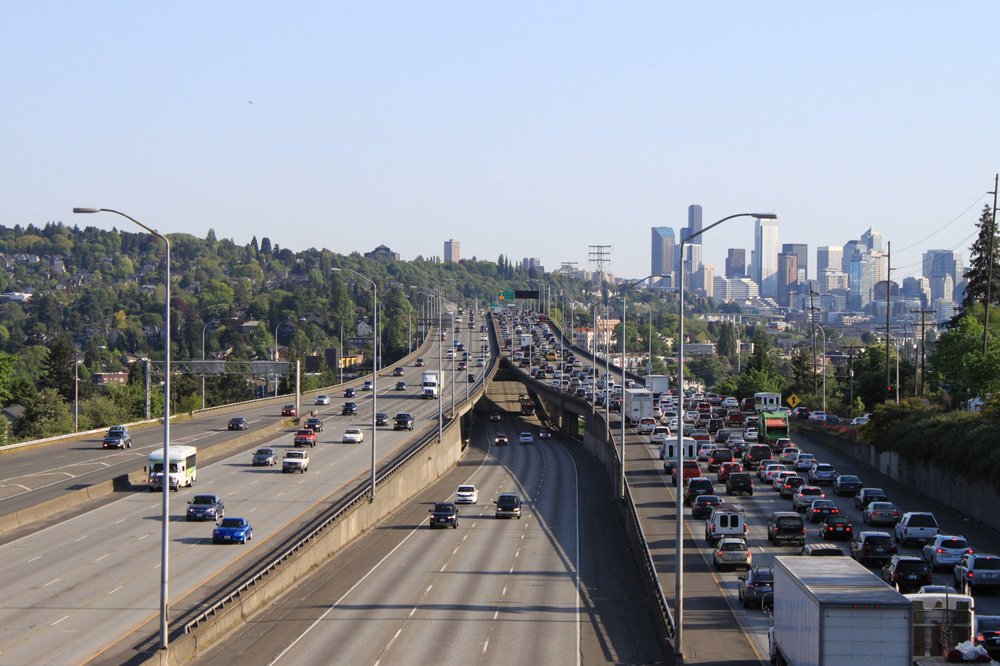
Transportation emissions are the largest producer of greenhouse gases in Washington state. In order to achieve the state’s climate goals — net zero by 2050 — we must make immediate and bold investments to reduce and decarbonize emissions in this sector. This year, the state Legislature has a unique opportunity to pass a transportation package that supports investments for sustainable and climate-focused transportation systems.
Supported by the passage of the Federal Infrastructure Investment and Jobs Act—a bipartisan achievement full of robust funding for public transit, clean energy, natural infrastructure and habitat restoration—as well as Washington’s Climate Commitment Act, which provides $5.2 billion to decarbonize emissions, the state Legislature is primed to pass a transportation package that invests in Washington residents and their future.
Invest in equity and mobility: equitable transportation includes accessible sidewalks for folks who use wheelchairs and strollers, and access and infrastructure for all communities, not just those who have cars
Prioritize maintenance and preservation of existing infrastructure
Address transportation stormwater runoff with green infrastructure solutions
Meet tribal treaty obligations by addressing salmon habitat-blocking culverts
Reduce greenhouse-gas pollution from the transportation sector
A transportation package would reduce overall vehicle miles traveled by making significant investments in sustainable and equity-based solutions like public transit, bike and pedestrian infrastructure while also driving an acceleration of electrification efforts, especially for state fleets such as ferries.
By prioritizing multi-modal transportation and strong decarbonization efforts, the state can ensure sufficient funding goes toward reducing emissions, an essential step toward meeting Washington’s climate goals.
Support for innovative water solutions
As part of the overall investment in Washington’s transportation network’s health and meeting tribal treaty obligations, a robust climate-forward transportation package would also prioritize watershed health. This means including funding for stormwater retrofitting and fish passage barrier removal as part of ongoing water quality and salmon recovery efforts.
Combating toxic pollutants
Roads and highways are the main source of stormwater runoff, the leading contributor of pollution in the Puget Sound Region’s waterways, which in turn harms wildlife and human health. The Nature Conservancy’s new stormwater heatmaptool outlines the disproportionate impact of this runoff on communities of color and provides a blueprint for targeting this pollution through investments in retrofitting. An example of the impact of these efforts is the Aurora Bridge Bioswale project, completed in 2021, which now filters 2 million gallons of stormwater annually, cleaning out pollutants before they reach the Lake Washington Ship Canal and serving as a model for additional projects across the state. Learn more in our latest video:
Stepping up for salmon
There’s no denying the connection between the fate of salmon and the sustainability of Washington’s transportation system. Salmon are central to the health of our region’s ecosystem and its people, and we have both a legal and moral imperative to invest in their recovery. Thanks to the efforts of U.S. Sen. Maria Cantwell and U.S. Rep. Derek Kilmer, the Infrastructure Investments and Jobs Act also included $1 billion for the National Culvert Removal, Replacement and Restoration Grant Program, which will help transportation agencies fix fish passage barriers that impact salmon.
A clean and just transportation package is a critical part of an equitable and sustainable future for Washington, helping us meet emissions-reduction goals and ensure a healthy environment for all.
Seven years ago, I was sitting with a friend having a cup of tea on a drizzly Pacific Northwest day at Batdorf and Bronson Coffee Roasters. Our conversation drifted like the rain outside, but one moment crystalized in my head. We both wondered could we ever recover salmon and create more resilient rivers and estuaries?Do we do more of the same or did we need a new approach to this daunting challenge? She offered; You should check out Floodplains by Design, it is this new program where local communities are trying this experiment — something called integrated floodplain management (IFM). I was intrigued.
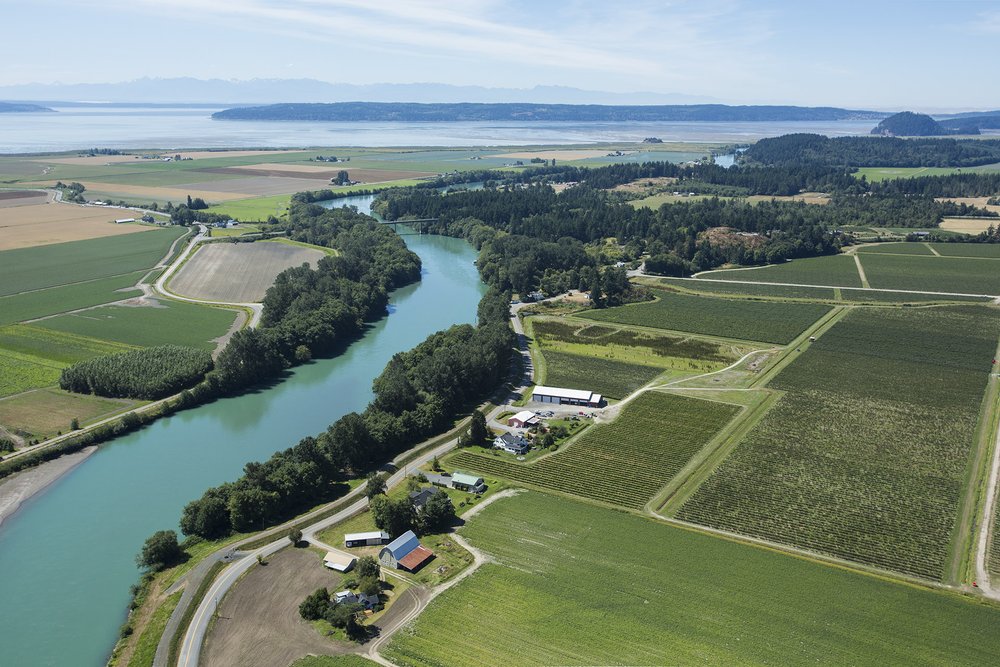
Aerial view of the Skagit River Delta. Photo by Marlin Greene/One Earth Images
Flash forward seven years later. There are so many examples of what integrated floodplain management looks like across the state. Local floodplain practitioners and leaders have found a new norm on how to manage floodplains that reaches across disciplines and backgrounds, digs deep to find locally driven solutions, doesn’t shy away from those difficult conversations and most of all gets work done on the ground. Levees are set back, new side channels are created, communities are more protected from flooding and agricultural land is protected — to name a few examples. It takes a village to do this work.
Now, we have a snapshot of this IFM work, thanks to the Puget Sound Institute, which just completed a “Synthesis of Integrated Floodplain Management in Selected Puget Sound River Deltas.” The synthesis highlights IFM groups in the Nooksack, Samish, Skagit, Stillaguamish, Snoqualmie, and Snohomish river basins in the Puget Sound Region. These basins were selected based on their large area of historic contiguous habitat and their significance to local salmon recovery efforts. Moreover, additional examples include: Floodplains for the Future, operating in the Puyallup River watershed, and the Yakima River Basin Integrated Plan, operating in the Yakima River Basin.
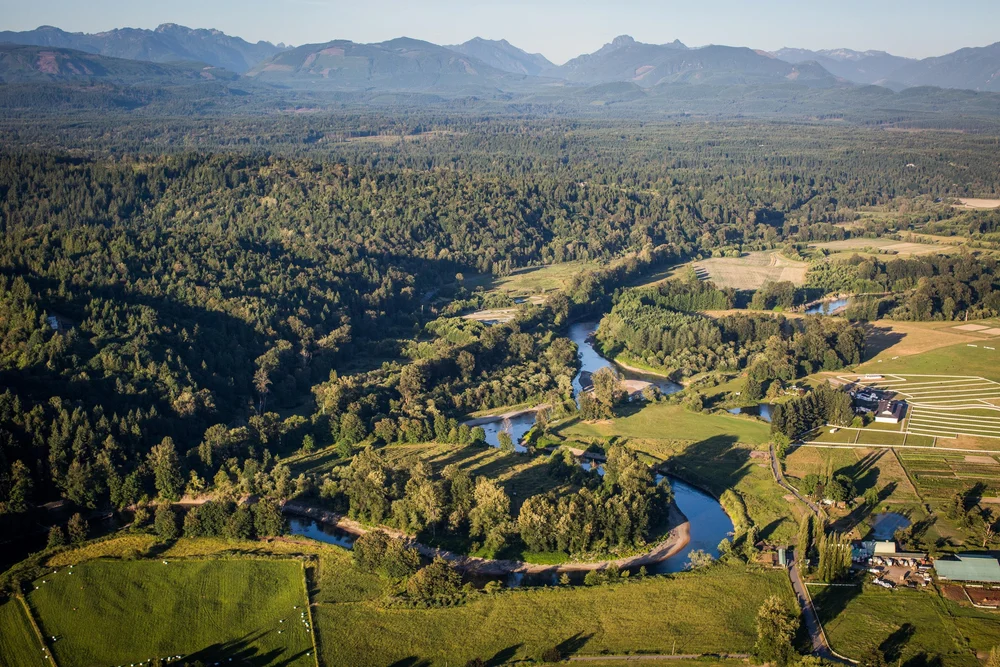
Over the Snohomish River basin, looking up the Snoqualmie River. Photo by Paul Joseph Brown/LightHawk.
One of the purposes of this synthesis is to serve as a resource for IFM practitioners in the Puget Sound Region, to support broader awareness and insights into approaches, accomplishments and challenges. The synthesis will also serve to support the Habitat Strategic Initiative Lead with adaptive management of the Floodplains and Estuaries Implementation Strategy.
Seven years later, and over $200 million dollars spent in Floodplains by Design alone, we are seeing a new level of resilience, creativity and impact in our floodplains across the state. That isn’t to say we are done. We have more to go for sure. But this synthesis is a beautiful snapshot in time to see how far we’ve come, the work we have ahead and what we can all learn from each other along the way.
Is it just us, or did time fly? While we ended 2021 positively with Trudeau’s historic mandate letters, 2022 will be a year for follow-through. With further pending commitments on an international scale, this year is gearing up to be a pivotal year for climate and biodiversity action.
Over the last twelve months, you supported Nature Canada campaigns by sending thousands of letters to decision-makers. As 2022 progresses, we look forward to investments in conversation and restoration, commitments to environmental justice, and more.
Are you feeling a little lost about what environmental action looks like across the world? Here are five areas the global community can look forward to in 2022 as we progress into a more sustainable future:
1. Investments in Conservation and Restoration
Climate change is irreversible, but there’s still time to avoid catastrophe and protect wildlife and human life. Through the conservation and protection of biodiversity, we can prevent the worst from happening. But for mitigation to succeed, we need to stop degrading ecosystems and restore depleted landscapes.
According to National Geographic, over 75% of the Earth’s land areas are degraded. These areas have either become deserts, suffer extreme pollution or have been deforested and converted to agricultural production, contributing to biodiversity loss and mass species extinction.
Canadians are lucky to have a wealth of intact ecosystems, including oceans, grasslands, peatlands and our vast boreal forest—which stores 186 billion tonnes of carbon (equivalent to 27 years of the world’s CO2 fossil fuel emissions). But we must protect these places for the sake of future generations.
So far, Canada and tens of other allied countries have committed to protecting 30 percent of our lands and ocean by 2030 to halt and reverse biodiversity loss. For Canadians, our government has promised:
The establishment of new land and marine protected areas, including Indigenous Protected and Conserved Areas
Creating at least one new urban park in every province and territory, with 15 new urban parks being created by 2030
New investments to support community-led public greenspace projects with municipalities, Indigenous communities, and nonprofits
In 2022, Nature Canada will continue to work towards the creation of more protected areas and ensure our government follows through on its 30×30 promises. As the effects of climate change and species extinction continue to affect Canadian landscapes, we cannot afford to wait.
Let decision-makers know climate change and biodiversity loss are important to you, send the letter now!
2. Environmental Justice
Climate change worsens existing inequalities in society that are often shaped by systemic racism. In Canada alone, the places most impacted by the climate crisis are Indigenous lands and minority communities. Across the world, developing countries–the least responsible for global warming–are facing the harshest consequences.
Over a decade ago, developed nations promised to channel USD 100 billion a year to less wealthy nations by 2020 to help tackle their limited capacity to prevent and cope with the consequences of the climate and biodiversity crisis.
But the promise was broken. In 2020, a report for the United Nations revealed that the $100 billion target was out of reach. “We are not there yet”, said UN secretary-general António Guterres. The promise was renewed at the COP26 climate change conference in Glasgow, with forecasts projecting we will get very close to the target this year and achieved by 2023.
In Canada, Prime Minister Trudeau released the following mandates to tackle climate injustice fueled by racial discrimination:
Recognizing the “right to a healthy environment” in Canadian law and prioritizing the clean-up of contaminated sites in areas where Indigenous Peoples, racialized and low-income Canadians live
Developing an environmental justice strategy and looking at the link between socio-economic status and exposure to environmental hazards and risks
Nature Canada is also working to ensure Indigenous and minority voices are included in the conversation. In 2021, we launched the Work to Grow program to make room for BIPOC youth in the environmental space and supported the creation of an Indigenous Protected and Conserved Area (IPCA) in the community of Île-à-la-Crosse.
Environmental action is being increasingly incorporated into policy and planning across the globe, and we’re doing our part to make a difference. The world could afford to be more ambitious about climate change, and 2022 will be a pivotal year for these changes.
3. The Ocean
In July 2021, we all watched in horror as the ocean surface in the Gulf of Mexico went up in flames. The issue not only sparked fury but also brought awareness to the importance of our ocean and what it truly does for the environment.
The ocean produces over half of the world’s oxygen and absorbs 50 times more CO2 than our atmosphere. Despite its importance, our ocean is warming with catastrophic results.
Over the last decade, scientists have witnessed dozens of marine heatwaves—warm spells in surface oceanic waters that last at least five days and reach temperatures well above the normal range. Exacerbated by climate change, marine heatwaves are now more severe and have doubled in frequency. The phenomenon is devastating food chains across the globe, impacting fisheries, aquaculture and biodiversity.
Late last year, the Government of Canada recommitted to its targets to protect 25 percent of oceans by 2025 and 30 percent by 2030. In 2022, decision-makers are also due to work with Indigenous partners to integrate traditional knowledge into planning and policy decisions. All great news for ocean conservation.
Nature Canada has been working towards ensuring the government meets its commitments to protect our ocean. Join us! Become an Ocean Defender.
4. Nature Can Help us Stay Below 1.5°c
You’ve heard it over and over: we must limit global warming to 1.5°C. Anything above risks unleashing far more severe climate change effects on our communities and wildlife.
But the UN’s Emissions Gap Report of 2021 shows that current commitments put the world on track for a global temperature rise of 2.7°C by the end of the century. Well above the 1.5°C goal. To prevent the worst impacts of climate change, the world needs to halve annual greenhouse gas emissions within the next eight years.
In October 2021, Nature Canada and partners released a report titled Missing the Forest. The document dived deep into Canada’s under-reporting of emissions from the forest sector—which totalled more than 80 million tonnes per year, an amount greater than 10 percent of our total annual reported greenhouse gas emissions.
Part of the report spoke about the importance of preserving primary or old-growth forests due to their irreplaceable value for biodiversity. In what seemed like a direct response, Trudeau’s mandate letters mentioned protecting old-growth forests as a goal for the term after re-election. Canada is one of over 120 countries committed to reaching net-zero emissions by 2050, but only time will tell if these ambitious commitments will be brought to fruition.
World leaders are due to return for the next round of climate talks this November in Sharm el-Sheikh, Egypt, with stronger commitments to put the world back on track to 1.5°C.
5. Loss and Damage Fund
Although natural climate solutions could help reduce Canada’s greenhouse gas emissions by as much as 78mt a year by 2030, the longer we take to protect, restore, and improve management of our landscapes, the more losses and damages our communities will suffer.
As the costs of recovering from climate change rise, the Loss and Damage Fund was a critical topic of discussion at COP26 in Glasgow. The concept consists of a “you broke it, you fix it” philosophy—whichever country is responsible for endangering or polluting a landscape, should be held responsible for reparations.
“We will never accept that anthropogenic climate change — which we did not cause — be the basis for a loss of our sovereignty, our sovereign rights, or our maritime boundaries,” a statement from the Marshall Islands reads.
The Loss and Damage fund is expected to be a topic of conversation during this year’s climate meeting in Egypt. Meanwhile, with mitigation in mind, Canada has taken initiative domestically by setting goals to implement a Natural Climate Solutions Fund and deliver on the plan to plant two billion trees across the country over ten years.
As the year progresses, 2022 will be a turning point for climate and biodiversity action. Especially in Canada, with Trudeau’s environmental goals looming over the shoulders of our elected representatives.
Now more than ever, it’s increasingly imperative that we make our voices heard. Meeting our 30×30 goal will be next to impossible without follow-through on environmental promises–including changes to policy and planning.
Nature Canada will continue its work to ensure accountability while standing up for environmental justice and supporting the creation of protected areas across the country.
Will you join us?Subscribe for updates to be the first to know about our ongoing campaigns and upcoming petitions.
As the Canadian ecologist Suzanne Simard discovered, the trees of a forest “speak” to each other under the earth, sharing nutrients through the fungal colonies that inhabit their root systems. The geobiologist Hope Jahren called this process “soil talking.”
Similarly, local nature groups depend on a larger community for the life-sustaining flow of knowledge and support. That’s where Nature Canada comes in. We’ve been “soil-talking” for 80 years.
In an earlier incarnation, we were a federation—a national representative of local nature groups. Over the years, we’ve become less of a federation and more of our own entity. But our network of local groups, the Nature Network, remains one of our greatest strengths. We currently have over 1000 groups in our Nature Network database.
Who are our partners?
They are the members of Bird-Safe Guelph, who work with us on our Bird-Friendly City program and who are helping local birds “survive and thrive.” They are the planters and tenders of Saskatoon’s SOS Trees Coalition, who have been protecting and fostering urban forests since 1992. They are the citizens of Climate Network Lanark, who are bringing climate change action down to the people’s scale by implementing local climate initiatives.
And they are the Indigenous groups and communities—the Cree of Eeyou Istchee on James Bay, for example, who are working to protect the bird and wildlife habitat of their homeland; and the Métis of Île-à-la-Crosse, Saskatchewan, who are leading the effort to create Sakitawak IPCA (Indigenous Protected and Conserved Area).
In sum, they are birders, botanists, hikers, canoeists, trail associations, wildlife centres, land trusts, naturalist groups, friends of local parks and all-around patriots of the living world. They are not just protecting landscapes and waterscapes; they are preserving ways of life.
That’s why, in 2021, we supported our partners to the tune of over $1.1 million. In addition to providing funding, we have convened regular working groups and communities of practice, and offered tools and services to help groups with their own engagement work.
And, as we help local groups realize their potential, they help us realize ours.
Nature Canada conducts national campaigns on important themes ranging from expanding protected areas to promoting nature-based climate solutions. For each of our national campaigns, we rally local groups whose interests dovetail with the focus of the campaign. For example, over 400 of our partners have contributed in some way to our protected areas advocacy.
Despite our success in engaging hundreds of nature groups, we’re very keen on growing the network—which is why we’re conducting surveys with those groups we’d love to know better.
Like a tree’s root system, our Nature Network is a living lattice, a community of the earth (and forthe Earth). Within this community, individual groups not only grow stronger; they can work together to bring about large-scale change.