Asian states are on course to double their spending on food by 2030 to some $8 trillion, with over $1.5 trillion of investment needed to keep up with the demand, a new report finds.
According to joint findings of investment firms PwC, Rabobank and Temasek, much of the spending increase will come from the fast population growth in the region, expected to reach 4.5 billion people by 2030.
Changing consumer habits is another factor contributing to increased demand, with people in the region increasingly turning toward healthy food.
“Folks want healthier food, they want safer food, they want to buy online, they want food that is sustainable,” Anuj Maheshwari, managing director of agribusiness at Temasek, told CNBC.
All this will inevitably lead to Asia becoming the world’s largest food and beverage market in less than a decade, the report states.
According to the findings, India and Southeast Asia will boost spending the most, however, China will retain its position as the largest market overall.
The report states that some $1.55 trillion of investment will be required across the entire Asian food chain to meet the growing demand, which could be a great commercial opportunity for investors.
The report urged producers and investors to shift their focus to six “critical trends,” including healthy diets, fresh produce, safe sources, sustainable consumption, alternative proteins and online purchasing.
“These trends (are) what agribusinesses need to focus on and make sure consumers can get this kind of food in addition to the volume that we need in places like Asia,” Maheshwari summed up.
British transport minister Grant Shapps has urged Britons to behave normally and stop making a fuss over fuel by queuing at filling stations and buying up petrol.
“There’s plenty of fuel, there’s no shortage of the fuel within the country,” the minister said, as quoted by Sky News
“So the most important thing is actually that people carry on as they normally would and fill up their cars when they normally would, then you won’t have queues and you won’t have shortages at the pump either,” he added.
Shapps also said that the country’s authorities were stepping in to ease the shortage of haulage drivers bringing fuel to petrol stations.
The government announced plans to issue 5,000 three-month visas for drivers of fuel tankers and food lorries, and 5,500 for poultry workers amid a severe labour crisis that has caused difficulties for several sectors, from supermarkets to fast-food chains in recent months.
Earlier this week, Shapps blamed the fuel issues on logistics problems, saying that the country has been plagued by the lack of lorry drivers, while UK refineries had “plenty of petrol” stockpiled. He also suggested that London might bring in the army to distribute fuel and other goods.
The fuel supply issues come amid a deepening gas crunch experienced by the UK over the past few weeks with skyrocketing prices already pushing a lot of smaller energy enterprises out of business.
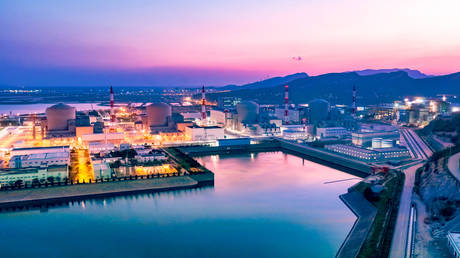
The number of nuclear power units in Russia will be increased at most of the country’s operational nuclear power plants, according to Director General of the State Atomic Energy Corporation Rosatom, Aleksey Likhachev.
“We will be gradually decommissioning Soviet units built in the 1970s. They will be replaced with about 15 units by 2035,” Likhachev, who’s heading the Russian delegation at the 65th IAEA General Conference in Vienna, Austria told reporters.“Our task is to build them on the existing sites, to expand the existing plants with new units. All of them will be generations 3+, with a capacity of 1,200 MW,” he said.
Rosatom’s chief also talked about low-power nuclear power plants: “A relevant decision has been made, and we switched to its practical implementation, namely the construction of a flotilla of small nuclear power plants based on RITM reactors that will be used in the development of the Baimskoye ore deposit, as well as the land-based version of the RITM-200 for the Kyuchus gold deposit in Yakutia. That means that we have already started implementing low-capacity projects both in Chukotka and Yakutia.”
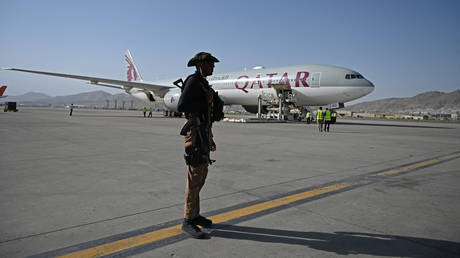
The Taliban government in Afghanistan has appealed for international flights to be restored, claiming that all the problems at the Kabul airport have been resolved while promising full cooperation with airlines.
According to the Foreign Affairs Ministry, the new administration has stepped up efforts to open up the country and gain international acceptance. The airport, which was damaged during the chaotic evacuation of tens of thousands of foreigners and Afghans that followed the Taliban’s seizure of the capital, has since been reopened with the assistance of technical teams from Qatar and Turkey.
Foreign Ministry spokesman Abdul Qahar Balkhi said the suspension of international flights has left many Afghans stranded abroad and also prevented people from traveling for work or study.
“As the problems at Kabul International Airport have been resolved and the airport is fully operational for domestic and international flights, the IEA [Islamic Emirate of Afghanistan] assures all airlines of its full cooperation,” he said, as quoted by Reuters.
A limited number of aid and passenger flights, including from Pakistan International Airlines, have been operating from Afghanistan’s airport. However, regular commercial services have been halted.
Crude prices extended gains on Monday, rallying to their highest levels since 2018 as global refineries fail to keep up with fuel demand that is projected to reach pre-pandemic levels by early next year.
Brent futures for November delivery grew 1.23% to more than $79 a barrel, the highest price since October 2018, while US crude benchmark West Texas Intermediate surged 1.28% to nearly $75 a barrel after a run of five consecutive weekly gains.
The rally is being attributed to the swift recovery of demand across the world as economies open up with the easing of pandemic restrictions. At the same time, a natural gas rally is expected to further push demand for oil higher as users switch fuels. However, global oil refining capacity is inevitably weighing on the supply-demand balance.
One reason markets are tightening is because the Organization of Petroleum Exporting Countries (OPEC) and allied producers including Russia have been easing the agreed production limits, but not enough to meet global demand. Another is the extreme weather conditions impacting US crude output.
Oil “continues to be supported by broader concerns over tightness in energy markets,” Warren Patterson, head of commodities strategy at ING Group NV told Bloomberg.
“Demand is looking as though it will be stronger than expected in the near term,” the expert added.