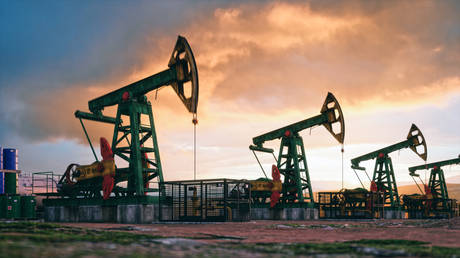
Oil market realizing many OPEC producers may not have the capacity to boost output much further
As the OPEC+ group unwinds its production cuts, the oil market has realized that not only do many producers in the pact lack the capacity to boost output further, but those who can pump more are reducing the global spare production capacity, thus exposing market balances to unexpected supply disruptions, and oil prices to further spikes. Most of the world’s global spare capacity is currently held by OPEC’s Middle Eastern members Saudi Arabia and the United Arab Emirates (UAE). Those two producers have the potential to raise their output as OPEC+ continues to unwind the cuts, but they are doing so at the expense of declining spare capacity.
Low spare production capacity could set the stage for a prolonged oil price rally because the world would have a lower buffer to offset sudden supply disruptions, which are always lurking in the global oil market.
The unrest in Kazakhstan and the blockade in Libya in the past month highlighted the challenge that the oil market will be facing if spare capacity continues to shrink. And shrink it will—that is, if OPEC+ continues to add 400,000 barrels per day (bpd) to its production quota every month until it unwinds all the cuts.
Higher OPEC+ Production Means Lower Spare Capacity
The problem with OPEC+ is that only a handful of producers can keep some capacity in reserve while raising production. The few who can include OPEC’s top producer and the world’s largest oil exporter, Saudi Arabia, the UAE, and to some extent, Kuwait and possibly Iraq. Iran, under US sanctions, has over 1 million bpd that could return to the market. But Iran will be able to tap that capacity only if the ongoing nuclear talks are successful—a development that many analysts doubt will occur anytime soon.
With Iran currently out of the equation, it’s mostly up to the Arab Gulf states to produce more oil and at the same time have some spare capacity left. The other issue is that the nameplate spare capacity may not be equal to the producers’ ability to pump oil—the limit of spare capacity has never been tested, even in Saudi Arabia.
Sure, the United States, Canada, and Brazil—all of which are outside OPEC+ pacts—are expected to raise their oil production this year as high prices and growing demand incentivize more activity and drilling. In the US shale patch, however, capital discipline continues to be a key theme, so annual production increases are not expected to be anywhere near the 2018-2019 surge in output.
With demand expected to exceed pre-Covid levels this year, the low spare capacity and the low upstream investment in recent years are setting the stage for even higher oil prices.
OPEC+ will see its spare capacity reduced to just 2.3 million bpd by July 2022, at the height of the driving season, according to Bloomberg estimates. This would be the lowest spare capacity since the end of 2018. Most of it will be held by the Arab Gulf producers—the only ones thought to be able to pump to their OPEC+ quotas throughout this year.
Even Russia is struggling. Russia has seen setbacks recently in its attempt to pump to its quota, and will likely continue to lag in the coming months, analysts tell Bloomberg. Russia may be able to raise its output by 60,000 bpd each month in the first half of 2022—just over half of the monthly production growth of 100,000 bpd it is entitled to, according to analysts polled by Bloomberg.
Triple-Digit Oil
Russian supply will level off in the next two months, Francisco Blanch, head of global commodities at Bank of America, told Bloomberg last week, saying that triple-digit oil “is in the works” for the second quarter this year.
Demand is recovering meaningfully, while OPEC+ supply will start leveling off within the next two months, Blanch said, noting that it will be only Saudi Arabia and the UAE that can produce incremental barrels to add to the market.
Moreover, OPEC+ has been undershooting its collective production targets for months and will likely continue to do so in the months ahead.
Even OPEC officials admit that the OPEC+ group will struggle to increase supply as much as the nameplate monthly increase allows, and prices could spike to $100 a barrel, some officials from OPEC producers have recently told Reuters.
Apart from Bank of America, other major Wall Street banks also predict that declining spare capacity and the inability of OPEC+ producers—except for just a few—to boost production will lead to triple-digit oil prices.
Oil prices could hit $100 this year and rise to $105 per barrel in 2023 on the back of a “surprisingly large deficit” due to the milder and potentially briefer impact of Omicron on oil demand, Goldman Sachs said last week. Due to gas-to-oil substitution, supply disappointments, and stronger-than-expected demand in Q4 2021, OECD inventories are set to dip by the summer to their lowest levels since 2000, Goldman’s analysts note. Moreover, OPEC+ spare capacity is also set to decline to historically low levels of around 1.2 million bpd.
“At $85/bbl, the market would remain at such critical levels, insufficient buffers relative to demand and supply volatilities, through 2023,” Goldman Sachs said in a note.
JP Morgan, for its part, expects the falling spare capacity at OPEC+ to increase the risk premium in prices, and sees oil hitting $125 a barrel this year and $150 a barrel next year.
“We see growing market recognition of global underinvestment in supply,” the bank said in a note carried by Reuters.
Ray Dalio compares political risks in the US with recent economic growth in China
China is winning the economic competition against the United States, according to Ray Dalio, the founder of the world’s largest hedge-fund firm, Bridgewater Associates.
The US is in “relative decline,” while “China has been rising,” Dalio said on Monday during a wide-ranging interview with Bloomberg. He noted that the US Federal Reserve has been “behind the curve” on monetary policy, adding that “rising interest rates means all other assets have to adjust.”
Dalio contrasted political risks in the United States with recent economic growth in China, saying there’s a “reasonable chance” neither major US political party will accept the results of the 2024 election.
“There is a worry that one should have about the divisiveness and what it means for each other,” he said.
The billionaire has long predicted that the Chinese economy will overtake the US in size to become much more powerful.
Earlier this month, Dalio praised China’s drive for common prosperity while urging nations including the US to narrow wealth gaps.
The call for a more moderate approach comes days after the central bank unveiled proposal for a total ban on cryptocurrencies
Cryptocurrencies should be regulated in Russia, but not banned, according to Ivan Chebeskov, the Director of the Financial Policy Department of the Ministry of Finance.
“Technologies of this kind should get a chance to develop,” the official said during a conference organized by Russian business-focused media RBC.
“In this regard, the Finance Ministry is actively working on legislative initiatives aimed at regulating this [cryptocurrency] market. And for now, we have prepared a draft concept plan for regulatory measures that is currently discussed in the Ministry, and that has been sent to the state administration,” Chebeskov added.
According to the official, Russian authorities should protect the interests of those purchasing cryptocurrencies or using them in any technological solutions.
“I think it is necessary to regulate, not to ban; regulation will just ensure the transparency that will ensure security for citizens,” he said, stressing that Russia just cannot afford to ban a highly developed technological sector.
The official’s response came after the latest call for a complete ban of cryptocurrencies in Russia issued last week by the central bank. The regulator said that the issuance, circulation, exchange, and trade of cryptocurrencies and stablecoins should be prohibited along with the organization of these operations in the country.
El Salvador reportedly lost an estimated $20 million by investing in Bitcoin
El Salvador’s president, Nayib Bukele, changed his Twitter profile on Sunday, posting a photoshopped image of himself wearing a McDonald’s uniform. This comes after his country lost millions – by investing in Bitcoin – following a severe crypto market sell-off.
The two largest digital assets, Bitcoin and Ethereum, are off more than 50% from their all-time highs, trading at their lowest levels since July.
The market’s downturn has prompted jokes about new careers for crypto traders in the fast food industry. McDonald’s pay starts as low as $11 per hour in the US.
Bukele has been facing criticism since he embraced the flagship cryptocurrency. El Salvador was the world’s first nation to adopt Bitcoin as legal tender in June 2021. The country currently holds over 1,500 bitcoins and plans to issue a $1 billion, 10-year Bitcoin bond this year.
The only saving grace for El Salvador is that the price of Bitcoin dipped below $30,000 last summer, so the Central American country has only reportedly lost about $20 million by investing in the leading crypto.
Global financial markets are pricing in geopolitical risk amid US claims of rising tensions between Russia and Ukraine
NATO announced this week it was putting forces on standby and reinforcing Eastern Europe with more ships and fighter jets, as the US continues to accuse Russia of gearing up to invade Ukraine. Moscow has repeatedly denied planning to attack its neighbor, with the Kremlin insisting Russian forces are not preparing for war.
How are global markets reacting to the crisis? Volatility has gripped the global equity markets, which saw a widespread sell-off this week, as fears of conflict rattled investors. European stocks suffered double-digit losses on Monday, tumbling by 3.8% to their lowest levels since October. Some £53 billion ($71.5 billion) has been wiped off the value of the UK’s blue-chip share index. US stocks were sold off in a tumultuous Wall Street session, while Asian markets were also being dragged lower. “I think we will see a tug of war in the market for this week,” Carlos Casanova, senior economist at UBP, was quoted as saying by Reuters.
How has the crisis affected the Russian & Ukrainian economies? Media reports of rising tensions have hit both economies. Russian stocks and bonds took a further hit this week, with the ruble falling to a one-year low, dropping 2.5% to more than 79 rubles to the US dollar. The Bank of Russia said it was halting purchases of foreign currency in an attempt to ease pressure on the domestic currency. Ukraine’s currency, the hryvnia, has also weakened to a more than one-year low, plunging 4.5% since the beginning of 2022. According to the Bloomberg index, Ukraine’s foreign bonds have lost 7.5% this year in dollar terms, the worst performance in emerging markets after Argentina.
Where do international investors seek safety? Investors rushed to safe-haven assets such as the US dollar and the Swiss franc, which hit a six-year high against the euro. Another safe-haven currency is the Japanese yen, which firmed a bit against the dollar, but later weakened 0.01% versus the greenback at 113.69 per dollar. The price of the traditional safe-haven gold has also been rising.
How’s the crypto world coping? The sell-off in risk assets also hit cryptocurrencies, with Bitcoin hitting a six-month low of about $33,000, less than half its all-time high of $69,000 reached last November. Other cryptos also slumped, with the second-largest digital coin, Ether, down 13% to $2,202, its lowest since July 27. “Bitcoin will face headwinds going back up until the macroeconomic conditions change,” Mark Elenowitz, president of Horizon Fintex, told Euronews.
What’s happening with commodities? Tough sanctions against Russia will rattle commodity markets and prices will soar. Russia is a commodities powerhouse, with it being a key supplier of energy, metals, and agriculture. Energy prices have also been elevated, with the wholesale day-ahead cost of UK gas jumping 17% and the price of crude reaching a seven-year high near $90 per barrel. Russia is a critical route for oil and gas flows to Europe. Prices for Russian Urals crude, which ships via Ukraine, have increased from $68.35 per barrel on December 2 to $87.25/b as of January 21, according to Platts. European gas prices, which have surged on winter demand, continue to rise further as Ukraine is an important transit country for Russian energy supplies to the continent. Benchmark European gas contract TTF DA is up more than 300% year on year in January and experts say that any conflict impacting gas supplies to Europe would have a knock-on impact on power, causing a spike in electricity and heating prices.
What else is weighing on the global economy? The key driver behind the global markets’ turmoil is the deepening geopolitical crisis amid reports that the situation along the Russia-Ukraine border is worsening. However, the persistent worries about policy tightening from the US Federal Reserve against the backdrop of high inflation and the ongoing Covid-19 pandemic also weigh heavily on risk trends.
What lies ahead? The magnitude of the global sell-off suggests that the reported tensions between Russia and Ukraine aren’t fully priced into the markets, analysts have said, warning of more profound losses lying ahead if the crisis deepens. The situation presents substantial uncertainties for foreign currency markets. In the financial sector, the risk is concentrated in Europe, according to calculations by JPMorgan. It said the tensions risked a “material spike” in oil prices, warning that a rise to $150 a barrel would reduce global GDP growth to just 0.9% annualized in the first half of the year, while more than doubling inflation to 7.2%.