People may have to pay twice as much for gas and electricity after the regulator lifts the cap on energy bills
The UK’s Office of Gas and Electricity Markets (Ofgem) is lifting the price cap for domestic energy bills by 54%, the regulator said in a press release on Thursday.
“The energy price cap will increase from 1 April for approximately 22 million customers. Those on default tariffs paying by direct debit will see an increase of £693 from £1,277 to £1,971 ($2,670) per year,” the press release reads.
The energy price cap sets a maximum amount energy suppliers can charge customers for the gas and electricity they use. According to Ofgem, the cap “stops energy companies from making excessive profits, ensuring customers pay no more than a fair price for their energy.”
Ofgem sets the cap every six months based on the underlying costs to supply energy, with the previous rise in October hiking energy bills by 12% to an all-time high of £1,277 ($1,731) a year for around 15 million households.
Ofgem says the latest cap hike is made in response to a “record rise in global gas prices over the last 6 months, with wholesale prices quadrupling in the last year” and resulting in closures of dozens of utilities.
“Over the last year, 29 energy companies have exited the market or been put in special administration in the wake of soaring global gas prices, affecting around 4.3 million domestic customers,” the regulator states. Ofgem expects the cap lift to affect default tariff customers, who haven’t yet switched to a fixed deal on energy consumption.
“This is because energy companies cannot afford to supply electricity and gas to their customers for less than they have paid for it,” the press release says. The regulator, however, noted that it is preparing other measures in order to tackle the worsening energy crisis, including changing the frequency of price cap updates “to ensure that it still reflects the true cost of supplying energy.”
UK consumers are already suffering from soaring prices on everything from energy to consumer goods as inflation races toward its fastest pace in three decades. Ofgem’s announcement also came mere hours before the Bank of England revealed a new interest-rate hike of 0.5%.
On the bright side, UK Chancellor of the Exchequer Rishi Sunak has just announced a package to help households pay their power bills, which will provide £350 ($476) to the “vast majority of households” to offset Ofgem’s cap hike. However, many experts say this will only cushion the impact, with social media users already dubbing Ofgem’s cap move “black Thursday.”
The case is one of several triggered by the CEO’s prolific tweeting
A lawyer for Tesla told a US appeals court on Wednesday that a 2018 tweet by chief executive Elon Musk suggesting factory workers would lose stock options if they unionized was not an unlawful threat, because it simply reflected the position of the union.
The tweet came amid the United Auto Workers (UAW) union’s years-long campaign to organize workers at Tesla’s factory in Fremont, California. It said: “Nothing stopping Tesla team at our car plant from voting union. Could do so tmrw if they wanted. But why pay union dues and give up stock options for nothing?”
Two days after the initial tweet, Musk said in a separate Twitter thread that it was the UAW, and not the company, that opposed stock options.
In March, Tesla appealed an order by the National Labor Relations Board (NLRB) that Musk delete the tweet. According to a judge, the labor board wasn’t “completely out of line,” as Musk’s tweet could be interpreted as a message that “the price you will have to pay if you unionize is you’ll give up your stock options.”
Tesla attorney David Salmons told the hearing on Wednesday that the constitutional right to free speech under the First Amendment “protects an employer’s robust speech about the downsides to unionization.” Taken in context, the tweet is really a “statement about what the union, not the company, will or will not do,” he said.
Meanwhile, a lawyer representing UAW, Daniel Curry, argued to the panel that Musk’s tweet was “a threat of retaliation, not a lawful expression of opinion.” The subsequent message only sowed further confusion, Curry said, adding: “The idea they’re putting out there that a union could take away an employee’s stock options just doesn’t fit with reality.”
Curry also pointed out that Musk’s history of making major announcements and controversial statements on social media would reasonably lead Tesla workers to take him at his word. “That is how Musk uses Twitter. Just like a press release,” he said.
Musk has a long history of controversial tweets, which has led to lawsuits. Tesla is facing a suit from investors over another 2018 post by the CEO, in which he said funding was secured to take the company private. In another case, a British cave explorer unsuccessfully sued Musk for calling him a “pedo guy” on Twitter.
The company lost over a quarter of market value amid the shares’ drop, dragging down other tech stocks
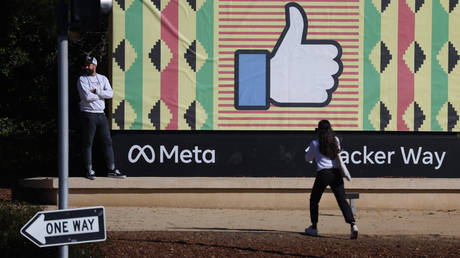
Meta (formerly Facebook) shares dropped around 26% at the opening of trading on Thursday after Facebook’s quarterly report missed earnings expectations. The report also revealed that the number of the social media platform’s global daily active users declined from the previous quarter for the first time on record, to 1.929 billion from 1.93 billion.
Amid the nosedive, the company’s market value plunged by $240 billion to about $660 billion.
Meta blamed Apple and TikTok for Facebook’s poor performance, claiming Apple’s privacy changes to its operating system made it difficult for brands to use advertising mechanisms on Facebook and Instagram.
The report also cited macroeconomic issues like supply chain disruptions as one of the reasons behind low fourth quarter earnings, while in his conversation with investors, Meta CEO Mark Zuckerberg complained that Facebook is facing growing competition from rivals like TikTok.
Statistics show that at its current level, Meta’s drop is the largest single-day collapse in US market history.
Moreover, the Meta plunge has triggered a sell-off on the tech-oriented Nasdaq composite index, with S&P 500 shedding 1.6%, while the Dow Jones Industrial Average lost 0.8% as of 17:00 GMT. Twitter, Snap, Spotify, and a number of other social media companies were among the stocks which also lost value following Meta’s drop.
Thursday’s stock crash could wipe out around $24 billion, or nearly 20%, of Facebook founder Mark Zuckerberg’s net worth, according to the Bloomberg Billionaires Index. The drop in Zuckerberg’s wealth from $120 billion to $97 billion would rank among the biggest ever, only rivaled by Tesla co-founder Elon Musk’s fortune swings. Musk lost $35 billion in one day in November last year when Tesla stock dropped after Musk’s Twitter poll on the sale of Tesla shares.
The company says an online shop made profits on the unauthorized sale of NFTs
Sports apparel giant Nike has filed a lawsuit against online reseller StockX in a New York federal court on Thursday for the unauthorized sale of Nike shoe NFTs (non-fungible tokens).
In the court filings, Nike complained that StockX began selling NFTs of its sneakers last month, informing customers they would be able to exchange the virtual tokens for real shoes “in the near future.” The online platform has allegedly sold over 500 Nike-branded NFTs so far.
Nike deemed the action an infringement on its trademarks and said the NFT sales would confuse customers. In the lawsuit, the company demanded an order to block the Nike-associated NFT sales on StockX. It also wants the reseller to pay damages, but the amount has not been disclosed.
The lawsuit states that the NFT sale “inflated prices and murky terms of purchase and ownership,” while also marring Nike’s business reputation.
Nike announced it will release a number of its own virtual products later in February in collaboration with digital art studio RTFKT, which it bought last year.
It is not the first lawsuit over NFTs, which have been gaining in popularity recently. Earlier this month, US rapper Lil Yachty sued music NFT start-up Opulous for trademark infringement, claiming that the firm “maliciously” used his name and image. In January, French luxury design house Hermes sued artist Mason Rothschild over ‘MetaBirkin’ NFTs named after Hermes’ famous Birkin handbags. In November 2021, Miramax studio sued director Quentin Tarantino after he announced plans to auction ‘Pulp Fiction’ movie NFTs.
NFTs are non-fungible tokens, which are units of digital data stored and traded online. Most NFTs are digital files such as photos, videos, and audio recordings.
Billionaire Alberto Bailleres made his fortune in mining and retail, and was also known as an arts and education patron
Billionaire Alberto Bailleres, Mexican gold and silver mining tycoon, has died at the age of 90. The cause of death has not yet been revealed.
Bailleres made his fortune across a range of industries, but started out in gold and silver mining alongside his father, which won him the nickname of Mexico’s ‘King Midas.’ He was the founder of the Industrias Penoles mining company, a global leader in silver production, and owned the Fresnillo silver mine and the largest gold deposits in Mexico.
Bailleres had an estimated net worth of $8.6 billion in 2022, according to Forbes. He owned a number of firms in a variety of sectors from insurance to retail under the umbrella of Grupo BAL.
Bailleres was also known as a prominent supporter of arts and education. He was chairman of the board of trustees of the Instituto Tecnologico Autonomo de Mexico (ITAM) and a key sponsor in many of Mexico’s other prestigious universities.
“His academic legacy at ITAM is invaluable. He transformed each and every sector and life he touched,” Jose Antonio Meade, a former Mexican finance minister and ITAM graduate, told Reuters.
Bailleres retired from Grupo Bal last spring and handed over the business to his son Alejandro. Last year, the Bailleres family ranked as fourth richest in Mexico and 255th in the world.