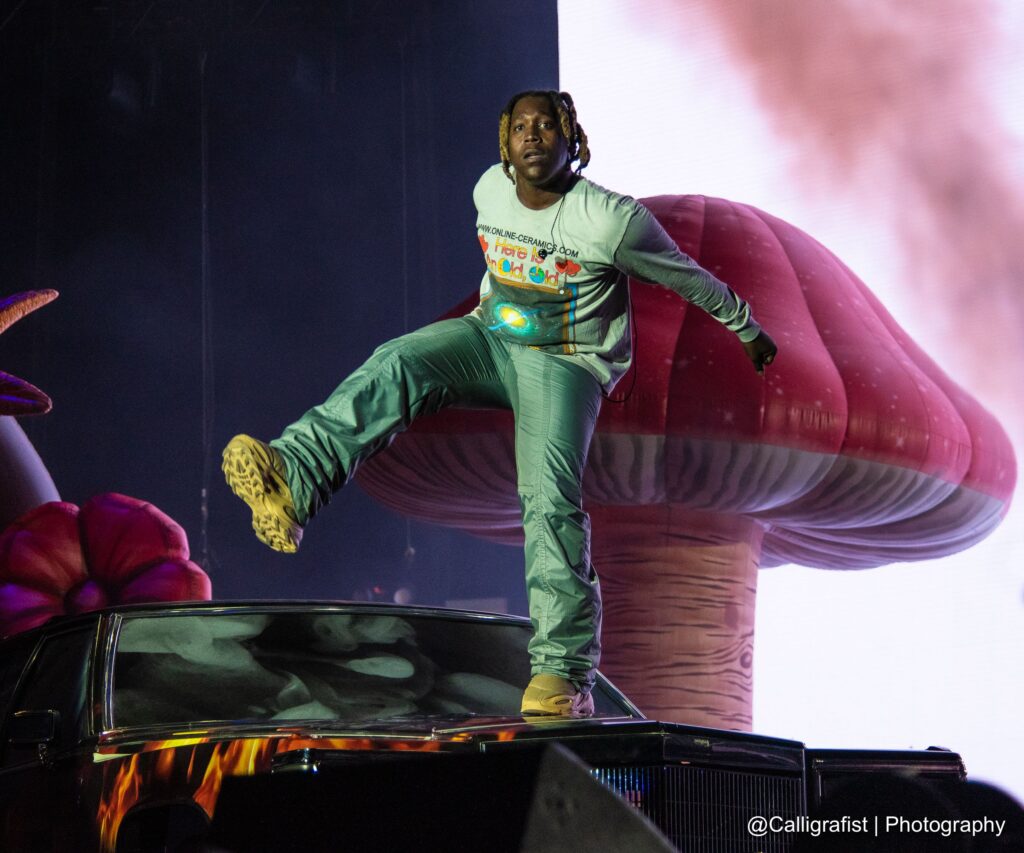
Day N Vegas returned to the desert after a hiatus due to Covid and minus a headliner switch was an amazing weekend of performers and stages. Day N Vegas is one of my favorite festivals to photograph because of the diversity of their line up, with the likes of Kendrick Lamar, Thundercat, Jazmine Sullivan, Tyler The Creator, Mereba, Griselda and late additions like Post Malone.
Kendrick Lamar easily stole the show at the festival, giving one of his dopest performances ever in my opinion and the opinion of many others… bringing out Baby Keem and amplifying the black experience, his lighting and attention to details showed throughout the set, while also having the biggest audience of the weekend.
Overall the weekend didn’t disappoint and we are excited to see what next year brings.
We can’t forget how Tyler was the perfect closer for the festival with his high energy performance, impromptu commentary throughout the show and giving all of himself as a performer as usual!
The sad passing of Leon Russell in November 2016 had many of us reappraising both his career achievements and his marvellous songbook. The posthumous release of his final album On A Distant Shore was another reminder of his legacy. Today we look at one of his most-covered numbers with the help of Leon himself, who reveals its little-known connection to a major female vocalist from the mid-1960s onwards.
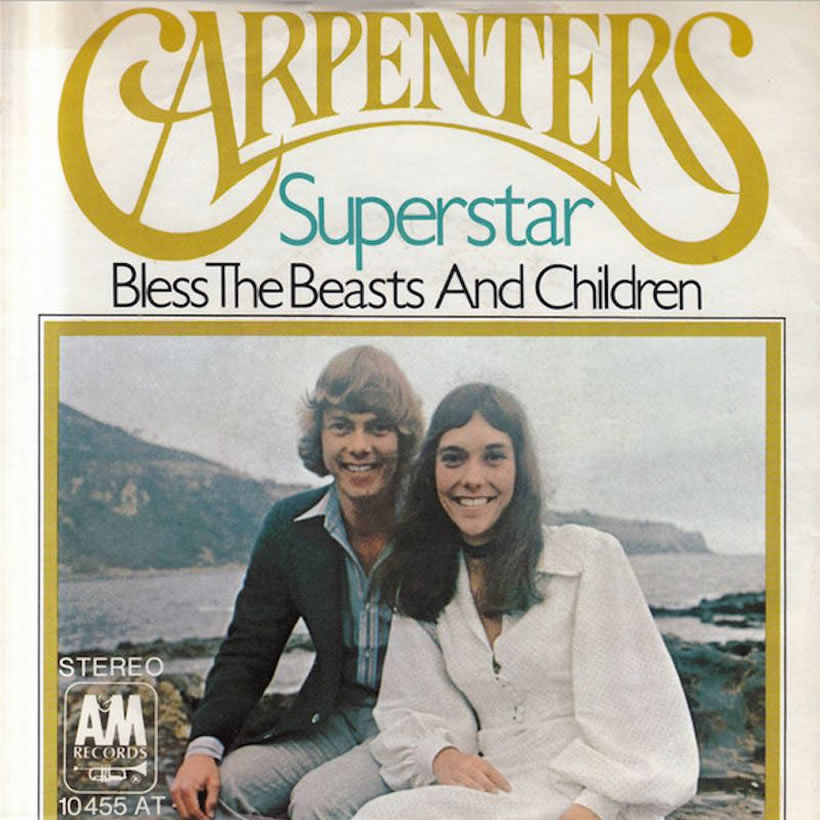
“Superstar” was, of course, eventually turned into an effortlessly classy, adult contemporary production by the Carpenters, in a characteristically smooth rendition that we came to know so well.
That version was based on the earthy but romantic story of a woman’s one-night stand with a rock star, whom she then hopes will return to her. For that reason, its working title was “Groupie Song,” and when it was first recorded by Delaney & Bonnie, with vocals by its co-writer Bonnie Bramlett, it was under the title “Groupie (Superstar).”
Like Eric Clapton, Russell was part of the circle of musical friends that came to be known as Delaney & Bonnie and Friends. As far back as the mid-1960s, Leon and Delaney Bramlett had played together in the Shindogs, the house band for the hit TV music show Shindig!
After signing to Stax, the Bramletts had released their first album Home in May 1969, with Russell on keyboards and further contributions from Stax alumni such as Booker T and the MGs, Isaac Hayes and William Bell. Soon afterwards, they moved to Elektra for The Original Delaney & Bonnie & Friends, and by the end of the year, were touring with Clapton and the musicians with whom he would form Derek and the Dominos. The single that accompanied that tour, ”Comin’ Home” (on another new label, Atlantic) featured “Groupie (Superstar)” on the B-side.
The first superstar
In a BBC Radio 2 documentary on Russell made by this writer in 2010, Singing This Song For You, Russell explained the song’s origins. “Rita Coolidge was the first person I ever heard use that word, ‘superstar,’” he said. “She was talking about Dionne Warwick, who was down in Memphis cutting a record, and Rita said ‘She was the first superstar I ever saw.’
“So that kind of struck me, I was not familiar with the word, and I started trying to started trying to write [the song], and I ended up finishing it with Bonnie Bramlett,” he continued. “And then Karen [Carpenter] sang it, and of course she had a definitive version.”
Coolidge, meanwhile, was the featured vocalist on the song (by now called “Superstar”) when it became part of the set for Joe Cocker’s Mad Dogs and Englishmen tour, album and film, with Russell as musical director.
After covers by Cher, Vikki Carr, former Smith singer Gayle McCormick, and others, the Carpenters recorded their version in early 1971 and it was released by A&M that summer. It topped the Adult Contemporary chart, went to No.2 pop and made the Top 20 in the UK. As A&M co-founder Herb Alpert said in the BBC documentary: “The Carpenters were always looking for good material, and Richard Carpenter had an ear for great melodies. And Leon had that touch.”
Among the countless readings of the song that have continued to arrive, there was one that took it to a new soul audience. Luther Vandross recorded it for his third studio album, 1983’s Busy Body, cleverly combining it with Aretha Franklin’s R&B classic “Until You Come Back To Me (That’s What I’m Gonna Do).” Released as a single the following year, the medley reached the soul Top 5. In another moment of poignancy, Bonnie Bramlett performed the song live at Music City Roots Live in June 2016, with Leon in the audience, just five months before his death.
Listen to the best of Leon Russell on Apple Music and Spotify.
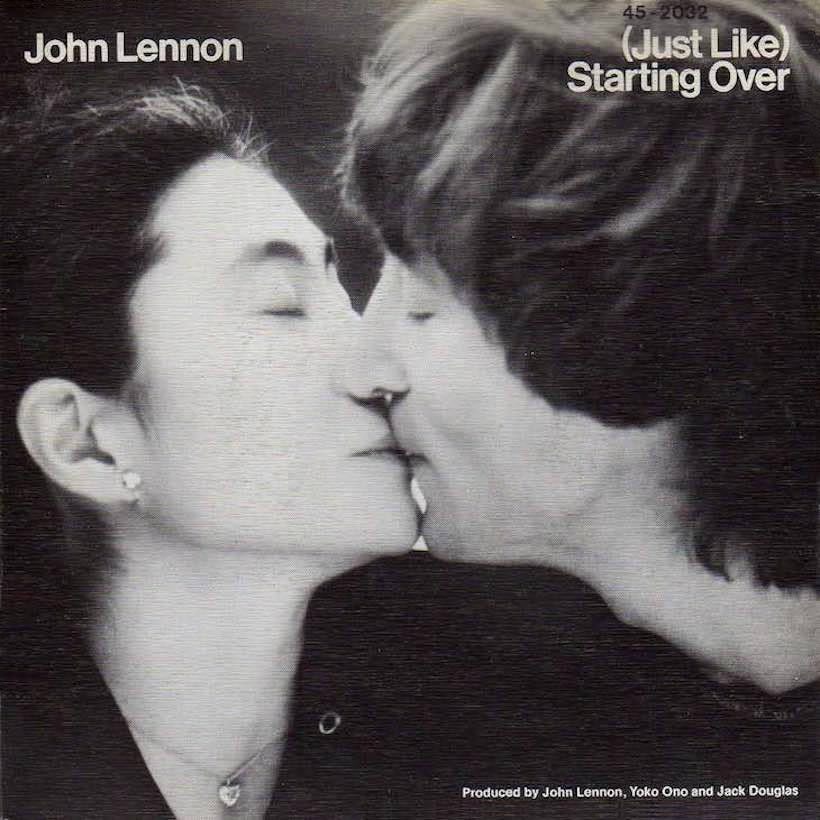
When John Lennon went into the Hit Factory in New York to record what became the first single from his and Yoko Ono’s return to public life, the Double Fantasy album, the rock’n’roll flavor of the track was so strong that he himself referred to it as the “ElvisOrbison” song. Its upbeat, optimistic spirit was in cruel contrast to what we all know happened just after its release. On the chart of December 20, 1980, “(Just Like) Starting Over” became a posthumous UK No.1.
At the time of John’s brutal and shocking murder on December 8, the single was on its way down the UK charts. It had entered at No.30 in November, his first appearance on the bestsellers in his home country since the reissue of “Imagine” in 1975. “Starting Over” climbed to No.20, then No.13, then No.8, its apparent peak, falling to No.10 and No.21 just before those fateful events near the Dakota Building where John and Yoko lived in New York.
As is so often the case when such a huge figure in music leaves us, the commercial and cultural impact of John’s passing was dramatic. The song raced straight to No.1 the following week, and then earlier in 1981, “Imagine” itself reemerged for a four-week run at the top.
Listen to the best of John Lennon on Apple Music and Spotify.
“(Just Like) Starting Over” then became the last US No.1 single of 1980 and Lennon’s second solo chart-topper there, after 1974’s “Whatever Gets You Thru The Night.” It stayed at the summit throughout January, in a five-week run that was almost like a vigil for the irreplaceable talent the world had lost. For millions of people, the contrast between John’s death and the infectious optimism of the comeback single he left behind was hard to bear.
Buy or stream “(Just Like) Starting Over” on the 2020 John Lennon compilation GIMME SOME TRUTH. The Ultimate Mixes.
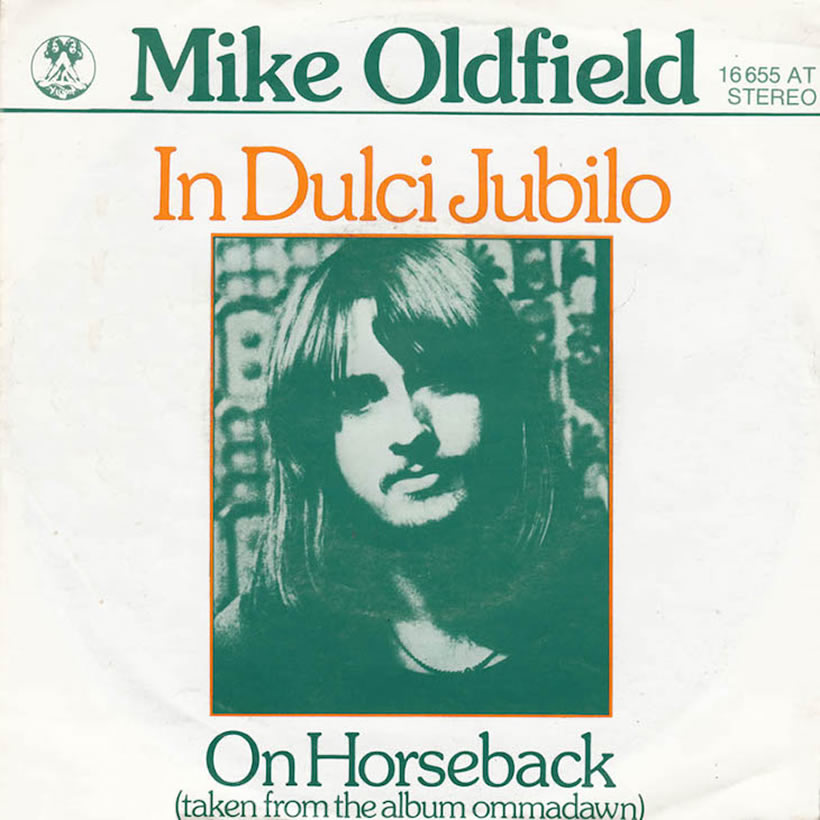
Mike Oldfield has always been chiefly an album artist, but that doesn’t mean he hasn’t had several moments of glory on the singles chart. One of them was not just his first UK Top 5 single, but has become a part of the sound of Christmas in his home country. The jaunty instrumental “In Dulci Jubilo” entered the British bestsellers on December 20, 1975.
Oldfield had been part of the singles scene only once before, when “Mike Oldfield’s Single (Theme From ‘Tubular Bells’)”, as it was idiosyncratically titled, reached No.31 in 1974. This time, the multi-instrumentalist was going specifically for the Yuletide market with his distinctive version of a Christmas carol that had its origins in the 14th century.
“In Dulci Jubilo” (sometimes spelt “dulce”) translates as “in sweet rejoicing.” The song, usually with words (originally from a combination of German and Latin), was popular throughout Europe in various incarnations through the centuries. There were two separate 19th century translations of the lyrics into English, firstly by composer Robert Lucas de Pearsall and then by priest, scholar and hymn-writer John Mason Neale.
Officially a double A-side
Oldfield recorded his version specially for the Virgin Records single release, which came out officially as a double A-side. “On Horseback,” the closing track from his then just-released third album Ommadawn, was listed alongside it. The single debuted on the UK chart at No.42. The album, which held at No.16 that week, climbed back into the Top 10 at No.9 on the final chart of the year.
Listen to the best of Mike Oldfield on Apple Music and Spotify.
Although it had a festive air, “In Dulci Jubilo” wasn’t a Christmas melody as such, so its appeal spread well into the new year of 1976, when it peaked at No.4 in mid-January, as Queen’s “Bohemian Rhapsody” came towards the end of its run at No.1.
The experience was such a success that Oldfield repeated it the following year with another instrumental single for the Christmas market, “Portsmouth.” That was an even bigger hit, reaching No.3 and winning a silver disc. Both hits were added to the Mercury Records reissue of Ommadawn in 2010.
Buy or stream “In Dulci Jubilo” on The Playlist – Christmas Hits 2015.
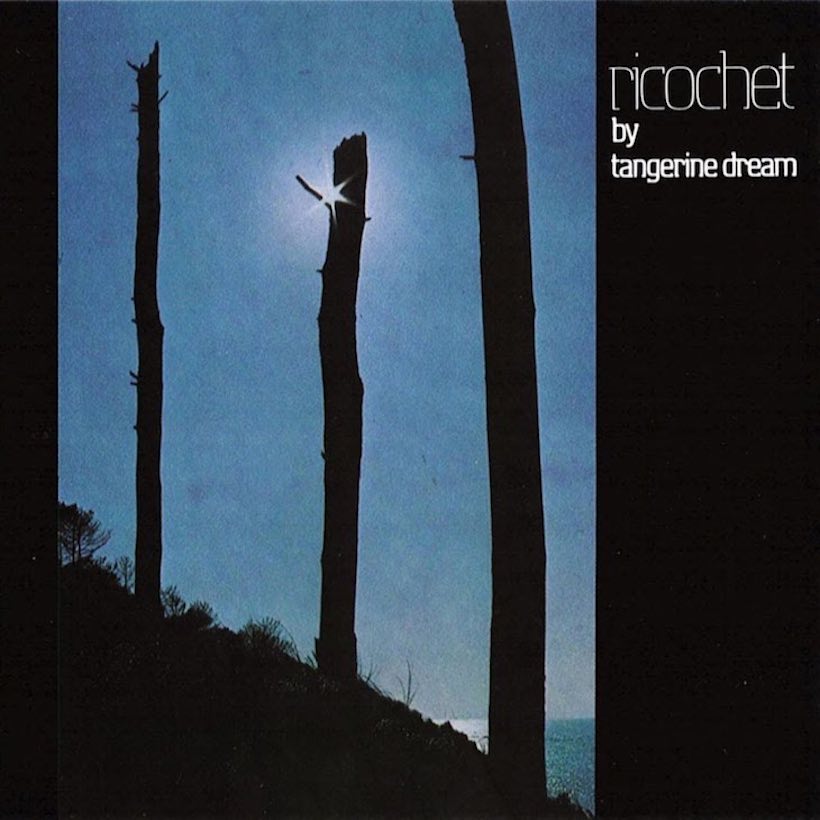
When Tangerine Dream released their first live album, Ricochet, towards the end of 1975, the German progressive pacemakers were basking in the success of two career-shaping studio releases of the previous 18 months or so, Phaedra and Rubycon. Now was the perfect time both to let their fans relive the experience of seeing the band in concert, and to send newcomers a message about their power as a performing unit.
The album went into the UK chart on December 20 that year, and although (like many live albums) it was a more modest seller than its predecessors, it was warmly welcomed by Tangerine Dream’s army of followers. It debuted at its peak position of No.40, in a week in which easy listening artists ruled the British market, with Perry Como’s 40 Greatest Hits at No.1 and Jim Reeves’ 40 Golden Greats at No.3, separated only by Queen’s A Night At The Opera. In fact, Ricochet was the only new entry on the Top 40 that week.
Most unusually for a live record, which would traditionally include an artist’s best-known material with perhaps a handful of newer material, the LP consisted of precisely two tracks, parts 1 and 2 of the title. Just as notably, the release was turned around very quickly, because most of the record was taken from a performance by the band at Fairfield Halls in Croydon only a few weeks earlier, on October 23, with some audio from a show in France.
Listen to uDiscover Music’s Tangerine Dream Best Of playlist.
Reflecting their well-established British following by this stage, this was at the end of an extensive UK tour throughout October that had visited Birmingham, Oxford, Glasgow, Sheffield and many other cities. The night before the Croydon date, Tangerine Dream had performed at Olympia in London.
The performance features the three-piece Tangerine Dream line-up of the time, of Edgar Froese, Christopher Franke and Peter Baumann. Ricochet not only sounds remarkably fresh today, but well ahead of its time in the field of electronic experimentation that the band excelled in.