Football fans have reacted with outrage to the state of the modern game after Lyon star Lucas Paqueta received a yellow card after showboating when attempting a harmless rainbow flick in Ligue 1 on Wednesday night.
The incident occurred during Olympique Lyonnais’ 3-1 win over Troyes.
After Paqueta scored in the 87th minute, the tie was done and dusted deep into stoppage time.
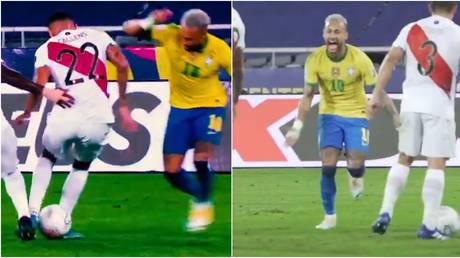
Attempting to kill it off near the corner flag, the Brazil international attempted a rainbow flick which didn’t quite come off, instead hitting a Troyes man who squared up to the 24-year-old.
Lucas Paquetá booked for attempting a rainbow flick.
Claiming handball and trotting away unfazed, Paqueta got into position to receive the resulting throw in.
Referee Stephanie Frappart strolled over to him uttered some words at the Flamengo academy product, who then headed closer to the touchline into space.
Huddled with some Troyes players, Frappart then got out her yellow card and showed it to the perplexed number 10, who shrugged the disciplinary action off in disbelief.
On social media, Brazilian football fans lamented the caution, claiming their players’ creative instincts were being ‘suppressed’.
“European clubs have suppressed our players’ style and identity for years. Now even the refs are doing it,” remarked one well-followed account that shared footage now seen by over a million people.
“This is stupid, what is the offence?” someone else asked.
They received the explanation that Paqueta had ignored the referee when she tried talking to him, which perhaps facilitated the yellow card, but a separate party noted that Selecao colleague Neymar was also reprimanded for a similar exhibition of skill when starring for PSG against Montpellier in the French top flight.
“People let this happen and yet wonder why modern football is so robotic.
“Sometimes I wonder how people enjoy football these days,” was another conclusion.
“European teams started to get scared of Brazil and its players. Hence carding players for dribbling. The only explanation I can give….embarrassing,” remarked a separate outraged party.
The same people will then complain that the Brazilian flair and feel for the fame “is gone”
“The same people will then complain that the Brazilian flair and feel for the fame ‘is gone’,” was another good point raised.
But Paqueta chose not to address the matter on Instagram or Twitter post-match.
On the latter format, he merely retweeted his impressive heat map during the win that one stats page produced, as well as an official club post of fans singing his name at the Groupama Stadium.
LUCAS PAQUETÁ, LUCAS PAQUETÁ, LUCAS PAQUETÁ, ALLEZ ALLEZ!
On Instagram, he shared a photo of him tucking his effort away and wrote, “One more goal. Glory to God for everything” alongside a closed hands praying emoji.
But even if Paqueta wouldn’t, Neymar took to the same platform later on Tuesday afternoon to voice his concern at the worrying development.
Neymar commented on Lucas Paquetá receiving a yellow card for trying to rainbow flick a player. This happened to Neymar himself in the 19/20 season.
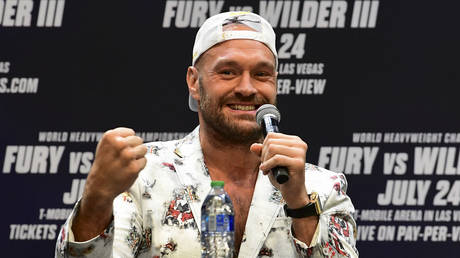
Deontay Wilder says that he will debut another theatrical outfit for his ring-walk ahead of the trilogy fight with Tyson Fury despite blaming his defeat in their rematch last year on a similar outfit which he said weighed 40lbs.
Wilder, 35, has long been known for wearing extravagant costumes to the ring throughout his ascent to the top of the heavyweight rankings but ‘The Bronze Bomber’ admitted after their fight in February 2020 that the weighty costume he wore to the ring which painted him as a sort of apocalyptic warrior complete with a horned helmet, glowing red eyes and human skulls adorning his armor – but it didn’t quite have the desired impact.
In the bout, which was the first defeat of the American’s 44-fight career, Wilder struggled to contain an aggressive Fury en route to being finished in the seventh round when his ex-trainer Mark Breland threw in the towel.
But despite Breland being run out of the camp shortly afterwards for this perceived indiscretion, Wilder says that he will again be adorned with some theatrical garb as he looks to score a measure of revenge against his British rival.
“All of my fights have – well, since I became champion, you know, nobody has come out with a better dress, better uniform than I have,” Wilder said to BoxingScene.
“And we’re going to continue with that. We’ll just have to see what I put on. It’s going to be something special. It’s going to be something that I dedicate to my people, my tribe. So you can look forward to seeing it.”
Some, though, see this as an unnecessary tempting of fate – particularly after Wilder’s excuses for his below par performance in his second fight with Fury.
In the days after their rematch last year, Wilder spoke of how he felt the 40lb outfit he wore to the ring wore him out and that he “didn’t have no legs” once the first bell rang.
“I didn’t have no legs from the beginning of the fight. In the third round, my legs were just shot all the way through,” Wilder opined. “But I’m a warrior and people know that I’m a warrior. It could easily be told that I didn’t have legs or anything.
“When I first tried it on, I saw it had some type of weight to it, but during that time you get so excited and you want people to see it. But we immediately started feeling, ‘Alright, we’re going to have to put this uniform on a certain amount of time before we go out,’ even if we had to delay it a little bit, before putting it on,” he explained.
“But our timing wasn’t perfect. We still had the uniform on about 10 to 15 minutes before walking out. And I was walking around with it. I just didn’t have the helmet on.
“And when I put the helmet on and started walking out, it was a long ring walk. Due to the circumstances I was under, it immediately just drained my legs. And then you’re talking about walking up the stairs [to the ring] with it on.
“It was almost like a workout. I didn’t think it would affect me that much. But it affected me more than what I expected. Then, by him coming and leaning his body on me and pushing me down and putting me in headlocks, that played a part in affecting my legs as well.”
While there is as of yet no indication if Wilder’s ring-walk costume will be quite as weighty this time around, fight fans have hit out at his decision to embrace pageantry when they say his full focus should be on extracting revenge from the unbeaten Fury.
Apparently Deontay Wilder is planning to wear “something special” to the ring again when he fights Tyson Fury.
He's obviously forgotten about the litany of costume-related excuses he produced last time they fought.
“Apparently Deontay Wilder is planning to wear ‘something special’ to the ring again when he fights Tyson Fury. He’s obviously forgotten about the litany of costume-related excuses he produced last time they fought,” said one fan in response to the news.
“Just wear you pyjamas because you’ll be going to sleep in the ring,” advised another.
“Might wanna put a little more into his actual boxing skill than ring-entrance outfits,” said a third.
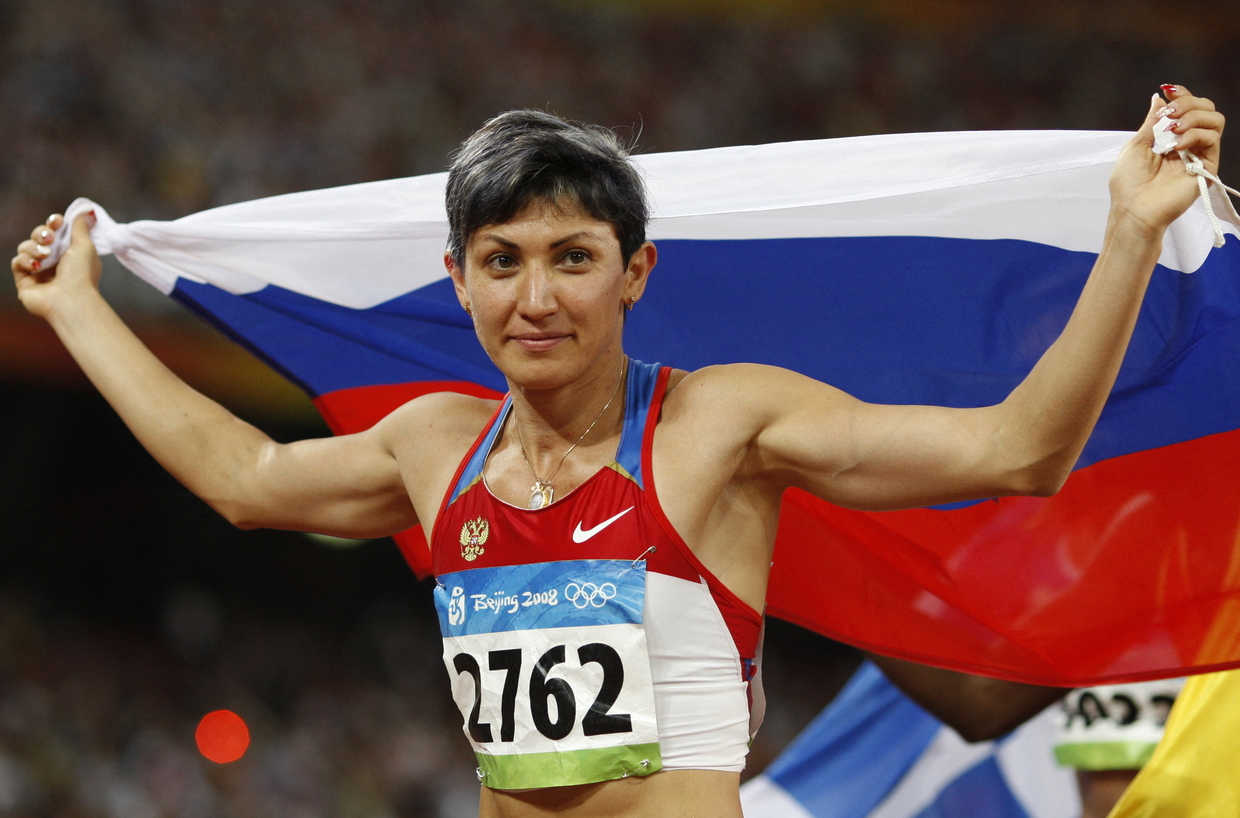
Russian Olympic gold medalist Tatyana Lebedeva says debates over transgender athletes and testosterone levels in female competitors are not going away anytime soon, urging more research from scientists to ensure fair competition.
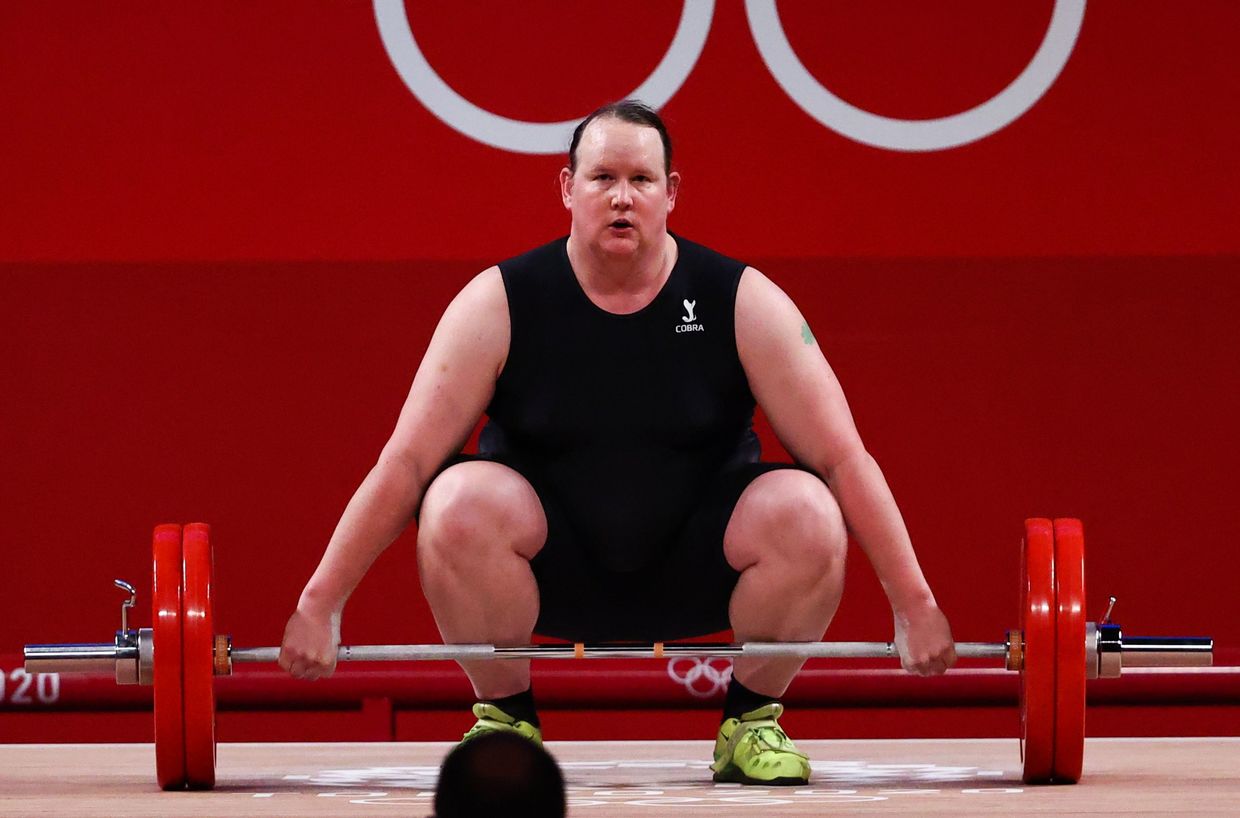
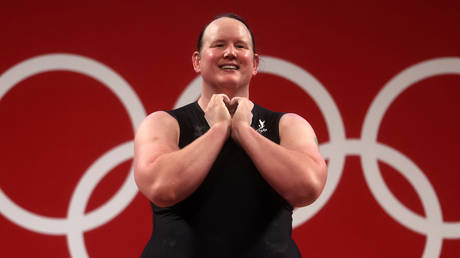
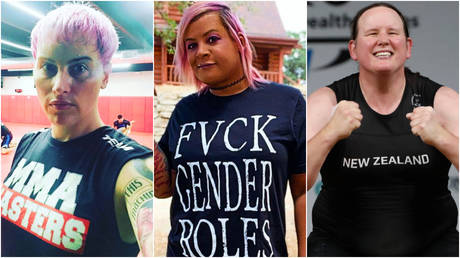
The issue of transgender competitors was among the significant talking points at the recent Tokyo Games, where New Zealand’s Laurel Hubbard competed in the women’s weightlifting.
Hubbard, 43, transitioned from male to female in 2012 having starter her sporting career as a man.
“Many people watched weightlifting at the Olympics just for Hubbard’s sake, many people wanted to take a picture with her,” said 2004 long-jump gold medalist Lebedeva in an interview with Sport-Express.
“She didn’t even record a successful lift, but at the same time she became a star even before the start.
“Is it right or not? I won’t say anything for sure, again, we need research, it is necessary to involve scientists.
“The fact is that there are people like this, and we cannot deny their existence.”
Lebedeva, a three-time Olympic medalist who retired in 2012, discussed the situation surrounding testosterone levels in female athletes, saying that the debate was a complex one.
“If we take, for example, the participation of men with testosterone of 10 nmol/liter in women’s competitions, then some [male] athletes in the Russian national team would be able to compete with women,” said the former world record holder.
“You just need to declare that now you’re a woman and maintain a certain level of testosterone.”
Lebedeva, 45, pointed to the situation surrounding South African middle-distance star Caster Semenya, who was barred from the Tokyo Games due to elevated testosterone levels.
“Semenya, for example, missed the Olympics. At the same time, a girl from Namibia, Christine Mboma, switched from the 400 meters to 200 meters in a month [because of testosterone restrictions] and immediately won an Olympic medal.
“Then what’s the point of the restrictions? Previously, scientists argued that testosterone doesn’t affect results at 100 and 200 meters, allegedly it only affects power.
“True, the sprint is power in its purest form, endurance isn’t needed. I think there will be new studies now.
“These are delicate questions and ethical considerations have to be taken into account. For example, this is very important when solving the problem of transgender people in sports.”
Lebedeva, who took up a career in politics after hanging up her spikes, suggested that increased testosterone levels could simply be treated as a physical benefit along the same lines as height or power – although adding that categorization could also be a solution.
“There’s no discussion whether it’s a woman or a man. She may be a full-fledged woman, but she will have a gene abnormality due to which extra testosterone is produced,” said Lebedeva.
“To some extent, this can be viewed as a talent, a reward from heaven. This doesn’t make her a man.
“One of the options for solving the problem is to introduce a separate category. We created many different categories at the Paralympics, you can introduce a similar classification for intersex people. There aren’t many of them, but they are there.”
The International Olympic Committee (IOC) recently delayed its new guidelines on transgender athletes, citing “very conflicting opinions” on the issue.
The new guidelines are not set to be published until after the Beijing Winter Olympics in February – three years later than originally planned.
Current IOC guidelines suggest that trans women can compete in women’s categories if they reduce their testosterone levels to a required amount for 12 months, although individual federations across sports are permitted to create their own rules.
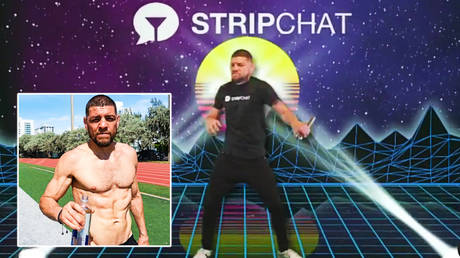
Ahead of his first bout in more than six years, Nick Diaz has prompted questions as to his motivation to fight – with several fans expressing concern after the UFC released footage of a sluggish Diaz shadow-boxing.
Diaz, 38, takes on Robbie Lawler this weekend in a rematch which takes place some 17 years after they first met in the early days of the UFC.
The Stockton native, a former UFC welterweight title challenger, has become one of the sport’s most beloved characters throughout his extensive career in the cage but as he prepares to take on the challenge of the hard-hitting Lawler in a featured bout on this weekend’s UFC 266 card, questions are being asked as to whether the elder Diaz still has the necessary tools to compete with the world’s finest fighters.
By the time he walks to the cage in Las Vegas this weekend, it will be just a month shy of a decade since he last registered a win when a prime Diaz stormed past former champion B.J. Penn all the way back at UFC 137.
Losses to Carlos Condit and Georges St-Pierre followed, before a no-contest with Anderson Silva in January 2015 which remains the last time that Diaz has thrown a punch in anger in the Octagon.
His return this Saturday night is a notable combat curiosity – but recent alarming comments from Diaz, coupled with footage of some less-than-impressive shadow boxing, has left some fans concerned that Diaz’s comeback could be a train wreck.
“I never enjoyed fighting. It’s just something that I do,” Diaz told ESPN. “It’s just what I do. I try to get away from it, but really, it’s kind of inevitable. It is. All the people around me, and all the money and the sponsors, they won’t let me get away from fighting. There’s things I could do, but that’s not gonna work out. I might as well just go and take my punches.
“But if I don’t do this, I don’t know how I’m gonna feel about myself. If two years down the road, if I’m sitting here going, ‘Why didn’t I just go do these fights?’
“Do I feel confident? I never do. I never have. I’ve always felt like I’m gonna get trashed out there. Every fight I’ve ever done. ‘How do you feel against Robbie Lawler?’ I feel like I’m gonna get the sh*t beat out of me. And even when I win, I get beat up worse.”
Diaz’s UFC return has been teased for a year and comes after his management told the media that their fighter was planning a comeback in 2021 – and that he had already completed a training camp and a ‘test’ weight cut in preparation.
Somewhere along the way, though, it seems as if Diaz has begun to question the specifics of it as the clock ticks ever closer to his date with destiny.
“This doesn’t make sense for me to go in there and fight Robbie Lawler again,” he said. “I don’t know why I’m doing this! This should not happen! Whoever set this up is an idiot! I don’t know why I’m doing this, I don’t know why this happened. I should be fighting Kamaru Usman, and that’s it.”
But perhaps Diaz’s love/hate relationship with the sport through which he made his name was best encapsulated by his description of how training for his comeback had impacted his life.
“I love to help people and I love to be a part of the sport, but I don’t love what it’s done to me. Especially in the last seven months, the last two years,” he said.
Furthermore, sections of MMA’s glass-half-full support have warned that Diaz, and particularly the evidence of his shadow boxing, could lead to as depressing a scenario as we witnessed last weekend in Florida when an ageing Evander Holyfield was rolled out into the ring for a one-round slaughter against MMA fighter Vitor Belfort.
“Flashbacks of Evander Holyfield last week,” wrote one fan online in reaction to the footage.
“Oh no. This is giving me flashbacks of Chuck Liddell’s video hittin’ the gloves before Liddell v Tito 4,” said another, referencing the fight where UFC legend Chuck Liddell was pounded out in his own comeback fight.
“Who would have thought it, he looks exactly like a 38 year old coming back after 6 years off,” said another.
MMA pundit Darren Russell quelled some of the fears over the footage, however, arguing: “I think we’re reading too much into this to be honest. It’s literally just a promo shoot, you’re not going to go ALL OUT!”
At a time when it has the perfect opportunity to show the best of itself, French football is exhibiting the worst. It may boast the world’s best player, but issues in broader society are manifesting themselves into the local game.
In the past week alone, there have been various lamentable scenes involving fans.
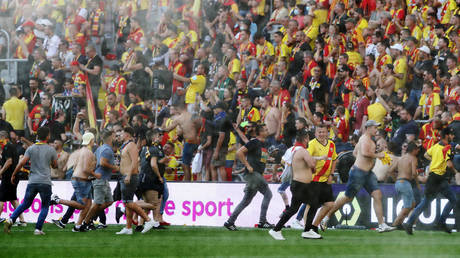
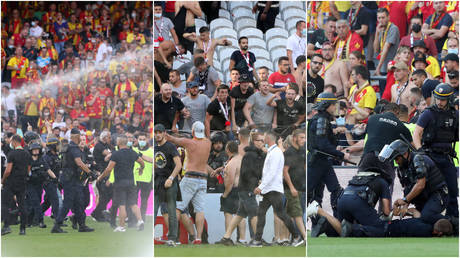
Amid a mass brawl between thugs fighting the police and Lens fans invading the pitch to get to supporters in the away end at the Stade Bollaert-Delelis, a visitor from Ligue 1 champions Lille was apparently pictured masturbating towards the family end of the ground for home supporters.
For his act during the 1-0 win to Lens, he reportedly faces up to a year in prison and a fine that could reach €15,000 ($17,600) if identified and prosecuted for sexual exhibition in a public place.
Last night brought fresh trouble, with a traveling Marseille contingent breaching a security cordon after a goalless draw with Angers at the Stade Raymond Kopa.
As stewards fell short of controlling the situation, punches were exchanged between both sets of fans as the Angers faithful had also got onto the turf.
This saw equipment damaged, as flares and firecrackers were thrown at each group during the action.
And let’s not forget the fracas on the new season’s opening week that also involved Marseille, when an installment of the Mediterranean Derby with Nice had to be abandoned after Dimitri Payet was hit by a missile. Fans once again made their way onto the pitch, and a Marseille assistant coach was seen punching a matchgoer amid the madness.
A request from the prosecutor for a five-year stadium ban and six-month term behind bars for the individual who attacked Payet shows that a soft stance will not be taken against the trouble.
But with the investigation still open into that case that has had a domino effect, footballing and government authorities are chasing their tails to keep up with everything.
These problems could be taken as a byproduct of issues in broader French society that are making their way onto the terraces.
As we have seen in the United States as of late with various knockouts and scuffles at NFL and MLB matches, sports fans around the world are generally letting out their angst after being cooped up in the house away from stadiums thanks to the pandemic and the lockdowns it brought with it.
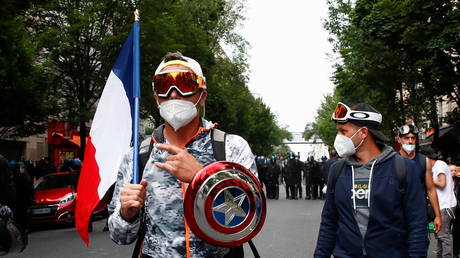
Already seen as a people who will take to the streets in protest at the drop of a hat, the ugly side of this culture has reached fever pitch given the pre-pandemic yellow vest protests in France and those on either side of the vaccine debate attacking each other akin to tribal matchgoing fans.
What is sad is that when it should be showing off the best of what it has to offer, French football is exhibiting its worst.
To a backdrop of a television rights war, which nearly imploded the domestic game as Canal+ took on beIN and Amazon, the landing of Lionel Messi as a free agent from FC Barcelona was a major coup not just for PSG, but also the league itself.
Couple the Argentine with other big names such as Neymar and Kylian Mbappe, plus the fact that France are the reigning world champions and are perhaps second only to Brazil for producing young talent, all this should see it rival the Premier League and La Liga for prestige.
But violence and clashes are overshadowing the quality on display, meaning certain western liberals might also want to look closer to home before throwing stones in glass houses at European neighbors further east such as Hungary.
Yet it remains to be seen how long UEFA can stand idly by while French football destroys itself from within.
Furthermore, the booing of Mbappe by his own fans at the weekend when he featured against Lyon will do little to stop him heading to La Liga and relieving the national game of one of its marquee talents, while others will be dissuaded from signing up to French clubs to receive the same treatment that as we have seen can result in actual physical confrontation.
Stories of yellow cards for showboating by players such as Lucas Paqueta and Neymar, suffocating the right they have to express themselves and entertain, isn’t a good look for French football either.
But only when they have ironed out these issues might Ligue 1 and French football realize their so evident potential.
By Tom Sanderson
The statements, views and opinions expressed in this column are solely those of the author and do not necessarily represent those of RT.