Facebook said this week it is “pausing” its Instagram Kids project in order to “work with parents, experts and policymakers to demonstrate the value and need for this product.”
The announcement came amid growing opposition for the project and criticism that Facebook has knowingly ignored its own research showing that Instagram is toxic to the mental health of younger people.
Boom Bust’s Ben Swann explains the latest developments.
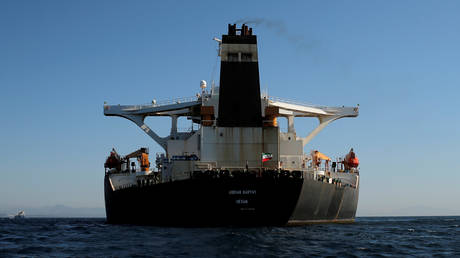
Iran and Venezuela have struck a deal to swap heavy Venezuelan crude for Iranian condensate, Reuters has reported, citing unnamed sources familiar with the deal.
According to these sources, the swaps are set to begin this week and last for six months, although they could be extended. The imports of Iranian superlight crude will help Venezuela revive its falling oil exports amid US sanctions that, among other problems, have cut off the country’s access to the light oil that is used to blend with its superheavy to make it exportable.
For Iran, the deal will bring in heavy crude it could sell in Asia, the Reuters sources also said. The diluted Venezuela crude will also likely go to Asian buyers.
Reuters also reported that, according to the US Treasury Department, the deal could constitute a breach of sanctions, to which both Venezuela and Iran are subjects.
“Transactions with NIOC by non-US persons are generally subject to secondary sanctions,” the Treasury Department said in response to a Reuters request for comments on the deal. It added that it “retains authority to impose sanctions on any person that is determined to operate in the oil sector of the Venezuelan economy.”
Despite the sanction noose, Venezuela has been ramping up its oil exports, generating vital revenue. According to a recent Reuters report, the country, which is home to the world’s largest oil reserves, exported more than 700,000 bpd of crude in July—the highest daily export rate since February.
Most of the oil went to China and Malaysia, although the latter is usually only a stop along Venezuelan oil’s trip to China. The same report noted that three of the five crude oil blending facilities in the Orinoco Belt were operational, and another crude upgrader was preparing to restart operations after a year’s pause.
Iran, meanwhile, recently revealed plans to attract some $145 billion in oil and gas investments from both local and foreign sources.
“We plan to invest $145 billion in the development of the upstream and downstream oil industry over the next four to eight years, hence I welcome the presence of domestic and foreign investors in the industry,” Javad Owji, Iran’s new oil minister, said during a meeting with executives from China’s oil giant Sinopec.
International rating agency S&P has improved its outlook for Russia’s GDP growth this year to 4% from its previous forecast of 3.7%, according to a survey released on Tuesday.
The document, focusing on emerging markets, also gave a forecast for Russia’s GDP in 2022 and 2023, with the agency’s analysts expecting the country’s economy to grow by 2.6% and 2% in the next two years, respectively.
The agency sets Russia’s inflation at 6.1% in 2021, but predicts it to drop to 4.2% next year. According to the survey, the country’s central bank key interest rate will reach 7% per annum in 2021, up from the current 6.75%.
Analysts expect Russia’s ruble exchange rate against the US currency to stop at 72 rubles per dollar at the end of the year, but to gradually weaken to 77.5 rubles per dollar by 2024.
The unemployment rate in the country is expected to be 4.9% this year, but fall to 4.6% in three years’ time.
The agency also gave an outlook for the emerging countries in Europe, the Middle East and Africa, predicting an upward trend in GDP growth throughout, primarily driven by increased consumption and exports. However, analysts noted that inflation in European states with emerging markets would continue to rise, pressured by higher fuel and food prices and supply chain disruptions as the result of accelerating economic growth. The agency warned that the two main risks to economic growth emerging economies are facing include inadequate vaccination and a faster-than-expected normalization of US monetary policy.
Fitch ratings agency also recently improved its forecast for Russia’s economic growth in 2021, with a slightly higher figure of 4.3%. Meanwhile, according to a recent statement by Russian President Vladimir Putin, the country’s economy has this year completely overcome the economic decline caused by last year’s Covid-19 pandemic.
Trade turnover between Russia and China has grown by a third since January, according to Russia’s Ministry of Economic Development, which expects further growth this year.
“By the end of the year, there is every chance to reach a historical maximum [in trade turnover with China],” the head of the ministry, Maxim Reshetnikov, said on Wednesday at a meeting of the Russian-Chinese subcommittee on trade and economic cooperation.
Reshetnikov praised the steady confidence Chinese companies have put in the Russian market, shown by prolonged economic activity and the launch of new projects even in the midst of the Covid-19 pandemic. The ministry plans to send four of its representatives to China to work in the Russian trade mission and promote cooperation with emphasis on the digital economy and sustainable development.
Among the issues discussed at the meeting were the restoration of supplies of Russian fish products to China, ensuring uninterrupted export cargoes crossing the Russian-Chinese border by land, and expanding cooperation in agricultural trade.
“We are interested in the implementation of new large projects – the first Russian-Chinese insurance company, the construction of additional capacities of the terminal for receiving and transshipment of liquefied petroleum gas and propylene in Manchuria,” Reshetnikov said.
According to China’s customs administration, trade turnover with Russia at the end of 2020 dropped by 2.9% in annual terms and amounted to $107.76 billion. However, in the pre-crisis years, the indicator grew steadily, rising gradually from $69.52 billion at the end of 2016 to $110.75 billion in 2019. Both countries plan to get back on course as soon as possible, with the goal of increasing the volume of bilateral trade to $200 billion per year.
The price of natural gas in Europe surged above $1,000 per 1,000 cubic meters for the second day in a row on Wednesday after adjusting to $950 the night before, Intercontinental Exchange (ICE) data shows.
The cost of November futures on the TTF hub in the Netherlands has so far increased to about $1,020 per 1,000 cubic meters, while the cost of October futures stood at about $1,010 per 1,000 cubic meters.
The overall rise in gas prices since the start of Wednesday’s trading session was about 6% by 7:00 GMT.
On Tuesday, gas prices exceeded the $1,000 level for the first time in history. The cost of October futures jumped 11% at one point to nearly $1,040.
Experts at the Fitch rating agency expect the price of gas to continue to grow and break new records if the current shortage of the commodity on the European market is not curbed ahead of the upcoming winter.
Analysts attribute the price hike to the post-pandemic increase in demand for natural gas combined with underfilled gas storage facilities in Europe. Europe’s energy crunch has resulted in higher costs for consumers and threatens to derail the continent’s economic recovery.