A major fertilizer manufacturer has been forced to shut down two factories in the UK as energy prices continue to soar in Europe.
The US-based CF Industries Holdings announced the shutdown of its manufacturing complexes in Billingham and Ince, with no timeline for when production may restart, as European power prices surge to multi-year highs.
The step comes amid an extreme squeeze for energy supplies across Europe and the UK that has sent spot prices for natural gas soaring by up to 20% – more than four times the level seen this time last year. The crunch was reportedly triggered by limited flows from the region’s top suppliers, Russia and Norway. Shipments of liquefied natural gas have also slowed, as Asia has started buying up cargoes to meet its own demand.
The October gas futures contracts at the Dutch TTF exchange climbed to a record high of €79 ($93.31) a megawatt-hour this week. The contract has risen more than 250% since January, according to Reuters, while benchmark power contracts in France and Germany have doubled.
Analysts at Goldman Sachs expect these soaring prices to evoke power outages during the upcoming winter with blackouts pushing bills even higher, raising concerns over the costs to businesses already shouldering higher costs for raw materials.
The shutdown of the CF Industries plants may have an impact on global pricing for fertilizers, with other producers following suit, according to Alexis Maxwell, an analyst at Bloomberg Intelligence.
“The market will read this as [evidence that] other European producers are likely to shut down, and nitrogen prices will continue to rise on the supply-side shortage,” the analyst said.
The rise of natural gas prices could hurt the economic competitiveness of the European Union on a global scale, Ole Hansen, head of commodity strategy at Saxo Bank, told RIA Novosti.
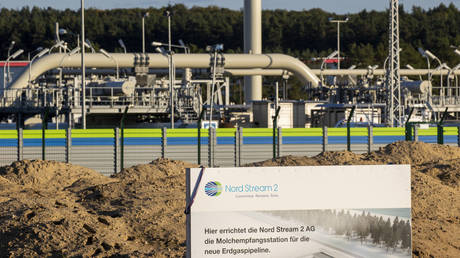
European gas prices have been hitting record highs lately due to low storage volumes and the fast-approaching winter, as well as low supplies from Russia and uncertainty about the Nord Stream 2 gas pipeline.
Russia’s Gazprom said earlier it was ready to begin gas deliveries to Europe once the new pipeline obtains the required EU certification. But that process could take months due to squabbling among European countries about approving more imports from Russia.
The certification delay sent European prices to a multi-year high of almost $970 per 1,000 cubic meters on Wednesday.
According to Hansen, the surge in prices could lead to power outages in the EU this winter.
“If the price growth is not pegged down in the near future, then there’s a risk of a harsh winter with power outages and a decrease in the competitiveness of energy-intensive industries, which are under pressure from a sharp rise in gas and electricity prices,” he said. The expert added that the energy-intensive industries, which are located mainly in Germany and France, will suffer the most.
Deprived of tourism dollars, Sri Lanka’s forex reserves plummeted from $7.5 billion in November 2019, when the government took office, to $2.8 billion at the end of July. Food staples in the country are also running low.
Max and Stacy discuss the reasons for the crisis and possible solutions to address it.
Rising gas prices will force European countries to restrain their ambitions to phase out coal and fossil fuels, according to an expert on EU energy markets, Simonas Vileikis.
“Underfilled storage facilities continue to push the price of gas higher. If the facilities are not refilled now, and the winter turns out to be rather severe, EU nations may be forced to reactivate thermal power plants operating on other types of fuel, including coal, to compensate for the lack of electricity,” Vileikis told TASS.
On Wednesday, European prices for gas hit a multi-year high of almost $970 per 1,000 cubic meters, extending the unprecedented rally seen over the past weeks. The surge in prices is projected to trigger power outages in the EU during the winter.
Steep gas prices have reportedly become a driver in lifting carbon and coal prices to record highs as well. Among the other factors contributing to higher energy costs, according to analysts, include low wind generation and nuclear plant unavailability across the continent.
European Commission President Ursula von der Leyen has called on the EU to counter rising Chinese investment with a new infrastructure program, Global Gate. “We want to create links and not dependencies,” she said in her address.
Boom Bust’s Christy Ai and Professor Richard Wolff offer their forecasts on the EU’s latest proposal to counter China’s new Silk Road.