F1 2021 – Review

If you want to look for the first ever racing game, you’d have to travel back some 48 years to Atari’s space race. For those past 48 years gaming has brought racing fans an experience ever so closer to the real thing, and now in 2021, we might just have the closest one yet. F1 2021 is Codemaster’s latest addition to their long line of Formula 1 titles, only this time they’re flying under the banner of gaming giant EA, it has a similar feel to the previous versions but there are a few major changes to gameplay and some new modes in the mix which stands as a clear sign of internet from the title’s new owners. There’s now more ways than ever to sink your teeth into the action, that’ll keep you rushing back to the game almost as fast as the cars on the track.

Out of the many different modes on display in F1 2021, the one which has seen the most hype is Braking Point, a new story mode in which you follow rookie driver Aiden Jackson in his battle against rival Devon Butler, whilst also trying to compete against veteran Casper Akkerman. The story is played out through a mix of cutscenes and situational gameplay, this could be nursing home a punctured tyre into the pits, gaining back positions after falling back in the race or pushing for a podium after finding some last minute speed. The balance of gameplay and cutscene is just about right, never feeling too far from the action or wanting more cinematics, and there’s some clever plot twists thrown in too which overall make for a really gripping tale. The story does take a little while to get going and once the plot is at its peak it does end very quickly, but this does leave the door open to develop on the story in future editions. Braking Point plays out very similarly to FIFA’s the Journey, and is a clear nod to the expertise and depth that EA has brought to Codemasters’ franchise.
Image

As well as Braking Point, there is a wide feature of single player modes to play from. My Team returns from its inception in the 2020 game, a mode in which you can design, develop and drive for your very own F1 team. Every choice from livery, engine supplier and second driver is yours to make, and each decision comes with sacrifice from another, do you go for a more experienced driver at the sacrifice of a less powerful or durable engine? Do you take on a sponsor with a lower weekly payment but a much more lucrative seasonal bonus? Each decision has weight behind it and allows you to experience just a glimpse of the headaches that f1 bosses have to deal with daily. There’s more decisions to be made, more freedom with research & development and greater customisation to expand on last year’s version and keep things different. Career mode makes the usual appearance, this time with even more options to drive, carve your own path with your customisable driver, or jump into the season with any driver on the grid, clinch the title with Max Verstappen or score those precious first points with George Russell. There’s now also the option of a 2 player career mode, you and a friend can lead each other to victory racing for the same team or compete for the title as rivals .Multiplayer makes a usual appearance with casual lobbies to hop into a quick game, or for a more competitive platform you can enter ranked and league races, and even enter E sports qualifying tournaments. Even though a lot of the single player options are the same as previous editions the additional features and options Codemasters have added makes for much more replayability and doesn’t make any feature feel stale or hastily carried over from the previous title. 

Gameplay on F1 2021 is much sharper and realistic. Racing on F1 2020 always felt on a knife edge, with very unforgiving braking and handling, but 2021 feels like a new game. The braking is surprisingly sharp and much more reactive than previous editions, allowing you to brake much later into turns and have a wider window of opportunity for overtakes. The steering feels lighter and more responsive, If you don’t catch the right line into a corner the game is much more forgiving with the adjustments you can make, gone are the days of binning it into the gravel if you don’t have an inch perfect entry. 
Image

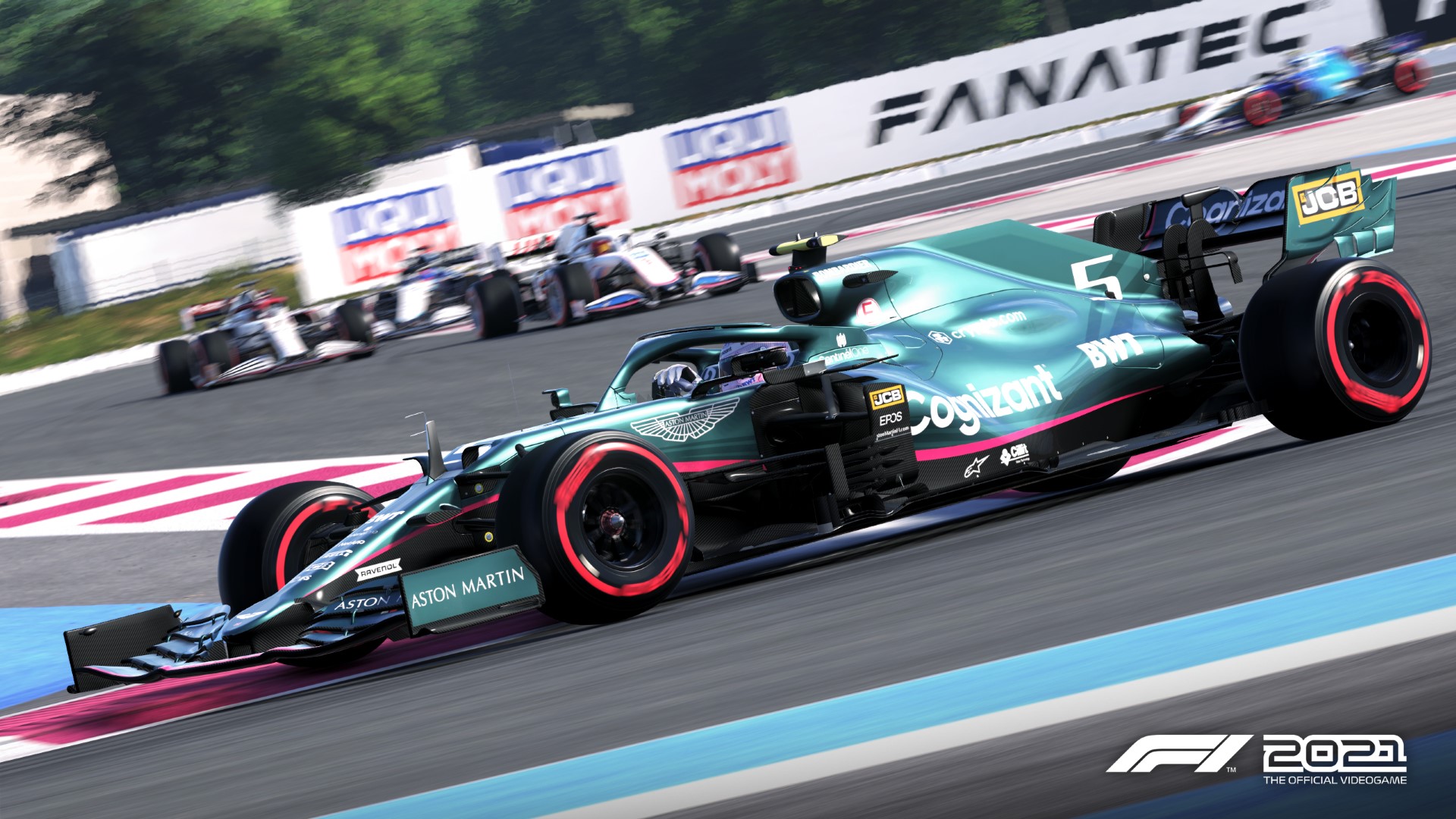
That doesn’t mean that gameplay has gotten any easier however, and Codemasters have made a few extra tweaks that bring this harsh dose of reality. F1 2021 has made a great effort to make the track and environments feel more alive, the kerbs are more raised and have a much greater effect on the balance and steering of the cars now, before you could breeze over a kerb with little effect, but now if you go too far over one it feels like you’re being shunted off course by a wrecking ball. Hitting the tarmac off of the limits or the gravel also has a much greater effect on driving, you’ll find yourself spinning much easier if you do veer too far over the limits. After a bit of getting used to it I much prefer the gameplay on this version, it feels more forgiving for correcting small mistakes, but it’ll punish you for trying to get a shortcut over a kerb or pushing the car past its limits, it feels much more realistic and less simulated than previous versions. Much like all the previous versions F1 2021 supports various racing wheels, and from using my one I can safely say that it feels brilliant, the movements are very responsive and the button layouts for car controls and messages are well thought out allowing for ease of use, another positive sign for those hard core racing fans.

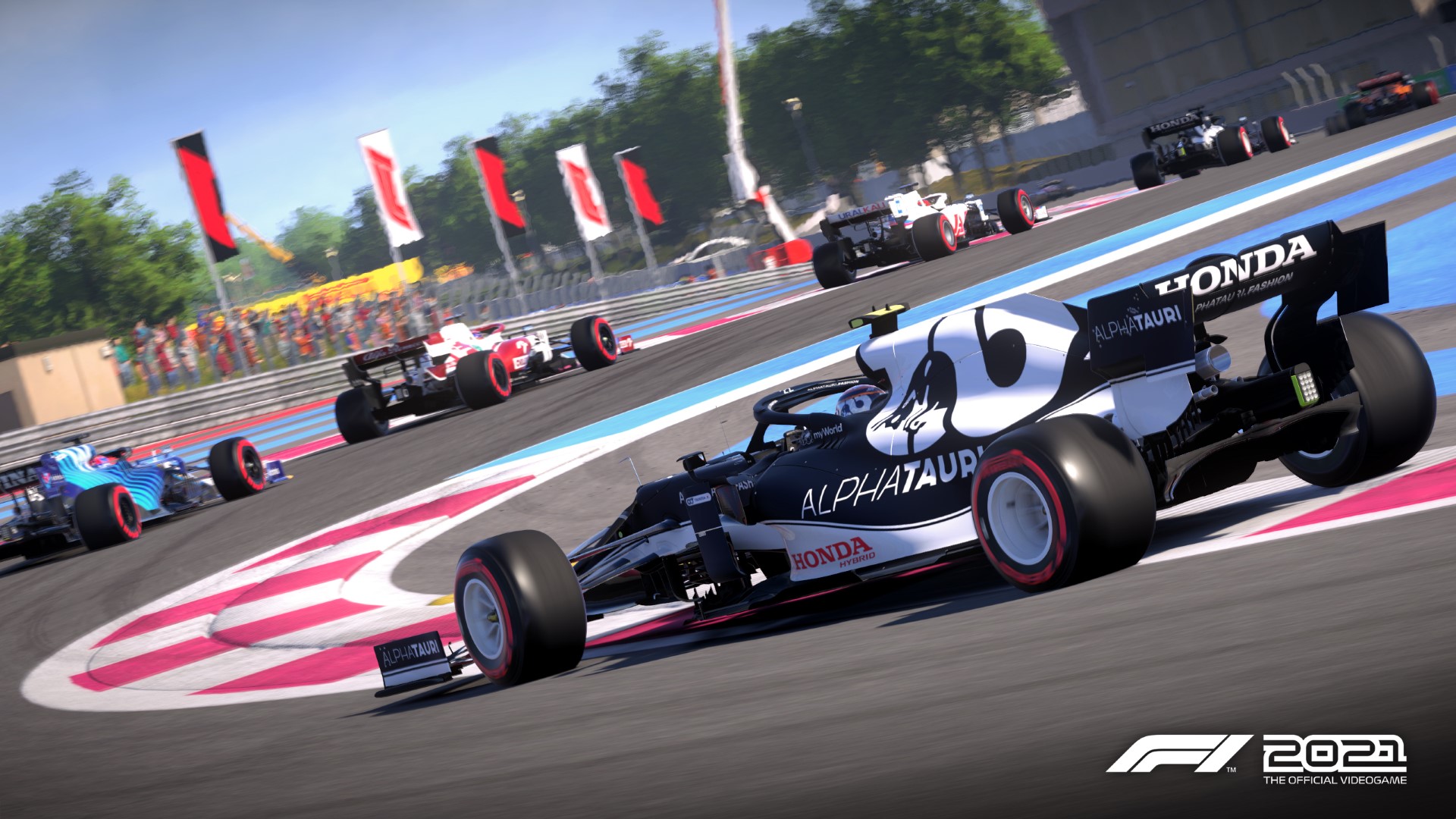
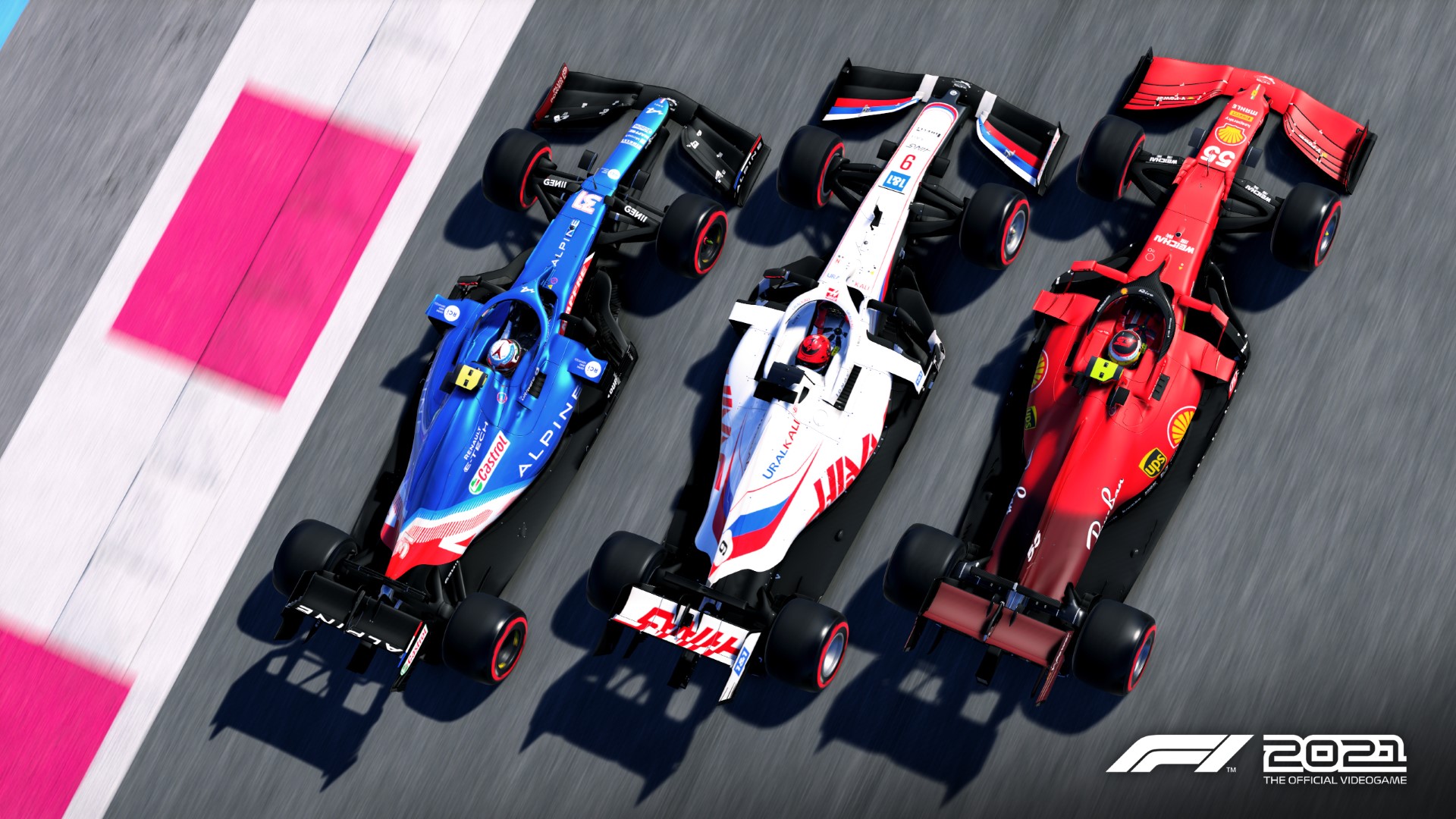
F1 2021 is Codemasters’ first venture into a next gen game, and they’ve pulled out all the stops for it. The F1 games have always been some of the best games around graphically but this year they’ve really kicked it up a notch, the cars are captured in stunning detail, especially when they’re showing signs of scraping and slight damage, the tracks too look amazing and much more dynamic. If a driver in front of you hits some dirt or gravel you’ll soon be plunging through a cloud of dust, and when a crash does happen there’s more debris and more visual flair with flying dirt and carbon fibre; driving in the rain also looks stunning, the spray from the cars looks very realistic alongside the droplets that constantly trickle down the screen. They’ve also overhauled the sound, making it their closest attempt to the real thing that I’ve seen, the added whir of the turbocharger when accelerating makes for a much richer sound than just a screeching engine, and it brings everything altogether to give the game a very premium feel, all of these details are powered in 4k 60+fps on next gen consoles. The new console generation and new lines of PC graphics cards have sent the benchmark for how games look & perform skyrocketing, and F1 2021 carries the flag for how a next gen title should look and feel.
Image

In their latest edition to the long-stretching series, Codemasters have set out with a clear goal of not reinventing the wheel but improving it, and in that regard they’ve knocked it out the park. Braking Point and improvements to Career mode & My Team add much more depth to the single player options available, and the gameplay tweaks they’ve made really help to improve the immersion and flow of the game, and these when combined with some stunning visual overhauls add a detailed and complete feel to the game. Some might say the F1 games have had a bit of a slump in recent years, but I’m confident that F1 2021 will be looked back on as one of the classic racing titles. 

GameRev was provided with a digital download of the game for the purpose of this review.

Samurai Warriors 5 – PS4 Review

One versus a thousand

You might think that that phrase can be interpreted in multiple ways: a philosophical mindset, a mental state, or a frame of mind. You would be forgiven if you overlooked the literal meaning behind the phrase: One person versus a lot of other people. Samurai Warriors 5 is a game that pits you against entire armies and spoiler alert: the armies do not do well. This type of game has the moniker of “Musou” and if you have not experienced this before, now would be a perfect time. Koei Tecmo has rebooted the ‘Warriors’ series into a “fresh re-imagining”; complete with a more compact storyline, new gameplay additions, and a new visual style. Will newcomers to the series be drawn into this historical hack-and-slash? Will returning fans be happy with the roster of changes? Let’s find out. 

Samurai Warriors 5 focuses on the Sengoku period of Japan, a 150-year period of almost neverending civil war that saw clan leaders and warlords fighting for power until the 3 “Great Unifiers” restored a central government in the region. The main storyline in the game focuses on a condensed timeframe of the Sengoku period where the story is told through the viewpoint of two primary characters: Nobunaga Oda and Akechi Mitsuhide. Whilst the game boasts an impressive roster of 37 playable characters, you will mainly be playing through the story as Nobunaga Oda (with smatterings of Akechi Mitsuhide). This main-character-centered focus helps to bring a level of continuity to the story and also adds a refreshing change of pace when a side-character steps into the story and you can carve up the battlefield with a fresh pair of blades. I will say, this forms more of a double-edged sword as I found myself falling in love with the playstyle of a side character (the legendary Lady Nō) and subsequently thereafter, falling out of love with Nobunaga’s playstyle throughout the story. This creeping feeling of boredom started to become worryingly apparent when the real enemy of the game started rearing its ugly head: repetition. 

With such an ugly beast on the horizon, surely the game can now turn to its biggest champion: the gameplay. I will say that the core idea behind the Muso playstyle is incredible. You stand alone in front of hundreds of (apparently brainless) soldiers who all fall victim to your blade. You can string together simple combos that play off variants of Square and Triangle and you have a “Hyper” attack that propels you forward whilst still attacking enemies (and knocking them along with you). Combine this with customisable ultimate attacks and a devastating Muso finisher and you have the ability to chain combos that reach into the thousands. To me, there is nothing better than carving through the battlefield whilst sending hundreds of enemies flying away with each arcing slash. It really helps to de-stress after a long day at work. The visual style complements this beautifully and the revamped musical score adds a layer of speed and aggression to the game. 

Are all of these positives enough to ward off the beast of boredom? Sadly, no.

The story and gameplay are the two worst casualties of this beast. The game does well to inform you of the story through in-game cutscenes and beautifully rendered artistic showcases and the voice acting on the characters is stellar but the game really can be boiled down to a simple “Move from A to B and kill everything along the way.” The historical elements add a level of intrigue and awe as you find yourself immersed in famous battles but the repetitive nature of the level structure and gameplay makes the game hard to stay passionate about. The “One versus a thousand” element is exhilarating and it is hard to complete a level without a smile on your face but once you have completed a few levels, you find that the details start to get lost in the wind. I love intense gaming experiences but there needs to be more respite and variance to break up the repetition. There is an impressive amount of weapon customisation available but this almost seems redundant when you are sending whole armies back to the stone age with each sword-swing. The AI also seems inconsistent to the point where the difficulty between the filler soldiers and the end of level bosses is too great. I found myself blindly massacring hordes of soldiers who seemed to struggle to even tie their laces, only to run head-first into a boss who made me feel like a 5 year-old armed with a butterknife. There is also a citadel mode which acts as a pseudo-tower defence mode where you can train characters for EXP and additional weapons but the appeal wears thin after a few hours of slaughter. 

Overall, Samurai Warriors 5 is an impressive reboot of an already well-loved series. The repetition was a huge issue for me but I must confess that I am relatively new to the Musou style of gameplay. I was immediately hooked with the beautiful visuals and the voice acting (and of course, the gameplay) but I did not find myself wanting to play longer than a level or two at a time. The game is also relatively smooth-running (except for the PS1-grade camera AI which threatens to get stuck behind anything and everything on the battlefield).

 If you are happy with a solid story, an absurdly destructive combat system, and an artistic rendition of a bloody time in Japan’s history then you will love Samurai Warriors 5. If you are like me and new to the series then you might want to take it slowly to avoid the danger of burnout but don’t worry, there is enough meat there to satisfy your bloodlust until the end credits roll. 

I give this 7.5 Demon Kings out of 10 

GameRev was provided with a digital download of the game for the purpose of this review.

The Ascent – PC Review

I’ve been having a tough time, lately. I live in a big city in the United States, and I’m struggling to find work that isn’t going to make me spiritually miserable or exhaust me completely. The COVID-19 pandemic has taken a second turn for the worse in my country, and a lot of hope I had back in May is mostly gone. I’m not suffering nearly as badly as many of my countrymen are, but I’m also feeling like I don’t have much of a future – every day, there’s new stories about corporations gobbling up resources and space side by side with stories of hundreds of thousands of regular people on the brink of losing their homes. I, and many of my friends, feel pretty powerless to make any change for the better.

The Ascent (Neon Giant, 2021) feels like a strikingly timely game, which surprised me. I expected it to be a solid but one-note sci-fi action RPG, with a story about some regular guy who becomes powerful beyond his wildest dreams and saves his society from total collapse – if this sounds cynical, it’s because my recent experiences with sci-fi stories in games have been subpar. What I found instead was an elegant narrative that struck chords the way sci-fi and cyberpunk media ought to: the author trying to communicate an allegory alongside the plot, but through immersion – wrapping you up in the details, until you encounter something that isn’t identical to your experience, but mirrors it through a series of scratched, neon lenses. You connect to the characters not because they do the same things you do, but because they feel the same way for similar reasons.

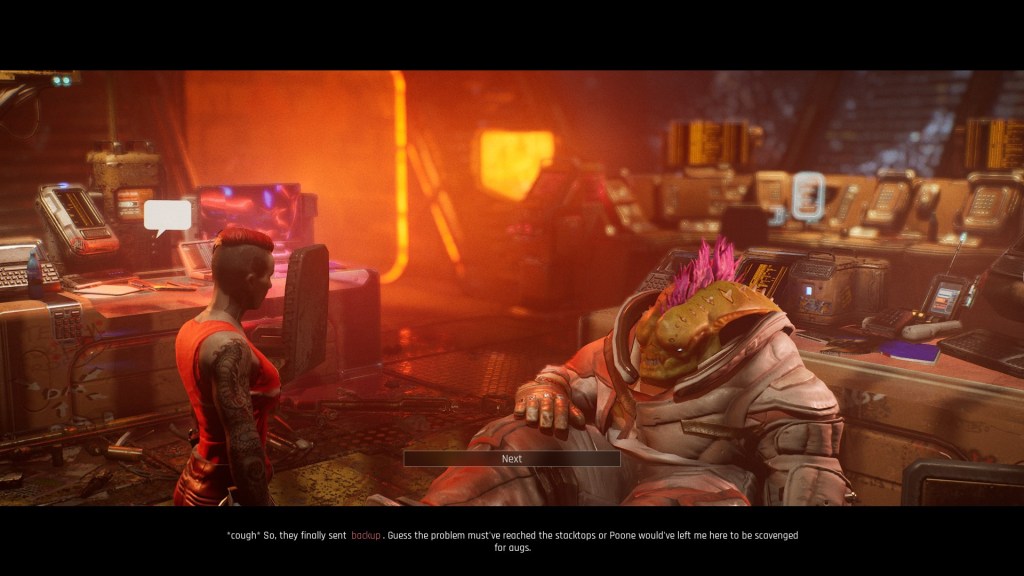
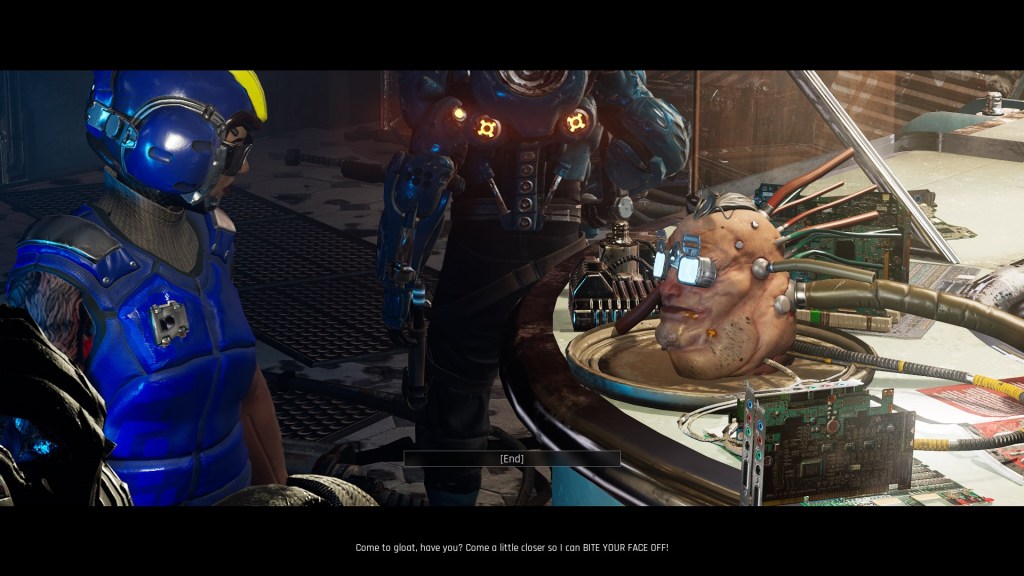
Your character in The Ascent is a glorified handyman with a gun, indentured into servitude to the Ascent Group in exchange for the travel fare it took to get to this planet. The Ascent Group itself couldn’t care less if you lived or died, but stackBoss Poone, your direct supervisor, is a little more involved. Your job is whatever he decides it is, whether that’s going down into the bowels of the Arcology to do repairs to to clean out Feral nests.

And then, the Ascent Group shuts down. Not the arcology itself, exactly, but the board of directors running the show. Suddenly they’re gone, and they’ve defaulted on all their finances. Their systems doing larger scale maintenance and operation are going offline. It’s every indent for themself. If you don’t move fast, competing corporations are going to descend on your arcology and strip it for parts, leaving the massive machine you live in totally non-functional.

You solve these problems with guns, of course, because it’s an action game. The core mechanic that sets The Ascent apart is its height system, which creates a genuine tension. At “rest” you stand straight up and shoot at waist height. You can raise your gun to shoot at a higher height, which does increased stagger damage. You can also crouch to hide behind cover, or walk around like a very dangerous duck out in the open if you really want. While you’re crouching, you can raise your gun to shoot at “waist height” over your cover, avoiding all shots that would hit you. Playing evasively behind cover is a big part of the game, and as enemies spawn in and swarm you’ll need to constantly re-evaluate your position. The shot-height mechanic was surprisingly robust, and I enjoyed getting to see it put to the test right out of the gate – the first enemies you encounter, ferals, are low to the ground. If you raise your gun to try to invoke more stagger damage, you’ll simply shoot right over them. This dance of crouching, hiding behind cover, dashing out, and then crouching in the middle of the open space to try get the right shot becomes part of the rhythm of the game later on, as other alien species of different heights join the ranks of the gangs you’re fighting.

There are a variety of classes of guns, which obviously perform differently but actually feel different to play too. You can equip a tactical item which charges up as you do damage, and while these are diverse and also feel different to use, the kinds of tac’s you’ll end up carrying into later stages of the game narrow significantly. Once you find the tactical that spawns an entire mech for you to pilot, I doubt you’ll ever go back.

You also can equip two augmentations and two modules, the former of which are active while the latter are passive. The augmentations feel great and very diverse, but unfortunately as a solo player my sole focus was survivability and immediate damage output. I imagine that in multiplayer, there’s more room to explore more niche character builds because your teammates can watch your back. Really, though, I was excited every time an augmentation came off cooldown and I got to use it. They’re powerful without being the basis for your whole playstyle, and the visual effects that accompany them are fantastic. They just feel great.

While the combat mechanics themselves feel good, The Ascent does commit three combat design cardinal sins. 1. Enemies spawn from behind you from areas you’ve already cleared, which breaks the immersion pretty badly. This is acceptable in the areas where enemies spawn by climbing in from over the sidewalk railings, but in dungeons it feels terrible. 2. Damage numbers are inconsistently displayed, which is important because the color of those numbers tells you whether the damage type you’re using is effective or not. 3. Enemies just don’t stop coming in certain areas. This would be okay if you started a big fight and every enemy nearby off the screen came towards you, but new enemies will spawn in for this big encounter – and then you’ll move further through the zone and yet more enemies are waiting nearby and spawn fresh. This kind of encounter pacing feels okay in the neighborhoods, but it’s an absolute slog during some of the closed-space missions.

The world of The Ascent is deeply horrifying, but generally in the same ways that capitalism, militarism, and socio-economic exploitation are horrifying in our own world. The writers behind The Ascent know just the right dials to turn to take regular exploitation and make it even more gruesome – one of my favorite side missions involved tracking down the corpse of an alien’s friend, which had gotten lost in the morgue system. Over the course of the plotline, you discover that the soda this alien’s friend was obsessed with actually contained slime from an alien creature which, when incubated in a warm being, could bioaccumulate rare metals. This missing corpse was harvested for her metals after death, and wiped from all records. Most of the other side missions I played were like this – surprisingly personal little stories of grief, anger, and deception inside this huge arcology these people all called home. Mechanically, too, the side missions I completed all felt like they were worth doing – interesting weapons and augments are given as rewards.

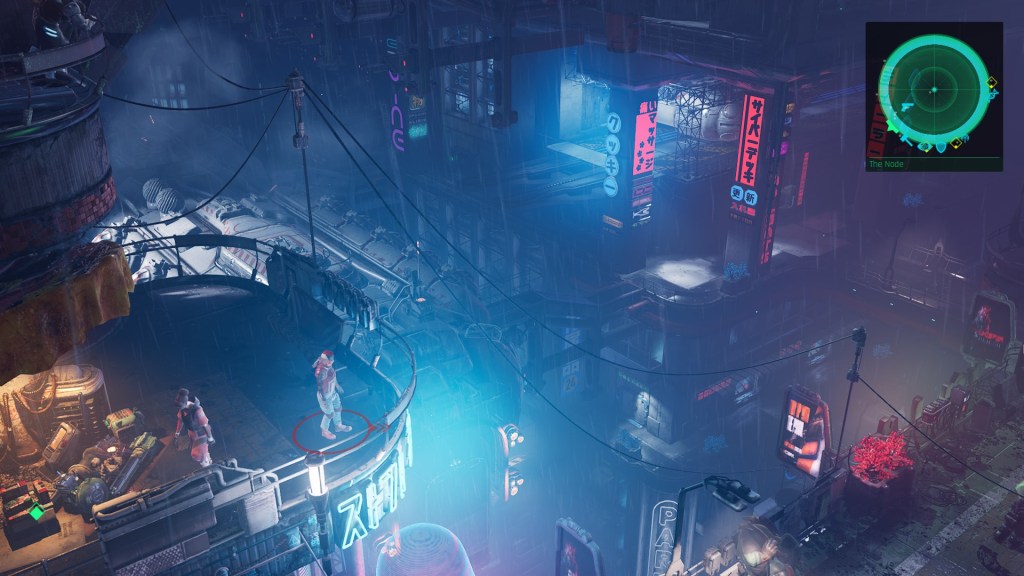
The main reason The Ascent’s setting can successfully be so creepy and genuine is because the world feels truly alive. A large part of this is thanks to The Ascent’s incredible graphics and stunning attention to detail. No two neighborhoods feel the same, yet are never too different so as to feel like they can’t be part of the same citystate – and even more granular, no two streets feel quite the same either. The immense amount of work that went into placing trash, streetlights, weird little NPC conversations, open buildings, cables, and machinery pays off tenfold by making the arcology feel like a real place. My favorite trick Neon Giant uses is all the animation and action happening in the background, under and away from the surface you’re walking on. Ships fly by, lights blink, maintenance robots go about their job – the arcology’s infinite number of systems are all playing out around you, ignoring you completely – just like life.

Neon Giant’s approach to the distant future is to lean all the way in, to really explore and display the full possibilities of what life might look like – this, too, makes the world feel somehow more alive than a nearer version of the future more closely tied to what we know. There are multiple other species of aliens all living in concert in the arcology, and I applaud Neon Giant for making them look more radically different than “vaguely human-shaped.” I’m especially a fan of the Keesh, these bipedal eel people who have had to reshape a lot of their traditional behaviors and society to fit in with other sentient beings.

One part of the arcology’s design that feels true to life and is miserable to play through is the way fast-travel works. Quite a few main story missions require you to travel to far-apart places in the arcology, including across tiers of the structure. The fast-travel train system will move you a significant distance, but you’re still going to have to do quite a bit of running around to get between tier elevators, which is a big drag on pacing. The taxi system is a joke: you can pay 1,000 uCreds to be picked up anywhere, just to be dumped somewhere in the middle of your selected neighborhood – you can’t pick your actual destination.

Bodymodding is a big part of society – and of gameplay, through the augments. You can change your sex for free and whenever, if you want, at the same place you get razor drones and energy shields inserted under your skin. And, again, Neon Giant isn’t afraid to make the far future scary and upsetting – corporations have figured out how to freeze people, but making spaceships go fast is difficult and expensive. If you want to get to a new planet, you’re going to need to sign away some years of your life to pay for the journey. If the ship you’re on miscalculates its trajectory, you might not get to your destination for decades – an NPC in the spaceport has been waiting for her brother for years, with no confirmation of where his ship is or when he’s going to show up. This repeated, subtle theme about the artificially long lives people live, contrasted against how dangerous and miserable it is to get turned into living trash in the arcologies really stuck out to me.

The voice acting for stackBoss Poone, nogHead, and Kira was excellent. Actually funny jokes, simple but solid characterization for those three main NPCs, and unique alien designs make the main cast really stand out as great characters in a genre that doesn’t often get such tender writing attention. The cinematic cutscenes during major plot moments are well-animated and well-paced – none overstayed their welcome, and were all skippable if you had, say, just died and needed to get through a scene again.

Ultimately, I liked how low-profile the plot of the game was. Obviously you run around starting big gun-fights and getting involved in megacorp politics, and the final boss fight does bridge into cosmic horror, but you start as some guy with a long and terrible contract, and you end as some guy who happened to have an absolute nightmare of a day who is now technically a “free agent”. You might have access to the upper level of the arcology where the sun actually hits you, but you can’t live there. There’s no way you can afford it. You’re a handyman.

The Ascent is a high-quality entry in the canon of ARPGs, and I hope attention stays on it long enough for it to make a mark. Unfortunately, the game was quite buggy and had some very rough performance issues at launch, and while many of these have been fixed with a patch on August 6, many stutters and bugs remain. However, Neon Giant seems dedicated to their effort, and I trust these will be ironed out in the next few weeks. 8.5/10

GameRev was provided with a key for the purposes of this review. KudzuControl played The Ascent on PC, using a mouse and keyboard.

Call of Duty 2021 Reveal Date Leaked

According to a popular leaker, we may be getting a reveal for the next Call of Duty game sooner than expected.

The next entry in the Call of Duty series is yet to be officially revealed, but reputable leaker Tom Henderson claims that the reveal date is near. According to Henderson, the next Call of Duty, codenamed Vanguard, will be revealed on Thursday, August 19. Apparently, these details have been verified with four different sources. Henderson’s tweet about Call of Duty 2021 has since been removed via DMCA by the copyright holder.

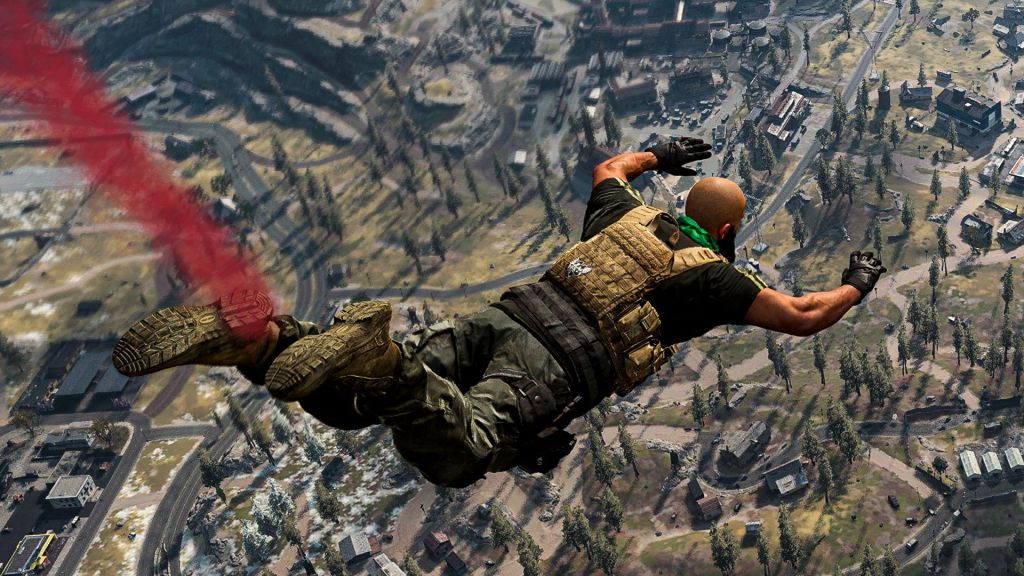
This date coincides with the rumored PlayStation’s State of Play event which would be a great opportunity to give players a sneak peak of the game. Call of Duty Vanguard is said to take place during World War 2, following the trend that the Battlefield series has set.

New Warzone map may be on the way.

Previous rumors suggest that Vanguard will feature Warzone integration with the possibility of a completely new battle royale map also being considered. This map is said to fit the World War 2 aesthetic to match the game’s setting.

For now, there isn’t much evidence to back up these claims so it is best to take this information with a grain of salt until more information comes to light. Thankfully id the reveal indeed is taking place on August 19, then we only have to wait one week until we learn more about Vanguard.

RiMS Racing Review

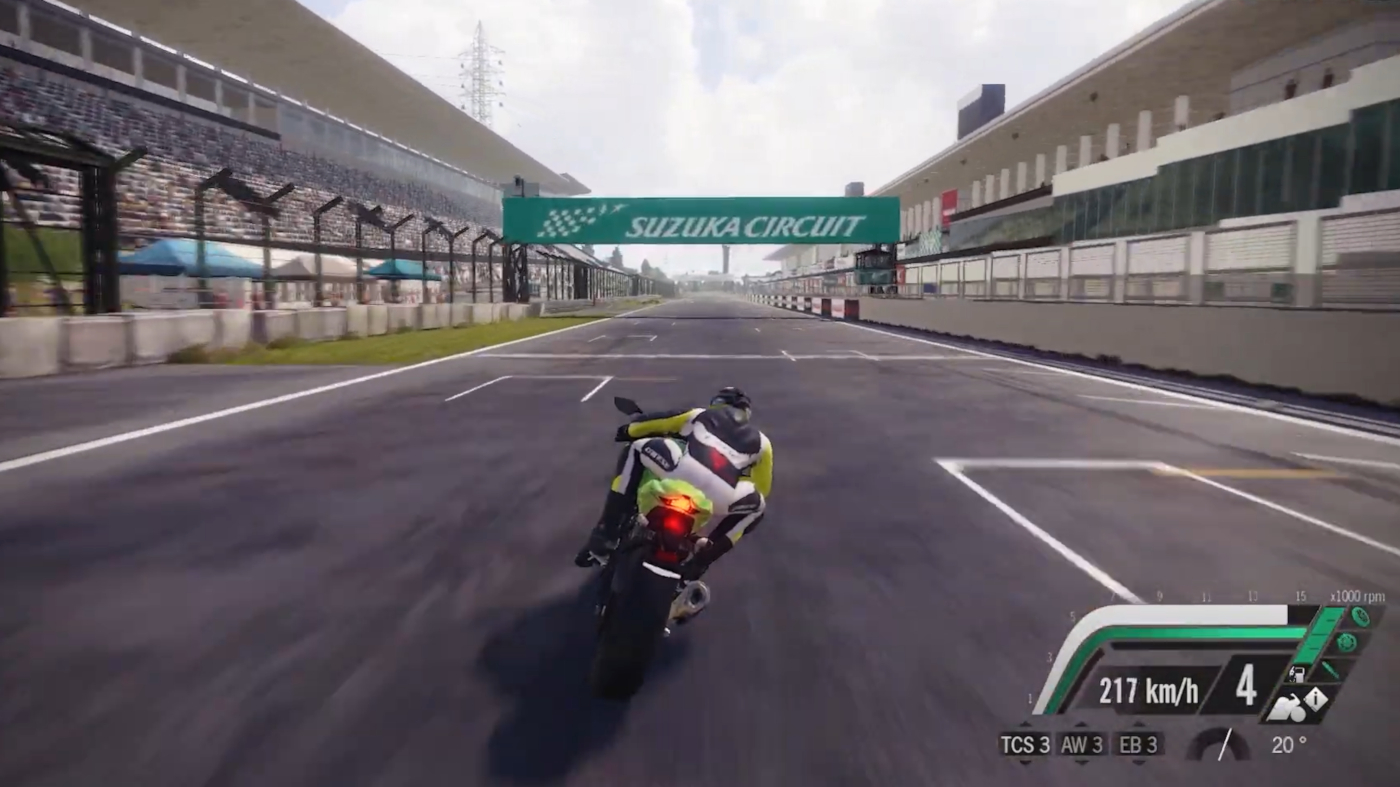
RiMS Racing replicates the experience of racing on a motorcycle. Together with the game’s tough bike riding mechanics and bike customization, RiMS Racing aims at providing a very realistic and fluid gameplay for players to indulge in. Whether you are an inexperienced player or a hardcore biker, there are settings that can assist the laid back gamers who want to play for fun. Turning off the settings that assist the driver creates a more challenging and unique way of playing for those who are more experienced with how bikes function. These settings can be tweaked to fit the player’s needs and playstyle.

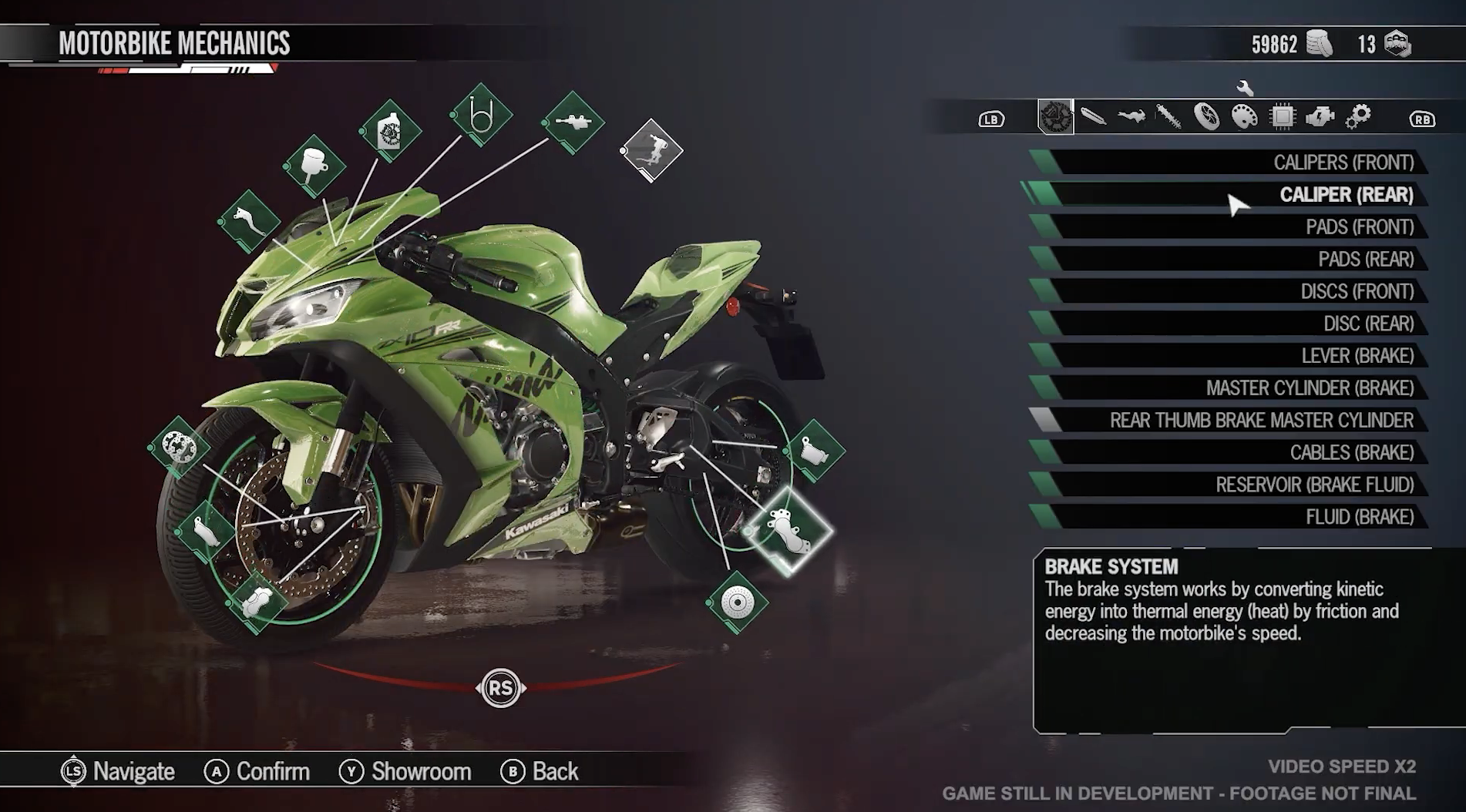
First and foremost it is very important to shed light on the bike customization RiMS Racing has to offer. The game did a magnificent job when it comes to this aspect. Motorbike enthusiasts can spend up to hours upgrading and unlocking new bikes through by playing the main story line. There are only 8 bikes, but the room for customization allows the player to create and tune their bikes in several ways that allow the bike to function and drive differently.

The career mode is where most players will earn the necessary credit used to upgrade and buy bikes. The career missions range on a wide scale of different missions and challenge to avoid repetitiveness within the the game. This endorses the player to collect and spoil himself or herself with upgrade goodies.

RiMS Racing does not excel when it comes to gameplay; however, credit should be given for the effort and hard work that was put into the game. It is not all that bad, but if more effort was put into refining some render issues and enhancing the game’s graphics such as the generic weather effects and monotonic visuals would be a plus. Reworking such details will enable the game to compete with other motorbike games in the market which surpass RiMS Racing in that aspect.

Overall, RiMS Racing is a spectacular bike racing game despite some minor problems. The game does a fantastic job to fill in time and enjoy some casual bike riding gaming sessions; however, bike enthusiasts might view the problems as limitations to fully experience a hands on bike racing simulation game. RiMS Racing peaks with its customization system which allows one to customize their bikes at a very micro level. For example, if we were to customize the brakes, one can change the calibers, disks, pads, fluids, cables, and much more.

It would be nice to see additional content and updates that keep refining the mechanics, enhance the already amazing bike customization system, and add additional bikes and game modes.

GameRev was provided with a digital download code for the purpose of this review.