
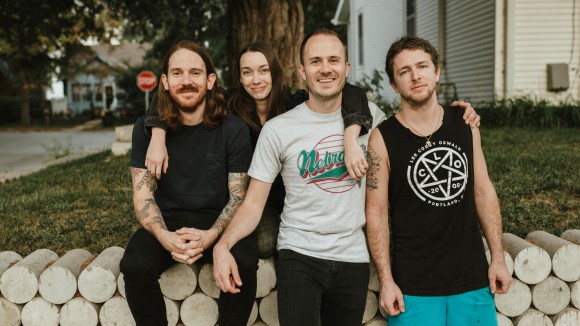
DIY Band Uh Oh Releases New Single From Upcoming Album

Once it became clear that we were going to have to hibernate for awhile, we quickly decided that we wanted to keep the band afloat and stay in each others’ day-to-day lives by just writing more new music. 

Joe Champion, Uh Oh frontman

The unfolding of unfortunate events in the previous year or so created a rare vortex in which many were allotted some of life’s most precious currency: the time to create. Nebraska-based DIY band, Uh Oh made good use of their time apart and away from the stage by writing, recording and mixing their upcoming album, Good Morning. “When the world went into hibernation mode,” says the band’s frontman, Joe Champion, “we poured our hearts into writing this album remotely via demos and video chats while missing each other like crazy.”

The anticipation of an in-person meeting of the minds carried the band through their remote collaboration for months– until, post-vaccination, the four were finally able to reunite. Champion describes the homecoming as a giddy experience: “We all piled ourselves and our equipment into our bassist Erik’s house, set up the living room as our home base, gave each other a huge group hug, and then played music and goofed around and watched Space Jam and danced and sang and laughed for like 4 days.”

“There was a bunch of hard work happening too,” Champion continued, “nailing down our parts and experimenting with a bunch of new ideas and recording day and night, but it just felt so good being back together in person that every second was fun.”

There is absolutely nothing more fun and gratifying than playing music together, it’s always been therapeutic for us and we can’t wait to get back out there with these new songs in tow.

From left: Erik Trent, Mari Crisler, Joe Champion and Jay Jacobson

The band was created as the brainchild of frontman Joe Champion and bassist Erik Trent six years previous. Once drummer Jay Jacobson and frequent collaborator and co-songwriter Mari Crisler joined the group, “everything clicked into place,” says Champion. An example of the group’s effortless cohesion is “Still Life,” the first single from Good Morning, which was released last week.

Uh Oh gained local recognition by performing any and everywhere in the area, from house shows to festivals. Although the band thrives while performing, Uh Oh hasn’t seen a stage since February 2020. With plans to return to live music later this year, Champion says, “There is absolutely nothing more fun and gratifying than playing music together, it’s always been therapeutic for us and we can’t wait to get back out there with these new songs in tow.” The group will be performing at The Sydney in Omaha on December 10th to promote the release of Good Morning, due to drop December 3rd.

The post DIY Band Uh Oh Releases New Single From Upcoming Album appeared first on The Greater Good.


Can You Always Go Home? Canadian Folk Singer-Songwriter Cassidy Waring Debuts Lonesome Reunion

An album that feels like an unchaperoned walk through dark and empty streets on a holiday back home, Lonesome Reunion is Cassidy Waring’s tormented debut.

Picture: families cozied up in warm houses, with bellies full and throats sore from a healthy balance of laughter and bickering as you carry on with your solitary stroll. Canadian folk singer-songwriter, Cassidy Waring‘s Lonesome Reunion is comparable to holding a snow globe. As an omnipotent outsider, you peer into a world so perfect, it’s almost fictitious. Knowing that life imitates art somehow makes beholding this tiny treasure more isolating, to know there are little towns with little houses and little families as happy as the replica you hold in your hands and yet, still so far removed from you.

Cassidy Waring photographed by Emile Benjamin

Everything you lose, needs to lose you.

Waring, “Everything You Lose”

A poignant, personal display of loss of innocence, Lonesome Reunion is somewhat of a study on the complexities of family and grief. Recorded and mastered by producer Jonathon Anderson, Lonesome Reunion features deep, folk-rooted instrumentals and sweeping, catchy melodies. Waring’s debut came to fruition after she sat for hours on end watching old VHS tapes of her family. The album’s intro, “Everybody’s Good,” features audio from one of these tapes. In the intro, we hear intimate, playful banter between Waring’s grandfather– to whom she affectionately refers as “Grandug”– and then-3-year-old Waring. “The tapes have become fascinating to watch because they are such a contrast to my painful memories as a teenager,” Waring stated in an email to The Greater Good.

The tapes, to Waring, are an ode to the glory of innocence and blissful ignorance only possessed in early childhood. “Part of me is comforted by them, they have served as proof that I have never been wrong about the amount of love and warmth that surrounded me as a kid and that we really were as happy and healthy as everyone remembers. It’s also confusing and devastating to watch these videos knowing what will happen for us in the future,” Waring stated. “When I was seventeen my mom died and her cause of death was chronic ethanol abuse,” the artist shared with me. “She and I were still very close when she passed. The main statement from anyone in and around my family is usually ‘But they were so happy, what happened?’”

Lonesome Reunion cover photo by Emile Benjamin

On the outside, Waring’s family could have lived in that aforementioned snow globe: “We were one of those families that went on bike rides together every week and talked about our feelings at the dinner table. It’s something I am still trying to understand, what pulled both my parents into addiction when I was about twelve. Very quickly, our house became a dangerous place to be, physically and mentally. I’ve just been trying to understand both of my parents and their relationship in a deeper way, after the fact.”

Waring released a music video for the fourth track on the album in September. In it, we see the songwriter through several days of sitting in front of an old CRT TV, captivated by family pictures in motion. “Leaving” is a wistful track about managing grief, with guitars sounding similar to what you may find yourself doing after listening this song (crying). I’d wager it nearly impossible not to feel a catch in your throat as Waring sings, “If I believed in ghosts, would you haunt me just to talk?”

Led by melancholy piano keys, “Everything You Lose” is another painfully intimate look into the stages of grief. The song was written after Waring experienced a series of losses including the ending of a romantic relationship and the break-up of her last band, all while still grappling with the loss of family years later. “I lost the sympathy cards from my mother’s funeral,” Waring sings.

When asked about this line, Waring said she was with her boyfriend at the time when she lost them: “Someone broke into his car in the mall parking lot and stole everything, including my big stack of unopened sympathy cards everyone gave me– I wasn’t ready to open them yet. What are the chances! After that verse poured out, so did the rest of the song.” Waring sings, “Everything you lose, needs to lose you.” Perhaps that sentiment works in reverse and everything that finds you, needs to find you.

The post Can You Always Go Home? Canadian Folk Singer-Songwriter Cassidy Waring Debuts Lonesome Reunion appeared first on The Greater Good.

Can You Always Go Home? Canadian Folk Singer-Songwriter Cassidy Ware Debuts Lonesome Reunion

An album that feels like an unchaperoned walk through dark and empty streets on a holiday back home, Lonesome Reunion is Cassidy Waring’s tormented debut.

Picture: families cozied up in warm houses, with bellies full and throats sore from a healthy balance of laughter and bickering as you carry on with your solitary stroll. Canadian folk singer-songwriter, Cassidy Waring‘s Lonesome Reunion is comparable to holding a snow globe. As an omnipotent outsider, you peer into a world so perfect, it’s almost fictitious. Knowing that life imitates art somehow makes beholding this tiny treasure more isolating, to know there are little towns with little houses and little families as happy as the replica you hold in your hands and yet, still so far removed from you.

Cassidy Waring photographed by Emile Benjamin

Everything you lose, needs to lose you.

Waring, “Everything You Lose”

A poignant, personal display of loss of innocence, Lonesome Reunion is somewhat of a study on the complexities of family and grief. Recorded and mastered by producer Jonathon Anderson, Lonesome Reunion features deep, folk-rooted instrumentals and sweeping, catchy melodies. Waring’s debut came to fruition after she sat for hours on end watching old VHS tapes of her family. The album’s intro, “Everybody’s Good,” features audio from one of these tapes. In the intro, we hear intimate, playful banter between Waring’s grandfather– to whom she affectionately refers as “Grandug”– and then-3-year-old Waring. “The tapes have become fascinating to watch because they are such a contrast to my painful memories as a teenager,” Waring stated in an email to The Greater Good.

The tapes, to Waring, are an ode to the glory of innocence and blissful ignorance only possessed in early childhood. “Part of me is comforted by them, they have served as proof that I have never been wrong about the amount of love and warmth that surrounded me as a kid and that we really were as happy and healthy as everyone remembers. It’s also confusing and devastating to watch these videos knowing what will happen for us in the future,” Waring stated. “When I was seventeen my mom died from her addiction and the toxic environment she was in,” the artist shared with me. “She and I were still very close when she passed. The main statement from anyone in and around my family is usually ‘But they were so happy, what happened?’”

Lonesome Reunion cover photo by Emile Benjamin

On the outside, Waring’s family could have lived in that aforementioned snow globe: “We were one of those families that went on bike rides together every week and talked about our feelings at the dinner table. It’s something I am still trying to understand, what pulled both my parents into addiction when I was about twelve. Very quickly, our house became a dangerous place to be, physically and mentally. I’ve just been trying to understand both of my parents and their relationship in a deeper way, after the fact.”

Waring released a music video for the fourth track on the album in September. In it, we see the songwriter through several days of sitting in front of an old CRT TV, captivated by family pictures in motion. “Leaving” is a wistful track about managing grief, with guitars sounding similar to what you may find yourself doing after listening this song (crying). I’d wager it nearly impossible not to feel a catch in your throat as Waring sings, “If I believed in ghosts, would you haunt me just to talk?”

Led by melancholy piano keys, “Everything You Lose” is another painfully intimate look into the stages of grief. The song was written after Waring experienced a series of losses including the ending of a romantic relationship and the break-up of her last band, all while still grappling with the loss of family years later. “I lost the sympathy cards from my mother’s funeral,” Waring sings.

When asked about this line, Waring said she was with her boyfriend at the time when she lost them: “Someone broke into his car in the mall parking lot and stole everything, including my big stack of unopened sympathy cards everyone gave me– I wasn’t ready to open them yet. What are the chances! After that verse poured out, so did the rest of the song.” Waring sings, “Everything you lose, needs to lose you.” Perhaps that sentiment works in reverse and everything that finds you, needs to find you.

The post Can You Always Go Home? Canadian Folk Singer-Songwriter Cassidy Ware Debuts Lonesome Reunion appeared first on The Greater Good.

Descubre el “Curare” de tu vida junto a la artista peruana Fabiana Brenner

Fabiana Brenner Curare

Descubre el “Curare” de tu vida junto a la artista peruana Fabiana Brenner

“Curare” nos abre las puertas al mundo sonoro de Fabiana Brenner, un mensaje que evoluciona canción tras canción.

El término “Curare” ha sido usado antiguamente para hacer referencia a un veneno que se extrae de algunas plantas, sin embargo, en la actualidad es empleado en dosis muy pequeñas para la relajación muscular, llegando a ser un elemento que ya no puede matarte, muy por el contrario, te cura. Este concepto es el que atrapa la joven artista peruana Fabiana Brenner para presentar su nuevo EP de nombre “Curare”.

Luego de lanzar recientemente su single “Infierno“, la cantautora Fabiana Brenner cierra el año con este nuevo disco, el cual cuenta con cinco piezas que nos hablan de situaciones caóticas, las cuales, a pesar de herirnos, terminan siendo necesarias para entender la vida, todo esto entre ritmos urbanos, pop y hip hop. Cabe agregar que “Loca” y “Pa lante” son las novedades más frescas de este EP.

“‘Pa lante’ la escribí hace unos dos años, estaba muy deprimida y había mucha negatividad dentro de mí, es una canción de reconciliación con uno mismo y con las heridas que arrastramos del pasado. Es bonito porque tiene cierta tristeza y melancolía, pero al mismo tiempo reconoce esos sentimientos y no lo juzga así que se convierten en un combustible para seguir adelante a pesar de todo, creo que eso es motivador”, comenta la joven artista.

Fabiana Brenner se ha caracterizado por el increíble manejo que tiene con los diferentes géneros musicales, y en este EP lo demuestra nuevamente. Aquí encontramos sonidos en su mayoría frescos y melódicos, ritmos pop, hip hop y hasta elementos urbanos e indie folk, encajando en cada uno de ellos de manera perfecta.

YouTube Video

Este artículo es un contenido de NoEsFm

“Palta” de Comandante Castro, un EP de conflictos cotidianos

Comandante Castro

“Palta” de Comandante Castro, un EP de conflictos cotidianos

El EP contó con la colaboración de Arigato en las voces e inspiraciones y Ariel en la mezcla y master.

La palabra “palta” (o aguacate en otros países latinos) va mas allá del simple nombre de una fruta. En Perú, por ejemplo, hace referencia a algo que nos avergüenza, o nos quita honor, este sentimiento viene muy bien acompañado de sucesos infortunios que pasan cotidianamente en la sociedad, siendo esto cosas que nos “paltean”, y en esto se basa el concepto del nuevo EP de Comandante Castro, un combo de historias de amor, el día a día y cuestionamientos sobre la precariedad social.

Entre problemas de la vida y capas de mucho verde encontramos el nuevo rumbo de Ivan Castro, pues este nuevo EP se aleja un poco de la trova y el folk que antes compartía, ahora, este muta y se desenvuelve llegando a sonar como hip hop, pop, rock y más, haciendo de “Palta” un viaje de sonidos e historias sobre la vida y sus más interesantes dramas.

“‘Palta’ es un EP que en -poco más de- 15 minutos pasea por distintos géneros, estados de ánimo y temas del mundo que nos toca vivir hoy. Un mundo jodid* y peleado en muchos aspectos, pero donde, más que nunca, el amor y la amistad son los fundamentos de la vida”, comenta Iván Castro sobre su álbum.

Comandante Castro empezó como un proyecto acústico, el cual ha ido evolucionando hasta ser un espacio en donde Iván crea y explora emociones, sentimientos e inspiraciones.

El nombre del proyecto nace como alter ego del artista, quién previamente formó parte de Iván Castro y Radiopostales. Este, en referencia al Sgt. Pepper de The Beatles, y también como homenaje a su padre, el cual fue policía, pero no llegó a ser comandante. A diferencia de la postura rígida de un comandante, Iván se presenta como una hoja en blanco; libre y sin ataduras.

YouTube Video

Este artículo es un contenido de NoEsFm