
Will fears of ‘Russian invasion’ of Ukraine obliterate world financial markets?

Global financial markets are pricing in geopolitical risk amid US claims of rising tensions between Russia and Ukraine

NATO announced this week it was putting forces on standby and reinforcing Eastern Europe with more ships and fighter jets, as the US continues to accuse Russia of gearing up to invade Ukraine. Moscow has repeatedly denied planning to attack its neighbor, with the Kremlin insisting Russian forces are not preparing for war. 

  1. How are global markets reacting to the crisis?
    Volatility has gripped the global equity markets, which saw a widespread sell-off this week, as fears of conflict rattled investors. European stocks suffered double-digit losses on Monday, tumbling by 3.8% to their lowest levels since October. Some £53 billion ($71.5 billion) has been wiped off the value of the UK’s blue-chip share index. US stocks were sold off in a tumultuous Wall Street session, while Asian markets were also being dragged lower. “I think we will see a tug of war in the market for this week,” Carlos Casanova, senior economist at UBP, was quoted as saying by Reuters.
  2. How has the crisis affected the Russian & Ukrainian economies?
    Media reports of rising tensions have hit both economies. Russian stocks and bonds took a further hit this week, with the ruble falling to a one-year low, dropping 2.5% to more than 79 rubles to the US dollar. The Bank of Russia said it was halting purchases of foreign currency in an attempt to ease pressure on the domestic currency. Ukraine’s currency, the hryvnia, has also weakened to a more than one-year low, plunging 4.5% since the beginning of 2022. According to the Bloomberg index, Ukraine’s foreign bonds have lost 7.5% this year in dollar terms, the worst performance in emerging markets after Argentina.
  3. Where do international investors seek safety?
    Investors rushed to safe-haven assets such as the US dollar and the Swiss franc, which hit a six-year high against the euro. Another safe-haven currency is the Japanese yen, which firmed a bit against the dollar, but later weakened 0.01% versus the greenback at 113.69 per dollar. The price of the traditional safe-haven gold has also been rising.
  4. How’s the crypto world coping?
    The sell-off in risk assets also hit cryptocurrencies, with Bitcoin hitting a six-month low of about $33,000, less than half its all-time high of $69,000 reached last November. Other cryptos also slumped, with the second-largest digital coin, Ether, down 13% to $2,202, its lowest since July 27.  “Bitcoin will face headwinds going back up until the macroeconomic conditions change,” Mark Elenowitz, president of Horizon Fintex, told Euronews.
  5. What’s happening with commodities?
    Tough sanctions against Russia will rattle commodity markets and prices will soar. Russia is a commodities powerhouse, with it being a key supplier of energy, metals, and agriculture. Energy prices have also been elevated, with the wholesale day-ahead cost of UK gas jumping 17% and the price of crude reaching a seven-year high near $90 per barrel. Russia is a critical route for oil and gas flows to Europe. Prices for Russian Urals crude, which ships via Ukraine, have increased from $68.35 per barrel on December 2 to $87.25/b as of January 21, according to Platts. European gas prices, which have surged on winter demand, continue to rise further as Ukraine is an important transit country for Russian energy supplies to the continent. Benchmark European gas contract TTF DA is up more than 300% year on year in January and experts say that any conflict impacting gas supplies to Europe would have a knock-on impact on power, causing a spike in electricity and heating prices.
  6. What else is weighing on the global economy?
    The key driver behind the global markets’ turmoil is the deepening geopolitical crisis amid reports that the situation along the Russia-Ukraine border is worsening. However, the persistent worries about policy tightening from the US Federal Reserve against the backdrop of high inflation and the ongoing Covid-19 pandemic also weigh heavily on risk trends.
  7. What lies ahead?
    The magnitude of the global sell-off suggests that the reported tensions between Russia and Ukraine aren’t fully priced into the markets, analysts have said, warning of more profound losses lying ahead if the crisis deepens. The situation presents substantial uncertainties for foreign currency markets. In the financial sector, the risk is concentrated in Europe, according to calculations by JPMorgan. It said the tensions risked a “material spike” in oil prices, warning that a rise to $150 a barrel would reduce global GDP growth to just 0.9% annualized in the first half of the year, while more than doubling inflation to 7.2%.


For more stories on economy & finance visit RT’s business section
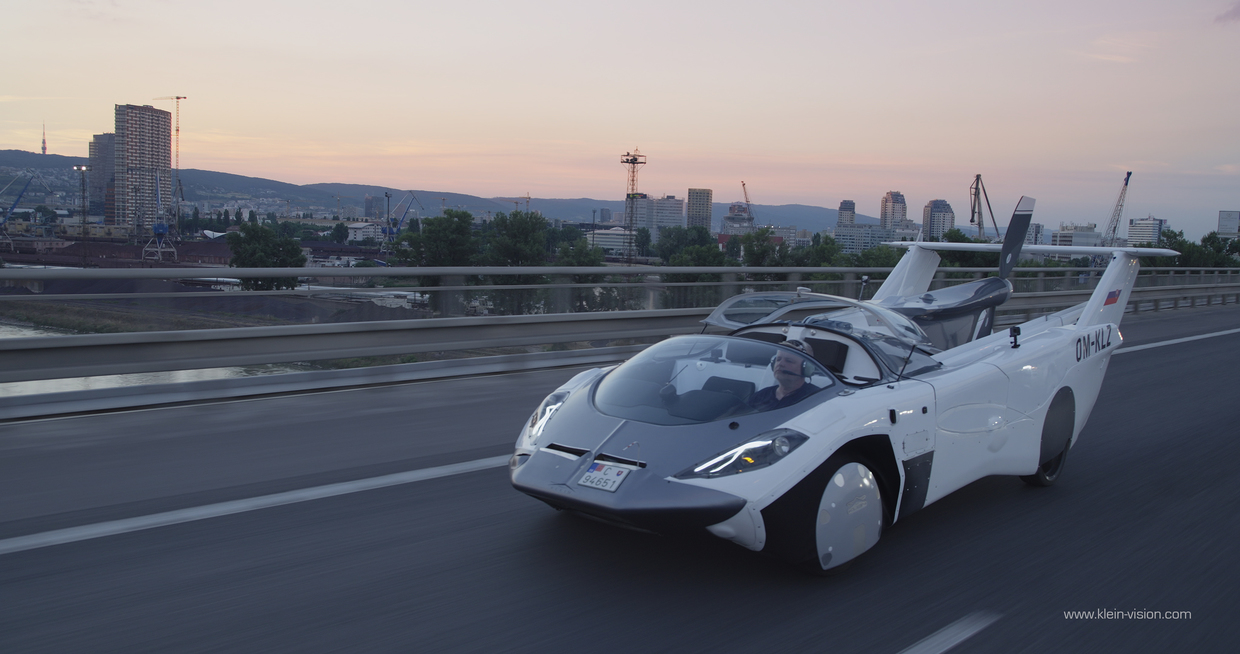
BMW powered flying car gets green light

Company that began as an aircraft engine maker powers car that transforms into a plane

A car that can transform into a small aircraft has been awarded with an “official Certificate of Airworthiness” by the Slovak Transport Authority. According to Klein Vision, the company behind the AirCar, 70 hours of “rigorous flight testing,” including over 200 takeoffs and landings, have been completed. All of that was compatible with European Aviation Safety Agency (EASA) standards.

“The challenging flight tests included the full range of flight and performance maneuvers and demonstrated an astonishing static and dynamic stability in the aircraft mode,” Klein Vision said in a press release on Monday.

The AirCar is powered by a 1.6-liter BMW engine, and runs on “fuel sold at any gas station,” Anton Zajac, co-founder of Klein Vision, told CNN. The vehicle can fly at a maximum operating altitude of 18,000 feet, he added. It takes two minutes and 15 seconds to transform from car into aircraft. The wings and tail fold away automatically for road driving.

A spokesperson for Klein Vision also said that a pilot’s license is required to fly the hybrid vehicle. He has expressed hopes of having the AirCar commercially available within 12 months.

In June, the flying car completed a 35-minute test flight between airports in Nitra and the capital Bratislava in Slovakia. After landing, the aircraft converted into a car and was driven to the city center.

AirCar completes inter-city flight in Bratislava, Slovakia on June 30, 2021


© Global Look Press / Keystone Press Agency

“AirCar certification opens the door for mass production of very efficient flying cars. It is official and the final confirmation of our ability to change mid-distance travel forever,” the AirCar’s inventor Stefan Klein said as quoted by Top Gear Magazine.

BMW started as an aircraft engine producer, but after WWI Germany was forbidden to make airplanes or engines for them (for five years). So, the company switched to making motorcycles and cars. In 1924 they resumed the production of aircraft engines, and ultimately stopped in 1945. The iconic logo with the four colored quadrants represents a spinning airplane propeller.

For more stories on economy & finance visit RT’s business section

US car giant reveals plan to dethrone Tesla

General Motors intends to boost spending on EV production to topple Elon Musk’s company

American automotive giant General Motors said on Tuesday it will pour $6.6 billion into boosting its electric pickup truck production and building a new electronic vehicle (EV) battery cell plant in its home state of Michigan.

The carmaker wants to overtake Tesla as the world’s biggest producer of electric vehicles.

We will have the products, the battery cell capacity and the vehicle-assembly capacity to be the EV leader by mid-decade,” GM CEO Mary Barra said in a statement, as cited by CNBC.

The investment will include $2.6 billion for the construction of a new battery plant in partnership with LG Energy Solution and $4 billion for converting GM’s existing Orion Assembly plant in Detroit to produce electric trucks, like the recently announced and highly anticipated Chevrolet Silverado and GMC Sierra, scheduled for launch in 2024.

The announced funds also represent a part of GM’s $35 billion agenda to increase its North American production capacity to 1 million electric vehicles by 2025. The carmaker forecasts it may beat rival EV producer Tesla as the top US-based seller of electric vehicles by that time.

Read more

© Getty Images / Jens Schlueter
Europe’s top carmaker doubles EV sales, Tesla still out of reach

The company also pledged to invest an additional $510 million to upgrade two of its non-electric vehicle assembly plants in Michigan. 

Michigan will be the recognized hub and leader of innovation in the US for EV R&D and manufacturing,” the company’s president, Mark Reuss, said during a media briefing.

GM is also converting its plants in Tennessee, Canada, and Mexico to assemble EVs, projecting that by 2030 half of its North American plants will be focused solely on EV production.

The car company has a long and bumpy road ahead, however, if it plans to topple Tesla as the top EV producer. Elon Musk’s EV giant delivered 936,172 electric vehicles globally last year. According to some estimations, Tesla’s 2021 US deliveries were well over 300,000 EVs, while GM sold less than 25,000 units, ranking third after Ford with 27,140 Mustang Mach-E EVs sold.

For more stories on economy & finance visit RT’s business section

‘Crypto winter’ is coming – analysts

Bitcoin’s sharp sell-off is reminiscent of the great crypto crash of 2018

The dramatic sell-off of digital coins that saw Bitcoin drop below $34,000 and erased more than $1.4 trillion of the entire crypto market’s value since November has raised investor concerns that the worst is yet to come. They are now talking about the possibility of a “crypto winter,” referring to historic bear markets in the digital currency space.

The most recent such occurrence happened in late 2017 and early 2018 when, after an unprecedented boom, Bitcoin crashed by more than 80% to as low as $3,100, and didn’t reach a new high until December 2020. That so-called ‘Great crypto crash’ was worse than the Dot-com bubble’s 78% collapse in March 2000.

“It’s during crypto winters that the best entrepreneurs build the better companies. This is the time again to focus on solving real problems vs. pumping tokens,” the former head of crypto at Facebook-parent Meta, David Marcus, tweeted on Monday. 

The crypto collapse raised concerns that the pain may persist for many months, according to UBS. “There’s this question of how do we characterize that and the nearest analogy is probably 2018, which is this idea of a crypto winter,” James Malcolm, head of foreign exchange research at UBS, told Fortune. “It looks likely to be a fairly difficult and potentially prolonged period and therefore, the crypto winter analogy is quite good,” he said, adding, “Remember, the crypto winter in 2018 wasn’t just over the Northern Hemisphere winter months. It basically extended for a whole year—so it was a crypto winter that lasted effectively a year.” 

Read more

RT
Crypto market loses $130 billion in one day amid Ukraine tensions

Analysts point out that the digital assets’ slump seems to be tracking broader market developments, in particular, the S&P 500 and Nasdaq indexes’ slide into correction territory last week. Cryptocurrencies are becoming more intertwined with traditional markets due to involvement from large institutional funds, they say. The crypto market has been plummeting since the Federal Reserve announced that it would reduce its stimulus to the financial markets.

The largest cryptocurrency, Bitcoin, sunk to its lowest price in six months at the start of this week to near $33,000 after it went into a nosedive on Friday with cryptos across the board plummeting in value. Ether has more than halved in value since reaching its peak in November, while Solana has suffered an even steeper decline, falling 65%. They have bounced back since then, with Bitcoin up by more than 4% to around $38,000 a token on Wednesday.

For more stories on economy & finance visit RT’s business section

Brent oil hits seven-year high

The international oil benchmark soared above $90 amid low output and tension in Eastern Europe

The price of a barrel of crude oil reached $90 on Wednesday, a level unseen since October 2014. It’s the second seven-year record in a week, and insiders are predicting $100 oil by the year’s end, the rise fueled by tight supply and the threat of war in Ukraine.

After closing at $88.20 on Tuesday, the Brent crude price climbed to $90.08 by late Wednesday morning, an increase of more than 2%. The US West Texas Intermediate benchmark was also up by 2.2%, sitting at $87.50 at time of writing.

The last time Brent spiked above $90 was in October 2014. Last week, the oil benchmark also hit a seven-year high, with that spike driven by hostilities in the United Arab Emirates.

Read more

Aerial view of fuel storage tanks at a Texas oil refinery outside Houston, Texas, US.
US helpless as oil prices climb higher

The latest surge comes as the oil-producing OPEC nations slowly increase their output to pre-pandemic levels. However, these producers have not scaled up their spare capacity to buffer against future disruptions, and prices in turn have shown no sign of falling. Moreover, the US is lagging behind its record daily production by around a million barrels, per Reuters, and Russia is increasing its production at a slower rate than expected.

Further complicating matters is the simmering tension over Ukraine, with Washington refusing to drop its demand that Ukraine be allowed to join the NATO alliance and Moscow sticking by its long-held position that a NATO state on its borders would be unacceptable.

All in all, the combination of market and geopolitical factors has led Goldman Sachs to predict an oil price of more than $100 by the third quarter of this year. The all-time highest oil price ever recorded was $143, in mid-2008.