The current sharp rise in gas prices in Europe has nothing to do with Russia, but the launch of the newly constructed Nord Stream 2 pipeline may stabilize the energy market, presidential spokesman Dmitry Peskov says.
“Undoubtedly, the early commissioning of Nord Stream 2 will significantly balance the price parameters for natural gas in Europe, including on the physical market; this is obvious,” the official said, commenting on the unprecedented rise in European gas prices over the past 24 hours.
He stressed that given the current low storage volumes of the commodity, Europe is likely to need more gas than it currently receives, and to need it soon.
“The demand for gas is great; besides, it is still unclear what the winter will be like; if it is cold, then, of course, even more gas will be needed,” Peskov stated.
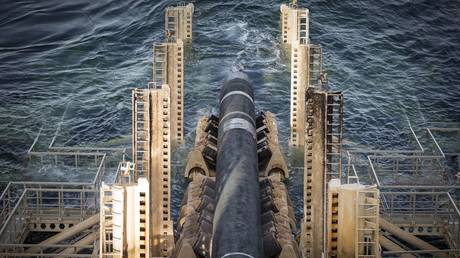
Despite the completion of Nord Stream 2, Europe should not expect the Russian pipeline to start deliveries this year due to bureaucracy within the EU, Russian Foreign Minister Sergey Lavrov warned on Wednesday.
“Now the process of obtaining the necessary permits from the German regulator is underway. The process is not fast. The beginning of 2022 has been indicated,” Lavrov told the press.
Experts say this could be the reason behind the current surge in gas prices, which have been smashing records for several days now. According to the press secretary of the German Federal Network Agency (BNetzA), Fita Wolf, Nord Stream 2’s certification may take several months, a prospect which practically forces market participants to raise prices.
To add to the problem, the pipeline’s main adversaries, Ukraine and the United States, have both vowed to complicate the certification procedure.
According to Lavrov, there will be many roadblocks before certification is finally granted.
“I have no doubt that attempts to attack this gas pipeline will continue,” the Russian foreign minister said.
Gas prices in Europe have risen 20% since the start of trading on Wednesday. The price of October futures on the Dutch TTF exchange exceeded $964 per 1,000 cubic meters by 11am GMT, ICE data shows.
The increase in US consumer prices eased in August, according to the Labor Department. Despite the positive data, the country is still facing its highest rate of inflation in 13 years.
Rachel Blevins and Brent Jabbour talk to Dean John Quelch of the Miami Herbert Business School about the latest figures to find out whether the inflation rate could reach the Federal Reserve’s traditional 2% annual target.
Supplies of natural gas to Europe via the completed Nord Stream 2 pipeline will not start on October 1, according to the CEO of Russian energy major Gazprom, Alexey Miller.
Responding to media reports on Wednesday suggesting that deliveries via the pipeline could begin next month, he said: “No. Supplies will not start on October 1.”
Gasflow via Nord Stream 2 were expected to begin as early as October, with volumes exceeding expectations. Russia’s Gazprom said it is ready to begin gas deliveries once the new pipeline obtains the required EU certification. However, this process could take up to four months under EU rules.
The certification delay has sent European natural gas prices to record highs, exceeding $960 per 1,000 cubic meters as of Wednesday.
The European market is severely short of supplies due to increased demand amid the post-pandemic recovery and a drop in deliveries from its key supply source, Norway’s Troll gas field, due to unplanned outages. A recent accident at the Gazprom plant in Russia has also forced the company to cut its supply to European underground storage facilities.
According to Gazprom’s statement last week, gas supplies via the Nord Stream 2 pipeline could total 5.6 billion cubic meters this year, if the EU gives the green light.
The world’s top oil importer, China, has reduced its crude imports by 5.7% since the start of 2021, but boosted natural gas purchases by over 20%, a report from the country’s State Statistical Office says.
From January to August, China imported 346.36 million tons of oil, which is 5.7% less than in the same period last year. At the same time, the country increased the volume of natural gas imports by 22.2%, to 79.31 million tons.
As specified in the document, in August alone, China purchased 44.53 million tons of crude (down 6.2% year on year) and 10.44 million tons of gas (up 11.5%).
Meanwhile, domestic oil production over the past eight months increased by 2.4%, amounting to 133.22 million tons. Domestic refining was also up by 7.4% to 470.79 million tons.
According to the report, China’s energy companies produced 136.1 billion cubic meters of gas in the reporting period (an increase of 10.8%). Over the past month alone, the country’s gas production increase amounted to 15.9 billion cubic meters, which is 15.5% higher than before the pandemic in August 2019.
Previously, China’s crude oil imports rebounded in July from a six-month low after state-backed refiners set out to increase output after returning from maintenance. However, independent refineries slowed their restocking due to official probes into trading and taxes.
Beijing has been carrying out investigations since April regarding illegal trading of import quotas, in part to lower a fuel surplus that has been hard on state-owned refiners’ profits.