NBA 2K22 Review

After months of waiting, NBA 2K22 is here and it has left its predecessors in the dust. This year’s iteration has established itself as the greatest basketball simulation game thanks to its superior realistic gameplay and renewed focus on rewarding smarter playstyles.

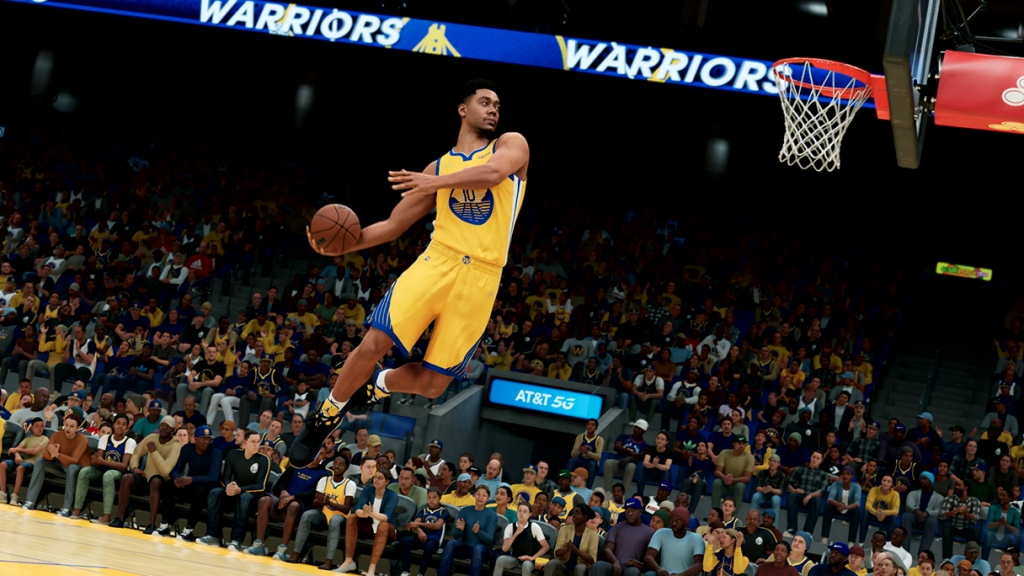
The gameplay in NBA 2K takes it to the next level by keeping things simple and improving on the foundations of previous games. As with every iteration in the franchise, small tweaks and reworks to dribbling and shooting make the gameplay experience much more satisfying. Dribble moves and combinations feel more precise and snappier giving you more control of the players. The new shot meter is also a welcome change from last year’s version. As you go for a shot, the meter will be directly affected by your player’s shooting abilities, energy level and defensive coverage. The new meter also takes the form of a longer arc that makes it much clearer when to release your shot.

In previous years, defending against certain players felt like an impossible task as they could just blow past you and finish at the rim with ease. Now, Visual Concepts have overhauled defense to reward skilled defenders both on the perimeter and in the paint. This also forces the offense to run more complex plays instead of relying on getting easy buckets. On the other hand, this has made the defensive AI slightly too pushy, as I was often faced with annoying full-court press defense during games.

A career in basketball, among other things.

In MyCareer, you’ll get to create your own player and gradually evolve him to become a Hall-of-Famer if you’re good enough. In typical 2K fashion, you’ll experience your character’s journey, starting off in college as he makes his way to the NBA. While not unfamiliar at this point, the story still has some interesting twists and forces you to take tough decisions which could affect your career going forwards.

Naturally, the path to success is difficult and you’ll have to grind to unlock Badges and earn VC to upgrade your player’s abilities. This aspect of the game remains the most engaging yet most time consuming, especially if you want to max out your character’s stats. While this isn’t a major issue playing MyCareer alone, you’ll quickly feel outclassed in the Rec Room by those who purchased microtransactions. Unfortunately, it seems the only way to speed up your progress is by purchasing VC with real money, which has become a trend in previous NBA 2K games. Apart from basketball, you can do just about anything like shopping, skateboarding, making hip-hop music which are fun distractions at times. Nonetheless, I would have preferred the mode to focus more on basketball above all else.
Card collecting at its finest.

Thankfully, some of MyCareer’s issues are alleviated in the MyTeam mode which lets you build your own team of past and present NBA superstars. The mode is fully-packed with content and ways to drastically improve your squad for free in a reasonable amount of time. The auction house is also a great way to get specific players you want without having to spend VC. In addition, NBA 2K22 has introduced a Card Grading system and Shoe Builder to this mode. While these ideas make sense, they don’t have much of an impact on the game and I opted to ignore them.

The Draft is also a new feature that lets you assemble a roster of players and get rewarded based on the number of games you win (similar to FIFA Ultimate Team’s Draft mode). This is by far one of the most fun aspects of the game but does require an entrance fee which is paid in real money after your first few draft runs. Hopefully, we’ll get to try out this mode using in-game currency in the near future. Lastly, MyNBA has received some additions in terms of coaching staff badges and attributes. While these are nice to have, this franchise mode doesn’t feel much more interesting than it did a few years ago.

All this being said, NBA 2K22 provides the most realistic and fluid basketball sim experience to date. The gameplay remains rock-solid and the variety of game modes available means there is always things to do. Although, microtransactions are still an issue, NBA 2K22 does justify the upgrade from last year’s iteration thanks to some much needed changes to the core gameplay, especially on defense. While, the last few entries in the franchise have been hit or miss, NBA 2K22 does deserve recognition for breaking the cycle and exceeding expectations with this release.

GameRev was provided with a digital download code for the purpose of this review.
Astria Ascending Review

Astria Ascending is a JRPG by Artisan Studios, featuring a team of developers who worked on Final Fantasy, Nier Automata and Bravely Default. The game was also developed in partnership with Hitoshi Sakimoto, composer of Final Fantasy XII and Vagrant Story, and Kazushige Nojima, known for his writing for Final Fantasy X and Final Fantasy VII Remake. The story revolves around the world of Orcanon wherein you command a battalion of eight demi-gods who are tasked to protect Harmony from the Noises. You are granted powers once chosen as a demi-god, but are also subjected to a shortened lifespan of three years. After the three years have passed, another eight champions are appointed, beginning the cycle once again. The premise definitely held promise, but was a tad disappointing in its execution.

The game already stumbles at the very beginning, introducing you to the cast of characters at the tail end of their reign as demi-gods. You learn from the onset that they only have three months left to live. With this as your starting point, you don’t get the proper time to get invested in each character. There are moments in the game wherein you get a glimpse of each character’s backstories, but these moments are few and far in between, and never quite hit the mark. Even the relationships between the demi-gods felt a little strained, being more like a motley crew of so-called heroes forced to work with each other. Dialogue between characters fell flat, often resulting in them mocking each other like Arpajo and Eko. All in all, the game lacked exposition and I felt very detached and disinterested in the narrative partly because I couldn’t grow attached to these so-called heroes, and partly because of the haphazardly-done world building.

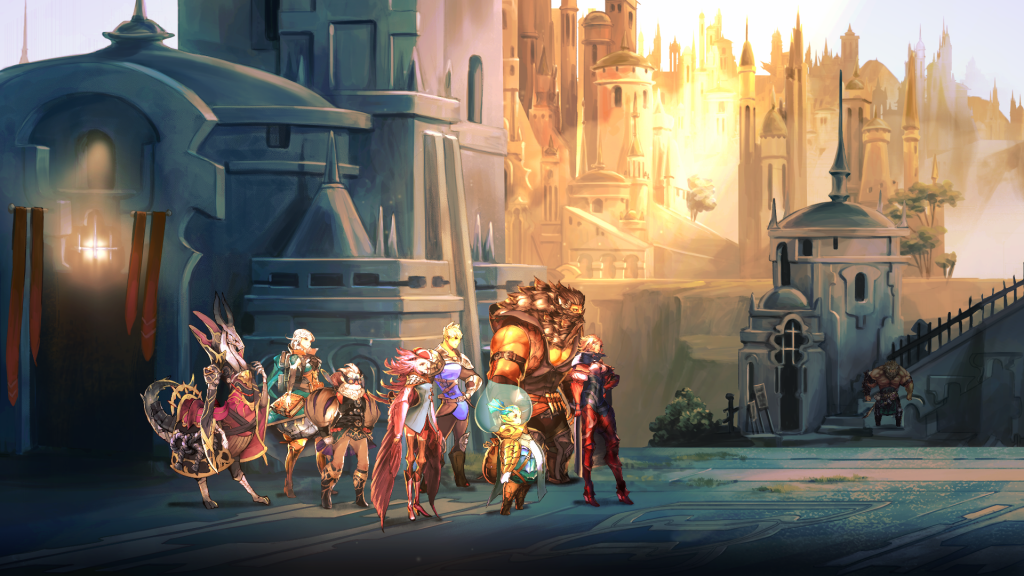
Where I will give the game much credit is in its art, there’s no question about it. Astria Ascending shines in its visually stunning 2D world. What drew me into the game from the trailer alone were the fully hand-drawn illustrations and beautiful landscapes, reminiscent of a Vanillaware game. There were moments while playing where I would simply pause and just admire the lush environments and the details of the artwork. In a way, I almost felt like a tourist within the game because of all the times I would catch myself merely sightseeing. It felt like being inside of a painting.

It’s a shame that its visual design is its most distinctive feature, because at the end of the day “pretty” can only get you so far. Just a few hours in and I already felt like the experience was a bit of a slog. While it is indeed similar in format to most JRPGs, the way the game progressed was borderline repetitive. A distress call would come from one of the districts, the cast of heroes would rush in to investigate, a backstory would ensue, the demi-gods would battle through Noises, and you’d wind up back at the Council Room in Harmonia. There wasn’t much you could do in between because quests had little payoff, the J-Ster mini game wasn’t really vital to your progress, and going on hunts was tiresome because of the lack of quest markers and badly designed map.

Combat, while not perfect, uses a turn-based format that would please most old school JRPG fans. It is what you’d expect from a game of this genre and is charming in its own regard, with a battle mechanic called “Focus” reminiscent of Bravely Default’s “Brave” and “Default” system. The difficulty seemed balanced enough and would trick you at times, making it feel like a cakewalk until a boss started to evolve into multiple forms. It challenged you to find the right weak spots, pick the optimal party, and be as resourceful as you could. The biggest flaw in its combat system however, is the lack of a turn indicator, making it difficult to plan your actions wisely. In addition to that, while immediately starting out with eight characters may seem like a good thing, it made me bench certain characters outright because it felt tedious to build the entire team.

Something else that Astria Ascending could have done without was the layer of complexity that came with the job system and ascension tree. The ascension tree in itself, similar to Final Fantasy X’s sphere grid, wasn’t a bad way to go about character progression. It was the fact that you needed stat orbs for certain parts of it, and the game showed you no clear way of attaining these stat orbs. From what I could tell, it seemed like it was a special drop from some enemy encounters. The job system also felt abruptly introduced, giving you a choice between three main jobs for each character with only a short one-liner to explain what the job entailed. You couldn’t even see the skill tree associated with the job. It felt like I was going in blind. You are only awarded two job orbs when the system is first introduced, and much like the stat orbs, there’s no way of telling when you’ll get your next orbs to unlock another job. Based on these instances, the game seemed to throw in many mechanics without much rationale, drawing inspiration from Final Fantasy and Bravely Default, yet making things unnecessarily complicated in the process.

Some quality of life improvements to Astria Ascending are definitely welcome. While they may not entirely fix what the game lacks, they would help make a more enjoyable experience. For one, being able to speed up battle animations or skip through dialogue during cutscenes would make the game feel a lot less sluggish. Adding quest markers or improving the map layout would also encourage players to explore the 2D world and make it easier to engage in more side quests along the way. Even making more sense of the weather system would be a nice touch, because as it stands, it seems like it was just added in as an afterthought.

Astria Ascending tries its best to be a jack-of-all-trades, yet fails in doing so. You can clearly see where the game drew inspiration from, but it would’ve benefitted from some editing down to focus on its better mechanics. While the game leaves much to be desired in certain aspects, it still does have its charm. In other words, it’s not bad, but it’s not great either. At the very least, the game is friendly for all types of players, with different settings to help you calibrate the difficulty at which you’d like to play. If you’re new to the genre or are a casual JRPG player, then Astria Ascending may be worth trying.

GameRev was provided with a digital download of the game for the purpose of this review.
European gas prices hit another record high on low supply

The price of natural gas in the European market has set yet another record, exceeding $730 per thousand cubic meters, trading data shows. The commodity now costs five times its 2020 price.

The price of October gas futures at the launch of the Monday trading session was $713.10 per thousand cubic meters, jumping to $728.20 by 7:30 GMT and quickly reaching $730.10 a little after that, the Dutch TTF index shows. The previous gas price record on the European market was set last Friday, when it reached $710 per thousand cubic meters by the end of the trading day.

Also on rt.com

Objects of the Yamal – Gas pipelines in Ciechanow, Poland, April 20, 2021
Gas prices in Europe surge past $590 for 1,000 cubic meters

In household terms, this means the fossil fuel’s price now edges toward $60 per megawatt-hour, having increased fivefold since last year. Gas prices have surged largely because the European market is severely short-supplied at the moment, with storage levels well below their five-year average. This is coupled with increased demand amid the post-pandemic recovery and a recent drop in deliveries from its key supply sources, including Russia, partly as a result of lower flows through Ukraine.

Experts say the worst is yet to come, as demand for natural gas at this time of year is still low. According to a Bloomberg analysis, Europe is headed for a very difficult winter, with prices likely to hit unprecedented highs in the near future.

Also on rt.com

© Getty Images / Anadolu Agency / Contributor
Gazprom stock surges in Moscow as Nord Stream 2 construction completed

However, the situation may change when Russia starts its gas deliveries to the European market via the Nord Stream 2 pipeline, designed to carry some 55 billion cubic meters of gas per year from the Siberian gas fields in Russia across the Baltic Sea to Europe. The pipeline’s construction was completed last week, with the exact timeframe for the start of gas deliveries now depending only on the certification process, which has already begun.

Russia’s Foreign Ministry spokeswoman Maria Zakharova said on Friday that the timing was now being decided by regulators in Germany, where the pipeline’s underwater link terminates.

”We expect that millions of European consumers in the near future will be able to receive Russian gas along the shortest, most economical and environmentally friendly route,” she said.

For more stories on economy & finance visit RT’s business section

OPEC predicts demand for all fuel types to surpass pre-pandemic level in 2022

The Organization of the Petroleum Exporting Countries (OPEC) projects rising fuel consumption next year, with global oil demand expected to grow by 4.2 million barrels per day (bpd).

Total oil demand in 2022 will reach 100.8 million bpd, which is higher than pre-pandemic levels, OPEC said in its monthly September report.

The recovery in demand for all types of fuel is expected to be stronger and supported by stable economic growth in all regions,” OPEC stated.

Also on rt.com

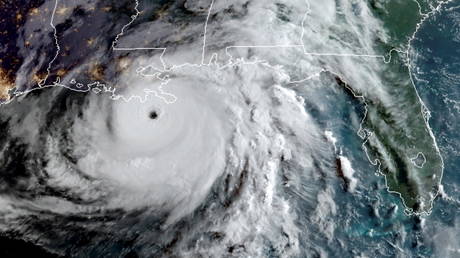
A satellite image shows Hurricane Ida in the Gulf of Mexico and approaching the coast of Louisiana, US, August 29, 2021.
What’s the future of oil production? RT’s Boom Bust finds out ahead of OPEC+ meeting

The forecast figure for next year’s oil demand is 0.9 million bpd higher than the estimate posted by the organization in August.

The report says the growth in global demand for oil for the remainder of 2021 will amount to six million bpd. The forecast for oil demand in the second half of the year was reduced due to the renewed spread of coronavirus infection, and in particular the Delta variant.

OPEC noted, however, that demand for the commodity in the third quarter of this year was stable amid growing population mobility, especially in the member-states of the Organization for Economic Co-operation and Development (OECD).

Also on rt.com

RT
OPEC+ may revise terms of output deal & cancel 400,000 bpd boost – Kuwait

In general, OPEC expects oil demand in 2021 to recover to the level of 96.7 million bpd. It also noted that it expects a growth in supply on the oil market for the remainder of the year, amounting to some 900,000 barrels per day, boosting the supply total up to 63.8 million barrels per day. This will happen amid increased production in Canada, Russia, China, USA, Brazil, and Norway.

For more stories on economy & finance visit RT’s business section

China expands global dominance in 5G technology

China continues to lead global growth in the next generation of telecommunications technology with the expansion of the country’s 5G network, according to the Minister of Industry and Information Technology Xiao Yaqing.

China has built more than one million 5G base stations, which is over 70% of the world market. The number of 5G users has exceeded 400 million, which is the largest user group in the world,” the official said, as quoted by Xinhua news agency.

Also on rt.com

RT
Beijing fines 3 chip dealers for price gouging as global shortage raises costs for automakers

According to the ministry’s forecast, the number of 5G subscribers in the country will exceed 560 million by 2023, or nearly 40% of the total number of mobile users in the country.

Earlier, the ministry also said that China ranks first in the number of patents related to 5G communication technologies.

China’s leading mobile operators began providing fifth-generation communication services to their customers in October 2019. Throughout 2020, some 580,000 5G base stations were installed in the country, with the network covering all major cities. Beijing plans to install over 600,000 new stations by the end of the year.

Also on rt.com

© Getty Images / Aleksandra Chalova
China’s Huawei plans to launch ultrafast 6G networks by 2030 – media

While many countries around the globe are only starting to embrace 5G technology, Chinese tech giant Huawei recently announced plans to roll out its successor 6G network, which it aims to introduce to the market by 2030.

For more stories on economy & finance visit RT’s business section