
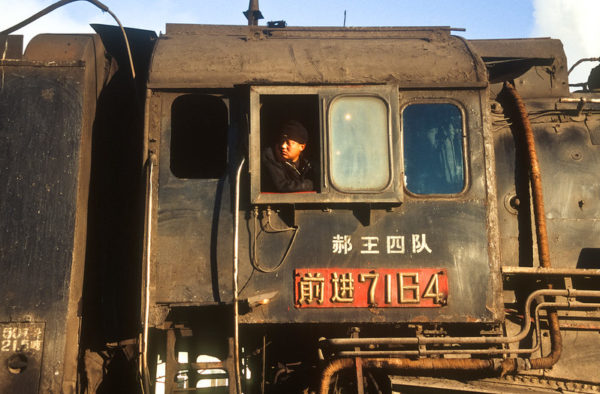
Untitled (Jining–Tongliao Railway, Inner Mongolia), by Jim Maurer (CC BY-NC-ND 2.0)
Untitled (Jining–Tongliao Railway, Inner Mongolia), by Jim Maurer (CC BY-NC-ND 2.0)
Shenzhen [Lihu Lake], by Tony (CC BY 2.0)
Untitled, by Hayden Liu (CC BY-NC-ND 2.0)
Dandong has been under intermittent lockdown (“static management” in the municipal government’s preferred euphemism) since April 25 of this year. The northeast city bordering North Korea is but the latest frontier town to bear the brunt of the central government’s strict coronavirus controls. Restrictions on freedom of movement have led to a host of now-familiar crises: delayed medical care for non-COVID-related diseases, conflict between lockdown enforcers and residents, and economic stagnation. Global Times provided an overview of the “grim and complex” situation in Dandong, which despite a partial re-opening, still faces the risk of a rebound in case numbers:
As China’s biggest border city with a population of 2.3 million as of 2020, Dandong reported seven new local asymptomatic infections on Saturday, bringing the tally of positive cases to 264 since May 24.
[…] The risk of a large-scale rebound of epidemic still exists since most of the sporadic cases are spreading from unknown sources, making the epidemic prevention situation grim and complex, explained Liu Yang, another expert from the city’s epidemic prevention and control headquarters and deputy director of Dandong Center for Disease Control and Prevention.
[…] At present, residents in the preventive area are asked to take two nucleic acid tests every week and residents in downtown areas have to take nucleic acid testing every […] other day. People and residents in lockdown and control zones have to take testing once every day. [Source]
While the source of new infections in Dandong remains unknown, Dandong officials suspect it is tied to the outbreak in neighboring North Korea. In May, North Korea publicly acknowledged the presence of the coronavirus within its borders for the first time. China had reopened a cross-border railway link in January after a two-year hiatus, but closed it again in April after new cases cropped up. Chinese officials have posited that the new cases might be the product of southerly winds blowing the virus across the Yalu River and infecting residents through open windows. City officials have placed air measuring devices along the Chinese bank of the river in an ostensible effort to detect windborne viruses. Persistent cross-border smuggling of goods and people is a much likelier culprit. The city’s inability to identify the source of the virus and the length of the lockdown prompted Dandong’s mayor to issue a rare public apology, labeling his government’s work “unsatisfactory” and promising “more proactive, more active and more effective” efforts in the future.
The long lockdown has led to a number of clashes between residents and pandemic policy enforcers. In one viral incident, an elderly father and his daughter were arrested for assault after the father slapped a police officer who detained them en route to a hospital, where they had hoped to pick up the father’s medicine for a non-COVID-related disease. The daughter had a yellow health code, which generally requires one to quarantine at home, but she had received special permission from her neighborhood committee to drive her father to the hospital.
Similar incidents have occured during other lockdowns across China. In January, during the Xi’an lockdown, a pregnant woman miscarried in an emergency room lobby after she was denied treatment because she could not provide proof of a recent negative COVID test. During the Shanghai lockdown, an off-duty nurse suffering from an asthma attack was denied treatment for the same reason; she died en route to a second hospital. CNN’s Simone McCarthy reported on the Dandong father-daughter incident and its aftermath:
In a statement Wednesday, a day after the incident, local police said they had issued Hao a 10-day administrative detention for obstructing their work, while her father had received a “criminal compulsory measure” — that could result in further charges, according to state media — on suspicion of assaulting a police officer.”
[…] Hao also responded publicly after the incident, explaining in a widely shared social media video that she was driving to pick up a difficult-to-find medicine for her father, who was recovering from surgery and suffered from a form of neuralgia.
“With this kind of pain, he can’t eat, he can’t talk, he can’t sleep,” she said. “Who said a yellow code can’t pass? If that’s the case sick people can only wait there and die?” [Source]
The video of the Dandong altercation went viral on Chinese social media. On Li Wenliang’s “Wailing Wall,” one Weibo user wrote, “Dr. Li, I couldn’t stand to watch all of that video from Dandong … It’s getting too hard to live.” Another now-removed WeChat post likened the incident to a recent scandal in which Henan officials manipulated out-of-province depositors’ health codes when they attempted to travel to the province to demand that insolvent local banks return their funds. The writer of the post encouraged people to photoshop their health codes rather than risk a fight with the police: “My proof is this: not a single one of those three officials in Zhengzhou who gave 1,317 depositors red health codes was sentenced to prison. If we adhere to this standard, citizens who photoshop yellow codes into green codes, especially for a good reason like seeing the doctor, shouldn’t be dealt with too harshly. (I’m just joking, don’t take this seriously.)” An editorial in Global Times held that the “police-resident friction” should prompt reflection on “how to conduct law enforcement more humanely.”
Such conflicts are, in part, a result of the fractured nature of China’s pandemic policy enforcement. A vast array of bureaucracies are tasked with enforcing policies that are, all too often, vaguely defined: neighborhood committees control the flow of movement into and out of residential compounds, private testing companies process the all-important nucleic acid tests, municipal health commissions run quarantine sites, police and the oft-maligned “Epidemic Prevention Hobbyists” man checkpoints. The result is that permission to travel granted by one authority may not be recognized by another. In extreme cases, authorities battle one another for control, as seen in another viral incident in which a pandemic enforcement volunteer attempted to detain policemen at a coronavirus checkpoint because he did not accept the validity of their travel documents. CDT has translated a portion of the argument that ensued:
Policeman One: Didn’t you just say how great we policemen are? And now you want to impound our vehicle?
Pandemic Enforcement Volunteer: I don’t know that you’re all that great! [inaudible]
[…]
Police Officer One: First, let’s set the record straight on [the limits of] your authority. Do you have the authority to enforce the law?
Pandemic Enforcement Volunteer: [inaudible] The government has granted me [the authority]! Pandemic prevention policy prescribes these checkpoints, so how’dya like that? [Chinese]
Stories of pandemic control overreach, manipulation, and abuse are not uncommon. In an account of life under lockdown published on WeChat by the influential Sanlian Lifeweek Magazine, one resident wrote that a blogger with some online cachet was permitted to quarantine at home while their neighbors were “hauled off” to centralized quarantine. Residents in some cities have taken to the streets to demand an end to the lockdown. Many more have taken to Weibo to voice their suffering under lockdown:
仿生人也会弹舌吗:What’re they doing? Are they even up to the task? It hasn’t been that long since the founding of the PRC, but just look at all these nauseating spectacles! It’s terrifying that the government has atrophied to this degree.
加速度-唐门:@Dandong **** me! How much longer will the lockdown be? Will the lockdown only end once you’ve killed all of us ordinary folks?
本帅帅并不需要昵称:#DandongPandemic# This first started trending during the Shanghai lockdown. Now Shanghai has opened up, but this hashtag remains. What’s the local government doing? The government has spent the last year burning through all the trust it earned over the past few decades. The officials, who serve for money or fame, have destroyed every last city, every last province, and harmed not just the people of this city, but the citizens of the entire country. This isn’t pandemic prevention. This isn’t following Party policy. This is treason.
inneverland:All the young people have fled. Who’d want to stay in this dying place?
爆炸的鳄鱼:There are no other explanations. The reason they can’t eradicate it is because it’s a virus. They’d be better off employing that same “eradication mentality” to the “Sweep Away Black” campaign or to [stopping] the trafficking of women and children.
纡余予彧:Whole-process People’s Democracy. Dandong’s residents must be choosing to lock themselves into their homes. [Chinese]
As in Shanghai, where searches for “runology” and emigration services skyrocketed after the lockdown, Dandong is facing a potential exodus when its lockdown ends. Dandong city officials criticized those planning to leave, likening them to children who would abandon their mother if she fell sick. One netizen’s saucy rebuttal went viral: “My mom doesn’t fake being sick.”
Life has not gotten easier for China’s LGBTQ+ communities. A looming demographic crisis has inspired calls to strengthen traditional family structures and produce more children, while rising nationalism and xenophobia have caused advocates of more inclusive and tolerant attitudes to be accused of promoting unwelcome “liberal Western values.” Over the past year (and indeed, throughout Xi Jinping’s tenure), the Chinese government has wielded restrictive policies to target sexual and gender nonconformity in society. As Pride month concludes, CDT reflects on the state of LGBTQ+ communities in China and their attempts to develop and thrive, despite the omnipresent threat of censorship and social stigmatization.
While the government continues to suppress LGBTQ+ content, certain online spaces have nonetheless allowed LGBTQ+ groups to flourish. As Chong Liu, Runze Ding, Jen Rao, Simon Frank, Yi-Ling Liu, Krish Raghav, Tianyu Fang, Jaime, and 咸湿佬 discussed in a recent episode of Chaoyang Trap, online porn has become an important tool in the construction, education, and discussion of sexual identities in a highly censored and conservative China:
Chong: Compared to boys, girls were more likely to deliberately search for (or admit that they had searched for) gay porn and Boys Love (BL) comics and literature. BL and gay porn filled in an important gap in China’s inadequate sexuality education. A girl participant told me that, to a certain extent, she obtained knowledge about the existence of sexual minorities and understood civil society according to her active exploration of BL and gay porn. Due to governmental suppression of sexual minorities’ rights, knowledge about LGBT issues is often deliberately obscured and hidden.
[…] Runze: Interestingly, not many of my gay participants felt guilty when watching porn. For the majority of (young) participants, when they first started to explore their sexual identity online, they would naturally encounter pornographic content. Specifically, for many participants from post-1980s and post-1990s generations [80 后和 90 后], the Internet has become Chinese gay men’s major (if not only) information source for sexually explicit materials. In fact, when many of my younger participants accessed information on homosexuality online, they found that sexually explicit material was the first thing that turned up, which suggests that homoeroticism is inseparable in the construction of gay identity. However, this access is not free from censorship or state control. Many participants noticed the government’s tightening-up censorship on Internet (gay) pornography. They often expressed that getting access to gay porn online was much easier when they were younger.
[…] Runze: [… The] internet has become the major source for Chinese gay men to explore their sexualities. Digital technologies provide sorely needed alternative spaces for LGBTQ folks to acquire and practice sexual knowledge. The internet creates a relatively safe space where gay men are empowered to satisfy their curiosity, learn about sex, and talk about topics they would unlikely discuss otherwise. [Source]
In response to cultural sensitivities and rising xenophobia, some members of Chinese LGBTQ+ communities have reoriented their advocacy strategies. Jerome Yau, the co-founder of Hong Kong Marriage Equality, for example, has argued that despite the Western dominance over popular, visible forms of modern noncomforming sexuality and sexual orientation, traditional values of Confucianism are no impediment to greater acceptance of same-sex marriage in China, as long as matrimony is grounded in love and commitment. Cyril Ip from the South China Morning Post reported on others who have shunned marriage equality while adopting non-Western approaches to expanding LGBTQ+ rights:
“For most Chinese gay men, personal factors such as acceptance from family and their community will be more important than structural factors like the right to marry, to the extent that it does not impinge on their daily lives,” said Professor Dominic Yeo from Hong Kong Baptist University, whose research focuses on LGBT youth.
“The Westernised style of expression that is in your face, is not necessarily the default or most preferred option for China’s LGBT community. It is also not the only metric of progress.”
[…] Yeo argued that authorities had more of an issue with the pursuit of individualism rather than homosexuality itself, given that China had traditionally valued collectivism.
“The emphasis of individualism, which purports that one’s LGBT identity is more salient than anything else, is the issue that China has,” he said. “Rather than emphasising the exclusiveness of a sexual identity or orientation, it would be more practical [for the Chinese LGBT community] to acknowledge that they are also Chinese and part of the family.”
[…] “Western countries focus on individualism and self-display, which are things that may be good in nature, but an excessive amount would draw backlash,” said [an anonymous 23-year-old from Guangdong], who came out as bisexual to close friends and family in late 2019. “In the Chinese context, a balance is necessary.” [Source]
Elaborating on these differences between Western and Chinese contexts for Sixth Tone, Song Lin, an assistant professor at Jinan University’s School of Journalism and Communication and the author of “Queering Chinese Kinship,” recently described the power of alternative methods of finding queer acceptance within Chinese family relations and values:
In its dominant Western definition, a person’s queer family exists outside their biological family, which is seen as a heteronormative institution. […]
Although appealing to some, the liberal focus on “choice” [in choosing a queer-friendly family of friends and lovers] in [Kath] Weston’s model presupposes a range of cultural, social, political, and economic privileges that many queer Chinese simply do not enjoy. Homosexuality has been de-criminalized and largely de-pathologized in contemporary China, but it nevertheless exists in the shadow of a powerful heterosexism which sees homosexuality, along with other forms of non-heterosexual, non-familial, and non-monogamous sex, as abnormal and morally unacceptable.This strong heterosexist inclination is reflected in the prominence of traditional familism, which, though reticent on the topic of homosexuality, persistently upholds the heterosexual reproductive family as the only acceptable family structure.
[…] A good example [of queer families in China] is “form marriages,” or xinghun. Essentially contract marriages between gay men and lesbian women, they help LGBT Chinese cope with social stigma and reproductive pressure from their biological families. Viewed through a Western lens, form marriages might look like a simple imitation of heterosexual marriage. But scholars like Shuzhen Huang and Daniel C. Bower have shown how form marriage can be empowering and disruptive, turning the ostensibly heterosexual institution of matrimony into a tool for the survival of homosexual intimacy. And imitation is not necessarily flattery. Form marriages constitute what Judith Butler terms “parodic repetition;” their very existence problematizes marriage as the default reproductive heterosexual institution in China.
In other words, in the absence of legal same-sex marriage protections, form marriages offer a way to embody queer desires within a supposedly heteronormative construct. [Source]
However, even when averting the Western model, pursuing this Chinese relational model has become even more difficult among doubly vulnerable queer populations, such as Uyghurs in Xinjiang. Reflecting on his encounters in Ürümchi with a closeted Uyghur friend who was assigned female at birth and presented masculine, LGBTQ+ researcher Sam Tynen described in SupChina last week how his friend was trapped by both state repression and conservative family values:
Hemrahjan and other straight Uyghurs I met associated homosexuality with urban life and Han influence. In the backdrop of a military police state, policing was not limited to the Chinese state, but enforced on bodies by Uyghurs themselves. As the Uyghur community was under threat of cultural erasure, holding on to whatever traditions they could was important. Many grasped and held on to their sense of morality, even if this meant discriminating against the LGBTQ community.
[…] I had transplanted romantic foreign ideas to a context still suffering the weight of colonization. I had utopian visions of building a path to change, but my perspective was that of a privileged white person. I had failed to take into account that the freedom to protest and live against the grain — to be “abnormal,” to be queer — is not always feasible, especially for already vulnerable populations. Patigul didn’t have the money to live on their own in the city as I suggested, let alone be out and proud. Besides, they were Uyghur. They were constantly targeted for their ethnicity alone. Patigul was trapped by the limitations of society, family, and nation. I wanted them to be proud and independent; their reality was erasure and double minority oppression.
[…] Like Patigul, many queer Uyghurs found themselves ostracized by their own families as well as discriminated against by society at large. If Patigul got an arranged marriage to a man, they would have had to live with that bodily and emotional trauma for the rest of their life. Losing sovereignty over one’s body in this way is part of the reproduction of state and colonial violence, which overlapped with trauma in the family. State and colonial violence are often reproduced in the family and on the body for the most vulnerable populations. [Source]
Hong Kong, previously known as a liberal haven for LGBTQ+ expression in Asia, is confronting the limits of systemic improvement on minority rights. LGBTQ+ youth have voiced frustration about policies limiting access to public transgender healthcare services and corporations instrumentalizing Pride month for profit. Their activism has been complicated by Beijing’s imposition of the National Security Law and decimation of the city’s once-thriving civil society. Isabella Steger from Bloomberg reported on activists’ fears that the government’s crackdown on civil society will undo progress on LGBTQ+ rights:
Well-known LGBTQ figures, including former lawmakers and singers, have been arrested or jailed for their political activism. The national security law imposed following the violent protests of 2019 has also exacerbated the pandemic’s restrictive impact, forcing the suspension of the annual Pride marches and prompting human rights lawyers to leave the city.
“We are worried that there will be a decrease in the space where LGBTI (lesbian, gay, bisexual, transgender and intersex) activists can challenge discriminatory laws through legal avenues,” said Kai Ong, a researcher with Amnesty International. Amnesty shut its operations in the city last October, saying the national security law made it impossible to operate without fear of reprisals.
[… Some] worry about the effects of a widening campaign of repression against LGBTQ rights and growing chauvinism in mainland China. For example, pro-Beijing legislators in Hong Kong last year launched homophobic attacks against the Gay Games, which were due to be held for the first time in Asia in Hong Kong.
[…] Amnesty’s Ong said that the Gay Games row and Beijing’s crackdown on advocates of sexual minorities meant global banks may think twice about lending their support to such causes in the future, especially after Shanghai’s Pride event was abruptly shut down in 2020. [Source]
Denise was the first mainstream female singer in Hong Kong to “come out of the closet” in 2012 and later on got involved with the Big Love Alliance 大愛同盟 to use her influence as a well-known pop star to strive for equal rights for the LGBTQ+ community. (2/)
— Joey Siu 邵嵐 ☘️ (@jooeysiiu) June 2, 2022
Third one is #JimmySham. Jimmy was the convenor of the now-disbanded Civil Human Rights Front and Secretary of the LGBTQI+ organization Rainbow Of Hong Kong 香港彩虹. He led multiple #Pride campaigns in Hong Kong prior to being put behind bars by the Hong Kong government. (4/)
— Joey Siu 邵嵐 ☘️ (@jooeysiiu) June 2, 2022
As we kick off #Pride2022 and continue to fight for equal rights, I urge the community, and every pro-LGBTQ+ advocate to recognize, remember and include these Hong Kong activists in your conversations. (end/)
— Joey Siu 邵嵐 ☘️ (@jooeysiiu) June 2, 2022
CDT has compiled a non-exhaustive monthly timeline of government measures rolling back LGBTQ+ rights since January 2021:
Recently, CDT Chinese republished a now-deleted post from Wechat account @柠柠堡贝 that offered a point-by-point rebuttal to a university’s reprimand of a student who attempted to mark International Day Against Homophobia, Transphobia, and Biphobia by placing ten rainbow flags on a table in an on-campus supermarket. The university later issued a written reprimand to the student for displaying “propaganda materials,” among other supposed violations of university policy. The final paragraph of the post is a poignant reflection on how marginalized individuals and groups must often fight to make themselves heard:
Suffering that cannot be spoken is much more painful than suffering that can be spoken. But I am trying to broaden the range of suffering that can be spoken of, and not allow myself to be frightened or intimidated. If I am indeed silenced, then I will use that silence to speak. [Chinese]
Translation by Cindy Carter.