
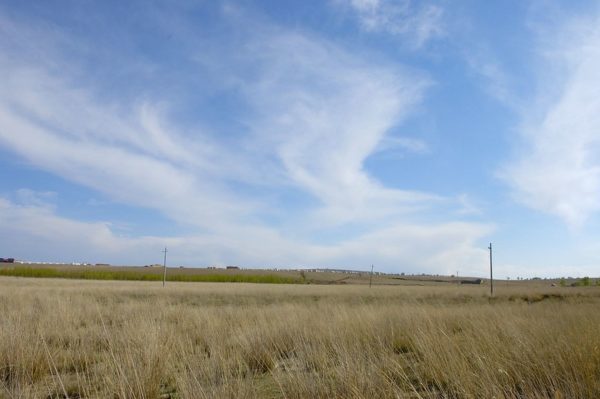
希拉穆仁草原 [Xilamuren Grassland, Inner Mongolia], by Frank Wang (CC BY-NC-ND 2.0)
希拉穆仁草原 [Xilamuren Grassland, Inner Mongolia], by Frank Wang (CC BY-NC-ND 2.0)
On Tuesday, the Uyghur Forced Labor Prevention Act (UFLPA) went into effect in the U.S. The bill was conceived in 2019, approved by the Senate last July, and passed by Congress in December before being signed into law by President Joe Biden later that month. Its survival in the face of polarized politics and hostile business interests demonstrates Washington’s growing resolve to “no longer remain complicit in the Chinese Communist Party’s use of slave labour and egregious crimes against humanity,” as U.S. lawmakers stated last week. Starting now, the onus will be on companies, instead of the U.S. government, to prove that goods imported into the U.S. contain no trace of forced labor from Xinjiang, a requirement that is expected to have a significant impact on global supply chains. The U.S. Customs and Border Protection Agency summarized the essence of the law:
It establishes a rebuttable presumption that the importation of any goods, wares, articles, and merchandise mined, produced, or manufactured wholly or in part in the Xinjiang Uyghur Autonomous Region of the People’s Republic of China, or produced by certain entities, is prohibited by Section 307 of the Tariff Act of 1930 and that such goods, wares, articles, and merchandise are not entitled to entry to the United States. The presumption applies unless the Commissioner of U.S. Customs and Border Protection (CBP) determines that the importer of record has complied with specified conditions and, by clear and convincing evidence, that the goods, wares, articles, or merchandise were not produced using forced labor. [Source]
Today is a big day for all Uyghurs and for those among us who worked so hard to bring this tragedy to light. But the work is far from done. It's upon on us to ensure that the law is enforced to the maximum and companies won't get away from being complicit. https://t.co/5CTmAZqdGg
— Yaqiu Wang 王亚秋 (@Yaqiu) June 21, 2022
Last Friday, the U.S. Department of Homeland Security released its official strategy outlining how it will enforce the UFLPA. Describing this in more detail in his newsletter “Forced Labor and Trade,” John Foote, a partner and head of the customs practice at the law firm Kelley Drye & Warren, showed how the U.S. government has invested unprecedented levels of resources into the implementation of the UFLPA:
Longtime readers will recall my update from March 11 of this year, when I sounded the alarm about current FY budget allocations to CBP for forced labor enforcement at the relatively unprecedented funding level of $24.7M. According to the long-awaited UFLPA strategy published last Friday, the Biden Administration is now seeking $70.3 million in funding in the FY 2023 budget so CBP can hire 300 full time personnel to do battle against shipments from China that may be linkable to Xinjiang or to entities listed by the United States for affiliation with forced labor in China.
That might not sound like much, especially against the shock and awe campaign of Section 301 and Section 232 tariffs, which have now netted over $150 billion in import tariffs since July 2018 (over 90% of that is Section 301). But this is an unprecedented level of funding for the enforcement of a single trade law, and augurs a devastating level of supply chain disruption for importers that are ill-prepared.
If approved, this funding level will exceed by some $30M the entire budget of the Office of Foreign Asset Control (OFAC), at the U.S. Department of the Treasury, charged with enforcing U.S. sanctions laws. It is roughly equivalent to the entire budget of the Bureau of Industry and Security (BIS) within the U.S. Department of Commerce, charged with enforcing U.S. export controls laws. [Source]
Implementation of the Uyghur Forced Labor Prevention Act effective June 21 will combat PRC human rights violations by keeping goods produced in Xinjiang out of , unless the importer can prove they’re made w/o forced labor. We stand with Uyghurs & minority groups in the PRC. https://t.co/b9zyfjau2C
— Under Secretary Uzra Zeya (@UnderSecStateJ) June 21, 2022
Human Rights Watch described how it will be virtually impossible for companies sourcing from Xinjiang to evade the law:
If customs officials identify a product as produced in whole or in part in Xinjiang or from an entity listed as linked to forced labor, the law requires importers to provide “clear and convincing evidence” that goods are free from forced labor. The US government’s guidance lists the evidence that importers could rely on, including supply chain mapping indicating the factories or other facilities where the goods were produced; information on the workers at each facility, including on wage payments and recruitment practices; and audits to identify and remediate forced labor.
For companies sourcing from Xinjiang, however, providing “clear and convincing evidence” is a near impossible bar to clear. The extent of Chinese government surveillance and threats to workers and auditors currently prevents companies from meaningfully evaluating the use of forced labor at factories or other facilities in Xinjiang. Even elsewhere in China, the arrests of labor activists, a prohibition on independent trade unions, government surveillance, and the Chinese government’s anti-sanctions laws pose serious obstacles to identifying and remediating the risk of forced labor and other human rights abuses. Companies with operations, suppliers, or sub-suppliers in Xinjiang should instead relocate their facilities or supply chains elsewhere, Human Rights Watch said. [Source]
The UFLPA has sent companies scrambling to adapt to the new import requirements. Business executives claim the law will disrupt supply chains and threaten the $500 billion in annual shipments from China to the U.S. Some complained that a messy implementation of the law would contribute to inflation. As Haley Byrd Wilt reported for The Dispatch, human rights advocates grew exasperated at how unable or unwilling many companies were to contend with the law and the abuses that motivated it, despite having seen years worth of headlines on the increasingly egregious human rights issues in Xinjiang:
In early 2021, [Sophie] Richardson—the China director at Human Rights Watch—began to receive the first of more than 100 calls from banking institutions, manufacturers, companies, and other corporate entities about forced labor in Xinjiang. She was alarmed by how ignorant they were about the genocide—and by their continued unwillingness to leave the region, even after being told how dire the situation was.
[…] “For so long, tougher human rights policies had foundered in the face of U.S. businesses saying, ‘No no no no, we have to be able to trade and engage, and it will all turn out okay in the end, really, we promise,’” Richardson says.
[…] “You guys are fucked,” [Nury Turkel, a Uyghur advocate and member of the U.S. Commission on International Religious Freedom,] told two D.C. lawyers representing American businesses in China. “China is kicking your ass on the one side and on the other, U.S. consumers all over the place are waking up to what is happening, and this is the one issue that unites Congress.”
“Cut the crap. Either pull the plug, or use your influence to change the Chinese behavior and say, ‘No, not in my name.’ Tell China, ‘You need my business and what you are forcing me to do is illegal, and I am under pressure at home.’” [Source]
The pervasiveness of Uyghur forced labor in China and America’s reliance on China for a variety of important products add to the potential for a broad application of the UFLPA. Earlier this month, Adrian Zenz provided new evidence on the evolution of labor transfer programs that have consigned tens of thousands of Uyghurs to forced labor in factories in Xinjiang and across other provinces. Last week, researchers at Sheffield Hallam University released a report detailing the increased use of Uyghur forced labor in the manufacturing of polyvinyl chloride (PVC) in Xinjiang. It also noted that the plurality, 10 percent, of the world’s PVC comes from Xinjiang, and that over 25 percent of all flooring sold in the U.S. contains PVC from China. Reporting on one Xinjiang-based metals company that employs forced labor, Ana Swanson and Chris Buckley from The New York Times described how much of the global supply chain for certain critical materials is tainted by Uyghur forced labor, and how the products of their labor wind up in foreign markets:
To understand how reliant the battery industry is on China, consider the country’s role in producing the materials that are critical to the technology. While many of the metals used in batteries today are mined elsewhere, almost all of the processing required to turn those materials into batteries takes place in China. The country processes 50 to 100 percent of the world’s lithium, nickel, cobalt, manganese and graphite, and makes 80 percent of the cells that power lithium ion batteries, according to Benchmark Mineral Intelligence, a research firm.
[…] The materials Xinjiang Nonferrous has produced — including a dizzying array of valuable minerals, like zinc, beryllium, cobalt, vanadium, lead, copper, gold, platinum and palladium — have gone into a wide variety of consumer products, including pharmaceuticals, jewelry, building materials and electronics. The company also claims to be one of China’s largest producers of lithium metal, and its second-largest producer of nickel cathode, which can be used to make batteries, stainless steel and other goods.
[…] The raw materials that these laborers produce disappear into complex and secretive supply chains, often passing through multiple companies as they are turned into auto parts, electronics and other goods. While that makes them difficult to trace, records show that Xinjiang Nonferrous has developed multiple potential channels to the United States. Many more of the company’s materials are likely transformed in Chinese factories into other products before they are sent abroad. [Source]
In response to our new report on China’s forced labor in the PVC industry, PRC govt spokesperson Wang Wenbin called on the intl community to conduct “in-depth investigation into the crimes of forced labor in the US.”
Good news! I’m several steps ahead!
https://t.co/nrW87quhDE— Laura Murphy (@LauraTMurphy) June 15, 2022
Stringent and broad enforcement of the UFLPA would likely accelerate the decoupling of American and Chinese economies by forcing companies to source their materials from outside of China. There is also a risk that until other countries, such as those in the EU, adopt similar laws banning forced-labor-produced goods from Xinjiang, they will serve as a dumping ground for these products. This phenomenon is already borne out by recent data: in 2021, while Xinjiang’s trade with the U.S. decreased by 60 percent, its trade with the EU increased by 13 percent. While the EU Parliament recently passed a resolution calling for an EU-wide instrument banning products made by forced labor, concrete proposals by the European Commission are unlikely to materialize before September.
“Global Coalition Calls on Companies Not to Dump Forced Labour-Made Goods in Non-US Markets”
UFLPA goes into effect today, banning #UyghurForcedLabor goods from entering . Brands should adopt a single-standard & not dump tainted goods in other markets.https://t.co/ImuJXXAhFc
— Campaign For Uyghurs (@CUyghurs) June 21, 2022
With weak laws in other countries, companies could:
1) Create split supply chains, one for the and one for everywhere else
2) Re-export products blocked at borders to other countries
We demand companies don't do this! ⚠️
Read our letter: ⬇️⬇️https://t.co/RUFzpLblL7
— Anti-Slavery International (@Anti_Slavery) June 21, 2022
“I think that citizens of the EU would be shocked to know that a ban on products known to be made with forced labour does not already exist,” said @LauraTMurphy.
After UFLPA comes into effect, the EU must step up and ban the use of Uyghur forced labor.https://t.co/sKUB2LBfEU
— Uyghur Human Rights Project (@UyghurProject) June 21, 2022
Ji Siqi, Luna Sun, He Huifeng, and Kandy Wong reported for the South China Morning Post that the UFLPA could potentially cripple China’s textile industry:
“In the textile and apparel export industry, the European and American markets bring considerable profits. If orders from Europe and the American market continue to contract, it means that China’s textile and apparel export enterprises will no longer be profitable,” [said Liu Kaiming, a supply-chain specialist and founder of the Institute of Contemporary Observation, a think tank and action group dedicated to labour development and corporate social responsibility in China]. “It will just result in a growing number of Chinese enterprises reducing their production capacity or even shutting down.
[…] And while downstream manufacturers have been trying to adapt to the shift – such as by refining the raw-material procurement processes by using Xinjiang cotton entirely for domestic demand, and imported cotton for export orders – it is unlikely that the Chinese domestic market will be able to absorb all of the excess capacity from Xinjiang, industry insiders said.
“The domestic market can consume only about 3 million tonnes [of cotton] each year, at most,” the Xinjiang cotton mill owner said.
That total is a little over half of the annual output of the region, and it’s nearly the same amount of unsold cotton taking up inventory space at Xinjiang cotton mills by the end of May – 3.3 million tonnes, according to figures from Beijing Cotton Outlook. [Source]
Meanwhile, Uyghur groups are still seeking justice for crimes against humanity committed in Xinjiang. On Monday, lawyers filed new evidence at the International Criminal Court in another attempt to convince ICC prosecutors to open an investigation into abuses against ethnic groups in Xinjiang. While China is not an ICC member, the lawyers argue that the Chinese government’s transnational repression against Uyghurs has occurred in states, such as Tajikistan, that are ICC members. The lawyers aim to use the precedent of the ICC’s case against Myanmar, which was allowed to proceed on the grounds that the persecuted Rohingya minority were forced to flee to Bangladesh (an ICC member), even though Myanmar is not an ICC member.
Other parts of the evidence come from Uyghur witnesses who fled to Tajikistan then Istanbul.
“One of the witnesses who was able to flee Tajikistan before being deported to China said that the Tajik police told him, “we are sending you back because you are Uyghur.”
— Finbarr Bermingham (@fbermingham) June 20, 2022
The evidence leans heavily on the recent Xinjiang Police Files, and criticises UN human rights chief Bachelet
“The submission contends that the report by Bachelet should not replace a thorough forensic investigation of the crimes committed against Uyghurs”
— Finbarr Bermingham (@fbermingham) June 20, 2022
Last week, prominent civil rights defenders Xu Zhiyong and Ding Jiaxi were put on trial behind closed doors on charges of subversion. The trials took place on Wednesday and Friday, respectively, in the Linshu County People’s Court, Shandong province, and ended without verdicts, which are expected to be issued at a later date. At the South China Morning Post, Mimi Lau and Guo Rui described the charges brought against Xu and Ding:
The pair have been held behind bars for more than two years. They were arrested soon after attending an activist gathering in southern Fujian province in December 2019.
[…] According to an indictment issued by the municipal prosecutor’s office in Linyi last year, Xu was charged with subverting state power for leading a “citizens’ movement” together with Ding.
Under the Chinese criminal code, the maximum penalty for subverting state power is life in prison.
The two are accused of recruiting a network of people to produce an “illegal” documentary, set up websites and publish subversive articles, and of organising “secret meetings” for the purpose of overturning the state. [Source]
Their judicial treatment has been far from fair, as neither defendant has been permitted sufficient access to lawyers, and their relatives and supporters have been barred from attending the trials. Prominent Chinese human rights lawyer Teng Biao argued that “Such a political case has nothing to do with the law or evidence. The whole trial process is dominated by political forces behind the court.” Reporting on these cases for The Washington Post, Christian Shepherd described the “opaque legal process designed to conceal from people the plight of the country’s human rights defenders”:
Luo Shengchun, Ding’s wife who now lives in the United States, described the process as having taken place in “pitch darkness.” Her husband’s lawyers said they could not provide her additional information about the case. Supporters who tried to attend the trial were thrown out of their hotel rooms in the middle of the night. All Luo received was a text message informing her that the hearing was taking place.
“It’s getting ever worse,” she said in an interview. “The power of defense lawyers has been stripped to zero, and every step of the way they must sign a nondisclosure agreement. Even calling this case a state secret has no legal basis, because all they did was organize two private gatherings. Yes, they talked about human rights, but that should be allowed under freedom of speech.”
[… The] hearing on Wednesday proceeded in almost complete silence. [Xu’s] lawyers, under threat of disbarment, were unable to speak to the press. Calls from fellow Chinese human rights lawyers for Xu’s and Ding’s trials to be open to the public were ignored. The courthouse did not release any statements about the hearings. [Source]
Teng Biao: #Xuzhiyong is a central figure in #China’s civil rights movement. The mvnt and the broader civil society are in the throes of a cold winter –a trend that has shown no signs of improving. The crackdown is set to continue for many years to come.
https://t.co/MSnRxg8Qzy— 滕彪 (@tengbiao) June 22, 2022
Xu Zhiyong and Ding Jiaxi have long endured judicial harassment for their lifelong promotion of civil rights and the rule of law. They are perhaps best known as leading figures of the “New Citizens Movement” that aimed to promote transparency, civic engagement, and enforcement of the civil and human rights purportedly guaranteed by China’s constitution. In the months following an informal meeting that they organized to discuss these issues with colleagues in the town of Xiamen in December 2019, security forces hunted down and apprehended many of the participants. Ding was detained later that month, and Xu was detained in February of 2020 and formally arrested in June. There was speculation that the pair would be tried during the Christmas season of 2021, although that did not materialize.
As the NGO Chinese Human Rights Defenders has documented, UN experts have deemed Xu and Ding’s detentions as arbitrary under international law, and both men have made credible allegations of having been tortured during their detention:
The UN Working Group on Arbitrary Detention has examined the cases of the detentions of both Xu Zhiyong and Ding Jiaxi, and in both instances found that the detentions were arbitrary under provisions of the Universal Declaration of Human Rights and that the appropriate remedy would be immediate and unconditional release and the right to compensation.
[…] Both Ding and Xu have credibly alleged that they were tortured while they were held in China’s notorious secret detention system known as “residential surveillance in a designated location” (RSDL).
From April 1-8, 2020, Ding was fastened to a “tiger chair,” with his back tightly tied to the chair, and with a band tightly tied around his chest, which inhibited regular breathing. Every day Ding was interrogated for 21 hours – from 9am to 6am the next morning. From 6am to 9am, he was allowed to use the bathroom and eat, but he was not allowed to sleep. Officials utilized these torture methods 24 hours a day. By the morning of April 7, due to sitting in the tiger chair for so long, Ding’s feet had swollen up into round balls and he was physically depleted. In his first interrogation sessions, authorities gave Ding Jiaxi extremely limited quantities of food and water: one quarter of a mantou (a bland Chinese bun), and 600ml of water, with no other food.
[…] Similarly, authorities in Yantai, Shandong tied Xu Zhiyong’s arms and legs to an “tiger chair” while interrogating him for 10-plus hours per day, making it difficult for him to breathe. Each meal consisted of only one mantou and Xu was taken to the interrogation chambers in a black hood. [Source]
This past Sunday, June 26, was the UN International Day in Support of Victims of Torture, and many NGOs have spoken out against the arbitrary arrest and illegal treatment of Xu and Ding. “The Chinese government is making a grave and shameful mistake by proceeding with the trial of Xu Zhiyong,” said Liesl Gerntholtz, director of the PEN/Barbey Freedom to Write Center at PEN America, who called for Xu’s release. The Observatory for the Protection of Human Rights Defenders, a partnership of the World Organisation Against Torture (OMCT) and the International Federation for Human Rights (FIDH), stated that it “strongly condemns the alleged acts of torture and ill-treatment to which Mr. Ding Jiaxi and Mr. Xu Zhiyong were subjected while in detention […,] strongly condemns the closed-door trial of Mr. Xu Zhiyong and Mr. Ding Jiaxi, and urges the authorities to immediately release them.” An Amnesty International press release also criticized the arbitrary detentions of the pair:
“The Chinese authorities have targeted Xu Zhiyong and Ding Jiaxi not because they committed any internationally recognized crime, but simply because they hold views the government does not like. These unfair trials are an egregious attack on their human rights,” said Amnesty International’s China Campaigner Gwen Lee.
“Having faced torture and other ill-treatment during their arbitrary detention, Xu Zhiyong and Ding Jiaxi now face being sentenced to years behind bars in secretive trials that have been rigged from the start.”
[…] “These men’s bravery in defending the human rights of others should be commended, not punished. Xu continued to loudly advocate for disadvantaged groups even after being jailed for it, and spoke out about the government’s handling of Covid-19 when others remained silent,” Gwen Lee said.
“The Chinese government is systematically using national security charges with extremely vague provisions, such as “subverting state power”, to unjustly prosecute lawyers, scholars, journalists, human rights activists and NGO workers among many others.”
[…] “Xu Zhiyong and Ding Jiaxi have been targeted solely for peacefully exercising their right to freedoms of opinion and association. They must be immediately released,” Gwen Lee said. [Source]
Today, admirable Chinese human rights lawyer #DingJiaxi stands trial accused of 'subverting State power' for relentlessly fighting for a just, transparent society.
We @ISHRglobal join his wife @luoshch in urging China to respect basic due process & #ReleaseDingJiaxi #释放丁家喜 pic.twitter.com/Xa9fsoRXFS
— Raphaël Viana David (@vdraphael) June 24, 2022
#China govt prosecution of #XuZhiyong is scandalous–legally baseless, self-destructive, an indictment of no one other than #XiJinping. https://t.co/JPMnt6h7R0 @hrw_chinese
— Sophie Richardson (@SophieHRW) June 23, 2022
Their trials also generated protests, led by Ding’s wife Luo Shengchun, that took place online and in front of the Chinese consulate in San Francisco. The French and British embassies in China, along with U.S. government officials, called on the Chinese government to release Xu and Ding. After it was published, the French embassy’s Weibo post on Xu Zhiyong appeared to have been censored.
#无罪释放许志永丁家喜 #无罪释放人权捍卫者 非常感谢加州的朋友们 !当局总是企图用秘密失踪,延期关押,延期庭审,闭门庭审等手段让人们遗忘,但人们的记忆愈加清晰深刻!
愿高墙之内的人们感受到朋友们的关爱,愿他们早日归来! https://t.co/1RlPx9YZc2— Luo Shengchun丁家喜律师妻子 (@luoshch) June 25, 2022
PRC propagandists and state media make dubious claims about being “shadow banned” on Twitter. Here's a real example of the French Embassy in Beijing being shadow banned on Weibo: Its post about Xu Zhiyong does not appear in a search for “Xu Zhiyong” https://t.co/G7F4U8Wk9O pic.twitter.com/DigtYi1yli
— William Farris (@wafarris) June 25, 2022
A number of other Chinese human rights defenders remain in detention. Xu’s partner, Li Qiaochu, a labor rights and feminist activist, was indicted in February on the charge of subversion and does not yet have a trial date. Human rights lawyer Chang Weiping, who participated in the Xiamen gathering with Xu and Ding, also remains in detention and has reportedly been subjected to repeated torture. Authorities have prevented his lawyer from reading his case files or from meeting with his client.
【许志永与丁家喜案件开庭审理| 翘楚朋友致大家的公开信】
作为翘楚的朋友,我们谨代表她的母亲和律师,密切关注许志永与丁家喜案件的开庭与审理。
以下是我们的公开信。
请大家持续关注李翘楚、许志永、丁家喜等人权活动者的处境。#FreeLiQiaochu #FreeXuZhiyong #FreeDingJiaxi pic.twitter.com/k20SbFSgNI
— FreeLiqiaochu李翘楚 (@FreeLiQiaoChu) June 22, 2022
Journalist and #MeToo activist Huang Xueqin and labor-rights advocate Wang Jianbing have been in detention since September of last year, and in March, both were charged with “inciting subversion of state power.” On Monday, the International Women’s Media Foundation awarded Huang the Wallis Annenberg Justice for Women Journalists Award.
.@IWMF announced the recipients of its 32nd annual Courage in Journalism Awards. The imprisoned CHN columnist #HuangXueqin was awarded the Wallis Annenberg Justice for Women Journalists Award, which is given annually to a journalist who is unjustly jailed, detained, or imprisoned https://t.co/n4sqUhg4BF
— Free Xueqin&Jianbing 释放雪饼 (@FreeXueBing) June 27, 2022
On Saturday, in a bereavement symbolic of China’s hostile atmosphere for rights defenders under Xi Jinping, veteran Chinese defense lawyer Zhang Sizhi passed away at the age of 94. Among the first lawyers to practice law in the newly formed People’s Republic of China, Zhang became famous for leading the defense team for the “Gang of Four” and others who had been closely affiliated with the late CCP vice-chairman Lin Biao. Zhang was dubbed “the conscience of Chinese lawyers” for his promotion of human rights. As described by Josephine Ma from the South China Morning Post, “His fearless persistence in upholding the impartiality of the legal profession over many decades won him […] respect among lawyers and intellectuals inside and outside China”:
In the decades following the landmark trials, Zhang represented defendants in many sensitive cases that no other mainland lawyers dared to touch, including famous dissident Wei Jingsheng; Wang Juntao, accused of being one of the “black hands” behind the 1989 Tiananmen student protests; and Bao Tong, secretary to reform-minded former party chief Zhao Ziyang.
[…] Zhang also spoke out openly against the sentencing of dissident and Nobel Peace Prize winner Liu Xiaobo in 2009, calling it “absurd” and a “political judgment”.
[…] In December 2008, at a ceremony in Berlin, Germany’s then justice minister, Brigitte Zypries, presented Zhang with the Petra Kelly Prize from the Heinrich Boell Foundation for his “exceptional commitment to human rights and establishment of the rule of law in China”.
[…] “His pleas prove that, especially in trials against members of the opposition, the Chinese legal system is far from fair. His life mirrors perfectly the very contradictory development of the People’s Republic of China. In a unique way, he has been responsible for shaping China’s difficult path towards democracy and the rule of law.” [Source]
Human rights lawyer Zhang Sizhi (张思之) died at the age of 95.
In 2014, he was the lawyer for famed lawyer Pu Zhiqing. He also served as the lawyer for Wei Jingsheng, Wang Juntao, Gao Yu.
In 1957, he was labeled a “rightist” & did 15 years in laogai. https://t.co/mpB83tkJ67
— CHRD人权捍卫者 (@CHRDnet) June 27, 2022
Zhang Sizhi was a legal giant of China. Other than defending Jiang Qing in the trial of the Gang of Four, he devoted much time and energy on building a modern, professional lawyer system and promoting rule of law in the country. https://t.co/cejQgEzw5z
— Xinqi Su 蘇昕琪 (@XinqiSu) June 24, 2022
Sad to see that Zhang Sizhi, one of the most inspirational people I’ve ever met in China, has died. He soldiered on for decades to defend human rights in an environment that was near-impossible and always gave journalists his time. https://t.co/41ZMb6P4NP
— Sui-Lee Wee 黄瑞黎 (@suilee) June 25, 2022
Mr. Zhang Sizhi, a veteran lawyer who acted for Mao Zedong’s wife Jiang Qing, among others, passed way yesterday at age of 95. A friend sent me a photo taken in 2007 at a hotel in Beijing showing him taking with Mr. Liu Xiaobo, who became Noble Peace Prize laureate in 2010. RIP. pic.twitter.com/SMYUs2HAhT
— Jingzhou Tao 陶景洲 (@JingzhouTao) June 25, 2022

Henan Geological Museum, by Gary Todd (CC0 1.0)
Two years and four months after whistleblower Dr. Li Wenliang’s death from COVID-19, the comments section under his last Weibo post, which has become known as “China’s Wailing Wall,” continues to serve as a repository for the hopes, dreams, worries, and opinions of countless Chinese citizens. CDT editors regularly archive and translate Wailing Wall content, including the selection of comments below.
In early June, a number of commenters referenced June 4, the thirty-third anniversary of the violent crackdown on the Tiananmen protests in Beijing, and wondered how many of their fellow citizens were even aware of the significance of the date, given strict government censorship of any online commemorations. Throughout the month, many Wailing Wall visitors focused on current events such as the brutal beating of four women at a hotpot restaurant in Tangshan and the reported misuse of health codes by officials in Henan. Students awaiting university entrance exam (gaokao) scores confided their hopes and anxieties; workers discussed wages, the cost of living, potential layoffs, and how their livelihoods had been affected by China’s pandemic lockdowns. Commenters of all ages and walks of life described coping with COVID testing, app-based health codes, and circumscribed freedom of movement during the pandemic. As always, there were expressions of gratitude and admiration for Dr. Li’s courage during his lifetime, well-wishes for him in the afterlife, and requests for his blessing and protection in these uncertain times.
The following Wailing Wall comments, selected and translated by CDT editors, were originally posted during the month of June, 2022.
Comments from May 30-June 4, 2022:
听说名字可以取这么长哦哟:Already, many people are unaware of the significance of this date [June 4].
Mazkew: This Dragon Boat Festival memorializes both Qu Yuan and Dr. Li. Someday, when people look back at this period of time, Dr. Li should be regarded as a modern-day Qu Yuan. But the tragedy is that over the last two thousand years, some things haven’t changed.
Hooger-: History is still being written, and we will remember all of this. The former, writ upon a monument; the latter, etched upon a pillar of shame. Thank you for your sacrifice, Dr. Li. [Chinese]
Comments from June 5-12, 2022:
蜡笔小丸子131:Dr. Li, how are you, over there? I’m not doing well today. This overwhelming tide of brutal news has made me lose my last shred of faith that this society is safe. We teach girls to go home early, and not to wear revealing clothes, but why doesn’t anyone teach boys that it’s not okay to harm women? It’s really upsetting. What do we have to do in order to live in peace and safety?
朝不虑夕2333:If this matter isn’t dealt with properly, then how can we ever trust our government?
劉雅文Emilio:Dr. Li, I feel like society is bleak. On the night of April 27, it was raining, and I went to pick up my mom from work, and was followed by a strange man. Luckily, I ran fast and nothing bad happened. After seeing the news about the Tangshan incident, I was so sad, I couldn’t sleep. There are so many bad people. How can they expect women to give birth to three kids while at the same time, not doing anything to protect women? I saw some comments saying that the women who were beaten weren’t good women because they went out to drink and eat barbecue in the middle of the night. ? ? ? It’s 2022. Do women really have to be careful about what time they pick to go out for a meal?
Coolbigcat: Doctor Li, my 13-year-old Weibo account @漂亮的大猫 got blocked because I said something similar to what you said. How are you? The world isn’t getting better and better as you imagined. We’re getting further and further away from the life we want.
凌晨的海w:I still don’t want to believe that this is China in 2022. There are some things happening in this country that I can’t quite bring myself to believe.
馋少年肉体的妖艳货色2:My memory will not be erased by “correct collective memory.“
_YANGZAI: Received an offer and took the first step to “run” to Hong Kong, but it seems Hong Kong is becoming more and more like the mainland. [Chinese]
Comments from June 13-18, 2022:
野生的奈奈阿: Dr. Li, I feel so hopeless and helpless. I can’t seem to do anything but cry and constantly doomscroll for news about Tangshan. I’m trying to stay rational and not believe random rumors, but why won’t they publish an announcement about the condition of those girls? Why haven’t we heard anything from the victims’ families?
四季稻F:You surely never imagined this, but health codes are already being used as a tool to restrict the movement of certain groups of people. How can they do this? // 幼稚_鬼:Never underestimate evil.
要和咩哥去海边:What these two incidents have in common is that all of us—you, me, the four girls in Tangshan, all of us ordinary people—are just trying to protect ourselves and the people around us. It’s that simple, but it never turns out well for us, does it? How is that not scary?
missLisasa: Dr. Li, they are bad people, rotten to the core. As a person born in 1989, suddenly now in 2022, I am utterly disappointed in this place I used to be so proud of!
张誉酩:I’ve been pretty happy recently. I met the right person and have a stable, satisfying relationship. Life’s not easy, but I try to be a kind person.
叶问天行:There have been no concrete updates on the Tangshan beating case, and there’s no way of knowing what steps have been taken regarding complaints [about gang violence] that people filed under their real names. Right now, Tangshan exists in a state of suspicion, cloaked in mystery. It’s like entering Tangshan has become a crime, and anyone who does is monitored. What are they so afraid of? Why haven’t Hebei’s leaders issued any concrete statements? Is it because they’re afraid of losing their cushy jobs?
-二吉:Dr. Li, I am applying for a job tomorrow, and I hope everything goes smoothly! Since graduating, I don’t seem to be very happy. Mostly I worry about the future. I don’t know what my future will look like. Will I be able to become an outstanding doctor? Will I be able to live the kind of life I want? I don’t know. All I can do is try my best with each task at hand, and hope for a good future. Also, I’ve recently discovered that this world is not as wonderful as we imagined.
太阳的麦兜:Dr. Li, the only reason I’ve been reluctant to uninstall Weibo is this place of yours. With so many friends who come here to call on you, you probably don’t have time to read all the messages. Even when we’re getting rained on, we always try to hold up an umbrella for others. Please remember those girls [who got beaten up in Tangshan]. Pray for them!
我就像没睡醒:The two most shocking sentences of 2022: “The world doesn’t want me anymore” and “We’re the last generation.” [Chinese]
Comments from June 19-26, 2022:
九味人生lww:Dr. Li, the violent incident in Tangshan has made us angry, and the foot-dragging by Tangshan’s local government has left us speechless. Henan’s red health codes are frightening everyone, and today from Shandong, there’s news of [people with too much money in their bank accounts being accused of] “maliciously refusing to buy homes” … Living isn’t easy.
-今天不饿TvT:Brother Liang, I want to make a secret vow—to become a person who isn’t cowardly or indifferent, who isn’t hesitant, or afraid, or nervous. If you happen to remember and have time, maybe you can give me a quiet helping hand. I do want to improve myself. Wish me luck~
四明山心:Governing the country with health app codes
Resaide喽:Dr. Li, I couldn’t stand to watch all of that video from Dandong … It’s getting too hard to live …
啊邪pig:Dr. Li, I was in an unfamiliar area today, searching everywhere for a hospital where I could get a nucleic acid COVID test. In the hospital lobby, I met a really kind-hearted and helpful older man. It made me so happy. // Gnemouz: The kindness of strangers can really warm your heart.
爱吃鸡蛋的小阳儿:Doctor, recently I’ve been afraid I’m pregnant. Although I’m at the right age to have a baby, I don’t think I’d be able to raise him yet. I don’t want him to come into this world and have to suffer. I wish he could wait until I have everything ready for him.
林海雪原950:Dr. Li, tonight I have to check my gaokao results, and I’m dying of nervousness. Send me your blessing, okay?
田甜鲸鱼:Dr. Li, if I pass by your grave a few decades from now, I’ll tell people that here lies a wise and courageous man. We suffered a grievous wound the night we lost him … [Chinese]
CDT’s Wailing Wall archive, and selections here, compiled by Tony Hu.