I love it because it’s so simple, and yet to appreciate it you need an understanding of Chinese vocabulary which goes beyond simple memorization (you need to understand a bit about the morpheme 吧), and you also need to be familiar with multiple translation possibilities of the particle 吧. So all kinds of translations for 吧 like “let’s” or “right?” or “I guess” or even “I think” really do make sense.
And now the breakdown just in case this one is still a bit beyond your level:
大堂 (dàtáng) lobby (of a hotel)
吧 (bā) is sometimes an abbreviation of 酒吧 (jiǔbā), meaning “bar”
So 大堂吧 (dàtáng bā) refers to a Lobby Bar/Lounge, in no uncertain way.
This image will also be in an upcoming issue of the free ARC (Advanced Readings in Chinese) Newsletter, and we’re starting to do more with jokes and memes these days, so please sign up if you like this kind of thing.
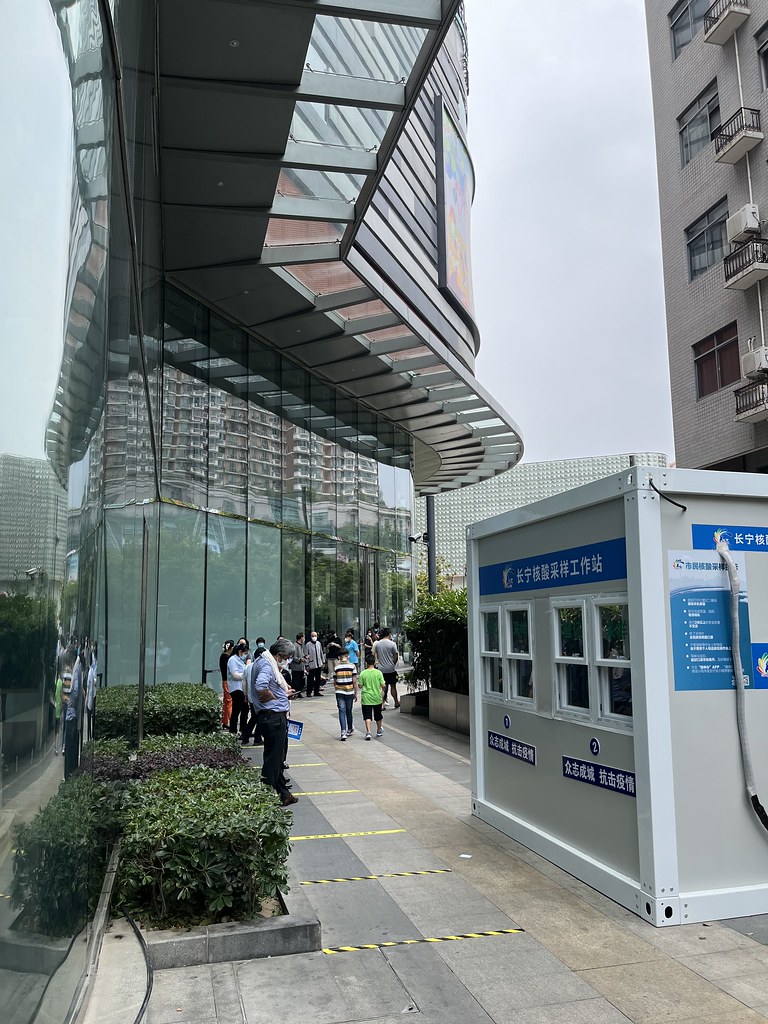
So as of June 1st, 2022, Shanghai has ended the city-wide lockdown, and we are once again “free.” With some qualification, of course. Free to go outside, wearing a mask, but not free to enter any public building or use public transportation unless you have NAT (nucleic acid test) results from the past 72 hours. And since it typically takes close to 24 hours to get the results, yeah… we’ve gotta do a lot of testing. For the entire month of June, I’m hearing. Fortunately the swabbing is universally fairly gentle now, in the back of the throat rather than way up in your nasal cavity.
June 1st, the first day out, was pretty ridiculous in that almost no stores were open, and everyone seemed to have gone out just to find a public testing spot and then line up for hours to get a test done. Those free public tests were only available for limited hours (1:30 to 4pm was the afternoon slot), and the lines were worse than Disney World.
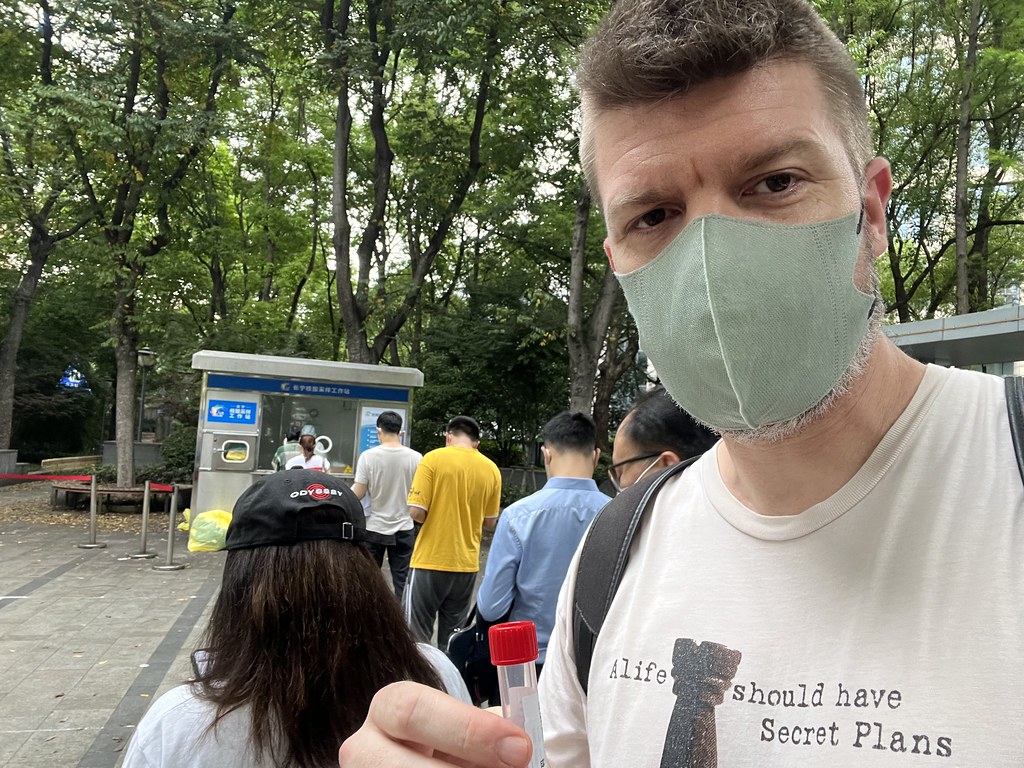
I waited until almost 3:45pm on Wednesday, June 1st to get mine done in a public testing center near my home, trusting that the results would be speedy. The results were not speedy. In fact, they never came out at all! I almost wasn’t allowed back into my own office building after lunch on that Thursday because I no longer had a valid “negative” result within that 72-hour window. Apparently this kind of thing is fairly common. My co-worker almost wasn’t able to take the subway to get home from work. His results came out just in time for him to go home an hour later.
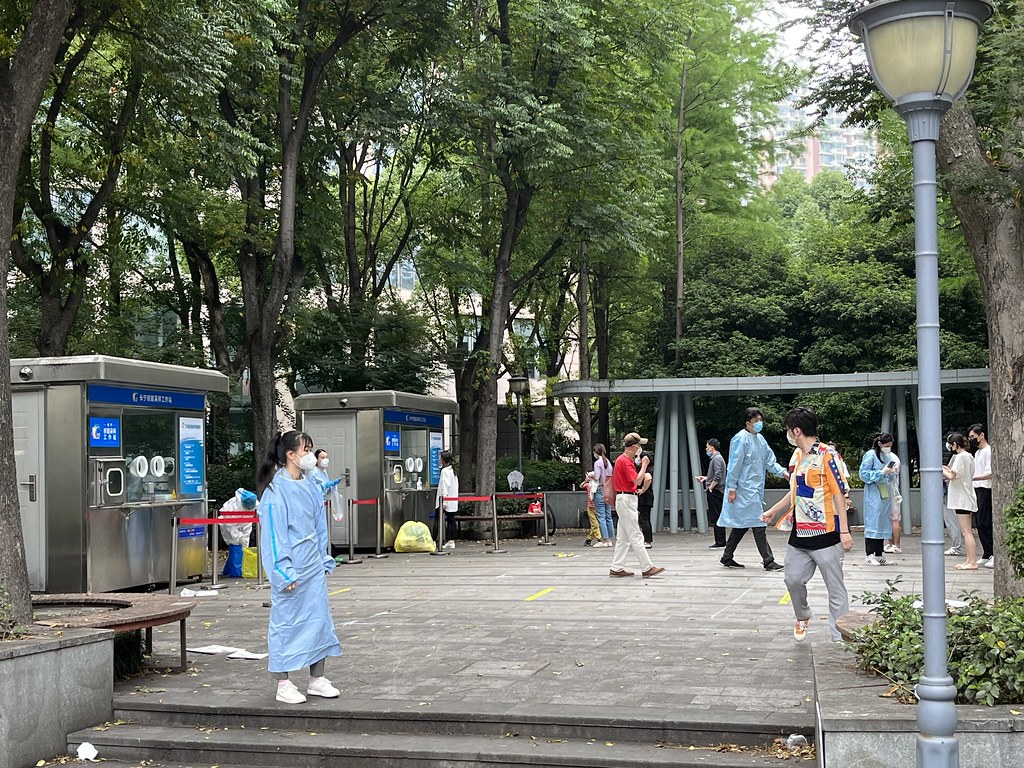
Most Shanghai residents I talk to are resigned to just getting a test every day wherever is convenient. Some apartment complexes still have free tests for residents. After those first few days, waits in public testing spots are typically quite short already (under 5 minutes), and there really are free testing booths everywhere now. They’re clearly designed to be temporary.
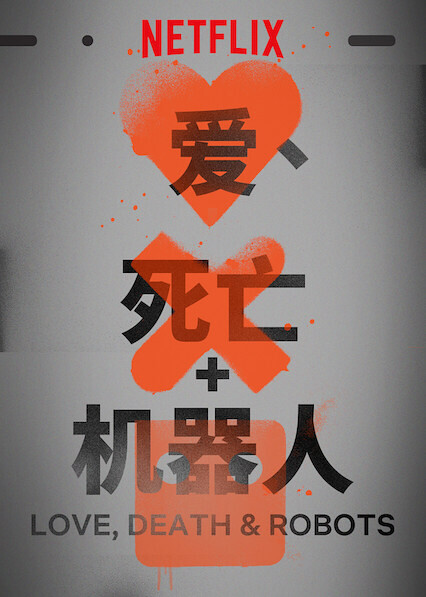
So you know the Netflix sci-fi anthology show Love, Death + Robots, right? Season 3 just dropped, and it’s being hailed as a return to form, almost as good as season 1, whereas season 2 was a bit of a disappointment. What you may not know is that the show is quite popular in China (or in Shanghai, at least). Due to its adult nature (violence, gore, nudity, sexual content), Love, Death & Robots was always going to have a hard time finding a prominent slot on any government-approved video streaming platform. But the show is super interesting in the ideas that it presents, and it does so in style, so Chinese sci-fi fans have been eating it up ever since season 1 come out.
Although each episode has a name, Love, Death & Robots also likes to use icons for each episode title. In fact, the name “Love, Death & Robots” itself is sometimes written in emoji as “.” So it’s not surprising that Chinese viewers have slapped a more interesting moniker on this show. While the official Chinese translation of Love, Death & Robots may be the expected 爱,死亡和机器人 (Ài, Sǐwáng hé Jīqìrén), the commonly used nickname in Chinese is the much shorter 爱死机 (Ài Sǐ Jī). Instead of an emoji per word, it’s a Chinese character per word. It gets the point across.
But what’s interesting about this nickname? Well, it’s not only used in writing; it’s also used in spoken Chinese. And when you hear 爱死机 (Ài Sǐ Jī) for the first time, whether you’re a native speaker or a learner, you have no idea what you’re hearing. It’s hard to make sense of. If you see the characters but are unaware that it’s the name of a sci-fi anthology series, there are still multiple possible interpretations:
爱死机 (ài-sǐ jī) to love to death a machine
爱死机 (àisǐ-jī) a machine that loves to death
爱死机 (ài sǐjī) loves to crash (the word 死机 is a common term for when a computer freezes up and needs a reboot)
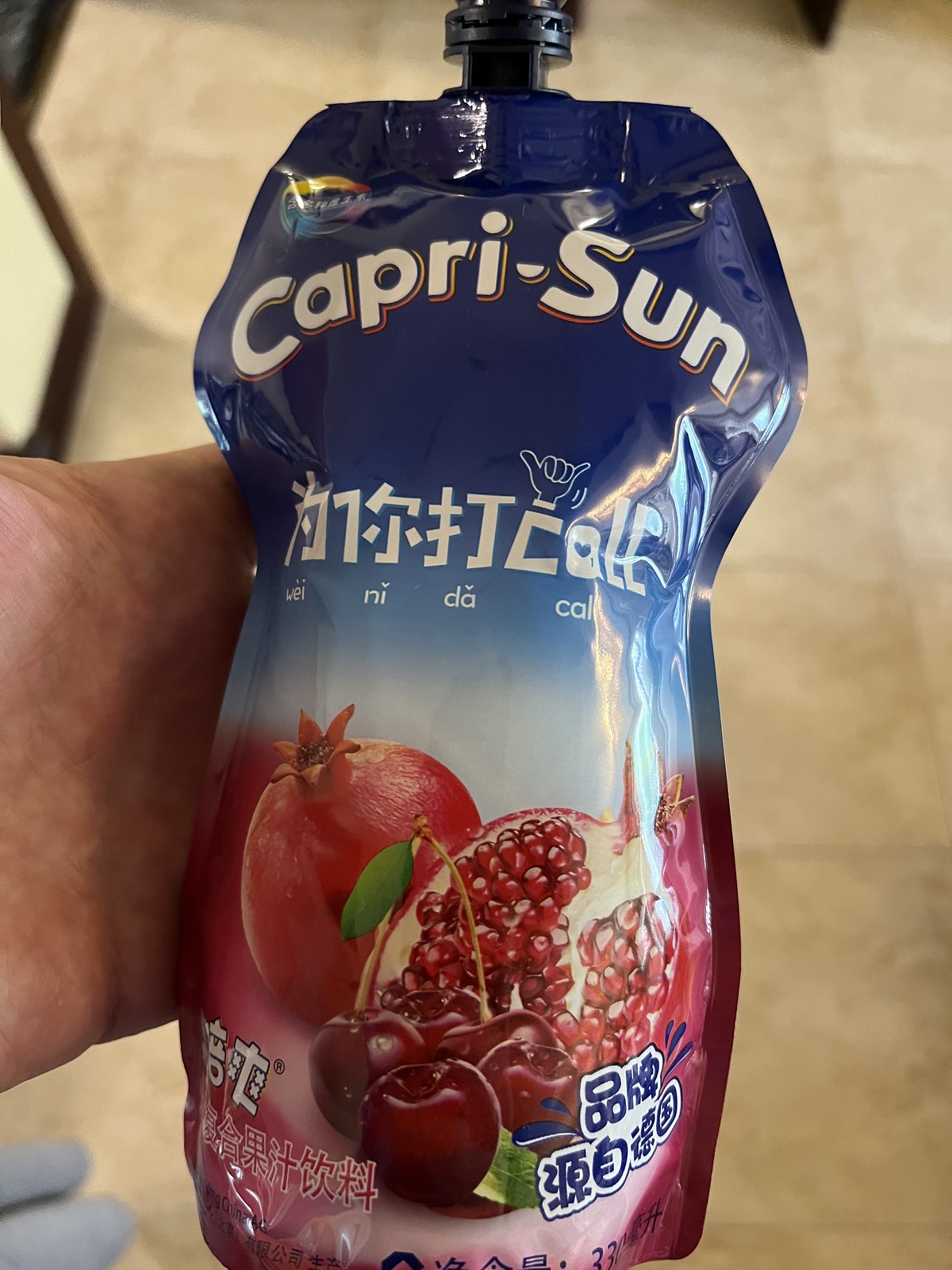
I was surprised to see this on the Capri-Sun I ordered for my kids:
No Chinese for the name “Capri-Sun,” but the Chinese reads:
为 你 打 call wèi nǐ dǎ call
I’m always wary of investing too much time into new Chinese slang, because a lot of it falls out of usage very quickly. 打call, however, seems to be withstanding the test of time.
Just for fun I asked my 10-year-old daughter (who attends an all-Chinese school) if she knows what “打call” means. She didn’t. She guessed it meant “to make a phone call.” This is a common guess among Chinese people that don’t know the term, so don’t feel bad if that’s what you thought too. Plus there’s that “hang loose” hand symbol which seems to reinforce the incorrect “make a phone call” interpretation.
“为你打call” simply means “to support you,” or “supporting you” might sound better in this context. Even though some Chinese people don’t even know it (mostly kids and old people; my wife knew it) It’s a slang term I feel is worth knowing, since it’s been around over 5 years already and has not disappeared yet. Plus, as you can see, it’s still appearing in companies’ marketing efforts.
This is a great illustration of how character components can impart meaning by combining with another character. If you’re a beginner to Chinese characters, you probably still recognize a few of these components. (Feel free to ignore the craziness that is biang!)
Learners: why not try the same exercise with a character that is not biang? You might accidentally “create” a character that already exists, but this is pretty cool in itself, because you can compare your own meaning with the actual meaning and learn something in the process!




 .” So it’s not surprising that Chinese viewers have slapped a more interesting moniker on this show. While the official Chinese translation of Love, Death & Robots may be the expected 爱,死亡和机器人 (Ài, Sǐwáng hé Jīqìrén), the commonly used nickname in Chinese is the much shorter 爱死机 (Ài Sǐ Jī). Instead of an emoji per word, it’s a Chinese character per word. It gets the point across.