The new AUKUS submarine pact between the US, UK and Australia, which saw France lose a major ship-building deal with Canberra last week, has led to a verbal fire exchange and diplomatic snubbing between Washington and Paris.
On the Keiser Report, Max and Stacy discuss the possible outcome of the standoff, predicting France to come out as a winner, backed by the whole European Union, while the post-Brexit UK and “bad crazy island” of Australia don’t stand a chance, even with the US behind them.
Natural gas prices in Europe hit record highs in Tuesday’s trading, exceeding $1,000 per 1,000 cubic meters for the first time in history, data from the Intercontinental Exchange (ICE) shows.
The price of October futures on the Dutch TTF exchange surged to $1,031.30 per 1,000 cubic meters, with the overall increase in gas prices since the beginning of the trading day exceeding 11%. The price of November futures on the TTF has reached almost $1,040 per 1,000 cubic meters.
European gas prices may continue to rise and break new records in the event of a cold winter and a physical shortage of gas on the market, according to international rating agency Fitch.
“The main test for gas prices and consumers will be in winter – in case of cold weather and physical shortage, prices may soar even higher than now,” Dmitry Marinchenko, the senior director of the group for natural resources and commodities at Fitch, told TASS.
Russian experts had warned that gas prices could surge due to a number of factors, including demand in Asia, the weather in Europe and the coming winter season, as well as the timing of the launch of Russia’s Nord Stream 2 pipeline. Low gas-storage volumes across the continent and unusually high demand for the current season also add to the prospects of record highs on the European gas market.
According to the chairman of Russia’s Gazprom, Alexey Miller, growing demand in Europe and a lag in filling underground storage facilities will continue to push natural gas prices higher.
Sergey Komlev, the department head at Gazprom Export, said that pipeline gas supplies from Russia to Europe this year are at historic highs, with Gazprom increasing gas production by 18.4% year-on-year.
At the same time, the European gas market in the first half of 2021 faced an outflow of liquefied natural gas (LNG) to the Asia-Pacific and South American markets, with its share in imports dropping from 41.5% to 31%. In absolute terms, LNG supplies to Europe during this period decreased by 10.74 billion cubic meters (15.9%).
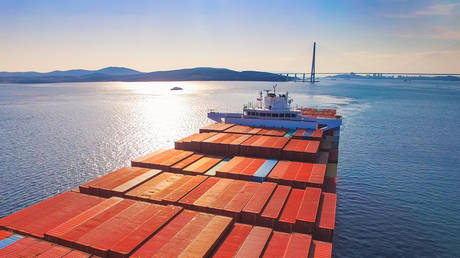
Trade turnover between Russia and China has grown by a third since January, according to Russia’s Ministry of Economic Development, which expects further growth this year.
“By the end of the year, there is every chance to reach a historical maximum [in trade turnover with China],” the head of the ministry, Maxim Reshetnikov, said on Wednesday at a meeting of the Russian-Chinese subcommittee on trade and economic cooperation.
Reshetnikov praised the steady confidence Chinese companies have put in the Russian market, shown by prolonged economic activity and the launch of new projects even in the midst of the Covid-19 pandemic. The ministry plans to send four of its representatives to China to work in the Russian trade mission and promote cooperation with emphasis on the digital economy and sustainable development.
Among the issues discussed at the meeting were the restoration of supplies of Russian fish products to China, ensuring uninterrupted export cargoes crossing the Russian-Chinese border by land, and expanding cooperation in agricultural trade.
“We are interested in the implementation of new large projects – the first Russian-Chinese insurance company, the construction of additional capacities of the terminal for receiving and transshipment of liquefied petroleum gas and propylene in Manchuria,” Reshetnikov said.
According to China’s customs administration, trade turnover with Russia at the end of 2020 dropped by 2.9% in annual terms and amounted to $107.76 billion. However, in the pre-crisis years, the indicator grew steadily, rising gradually from $69.52 billion at the end of 2016 to $110.75 billion in 2019. Both countries plan to get back on course as soon as possible, with the goal of increasing the volume of bilateral trade to $200 billion per year.
International rating agency S&P has improved its outlook for Russia’s GDP growth this year to 4% from its previous forecast of 3.7%, according to a survey released on Tuesday.
The document, focusing on emerging markets, also gave a forecast for Russia’s GDP in 2022 and 2023, with the agency’s analysts expecting the country’s economy to grow by 2.6% and 2% in the next two years, respectively.
The agency sets Russia’s inflation at 6.1% in 2021, but predicts it to drop to 4.2% next year. According to the survey, the country’s central bank key interest rate will reach 7% per annum in 2021, up from the current 6.75%.
Analysts expect Russia’s ruble exchange rate against the US currency to stop at 72 rubles per dollar at the end of the year, but to gradually weaken to 77.5 rubles per dollar by 2024.
The unemployment rate in the country is expected to be 4.9% this year, but fall to 4.6% in three years’ time.
The agency also gave an outlook for the emerging countries in Europe, the Middle East and Africa, predicting an upward trend in GDP growth throughout, primarily driven by increased consumption and exports. However, analysts noted that inflation in European states with emerging markets would continue to rise, pressured by higher fuel and food prices and supply chain disruptions as the result of accelerating economic growth. The agency warned that the two main risks to economic growth emerging economies are facing include inadequate vaccination and a faster-than-expected normalization of US monetary policy.
Fitch ratings agency also recently improved its forecast for Russia’s economic growth in 2021, with a slightly higher figure of 4.3%. Meanwhile, according to a recent statement by Russian President Vladimir Putin, the country’s economy has this year completely overcome the economic decline caused by last year’s Covid-19 pandemic.
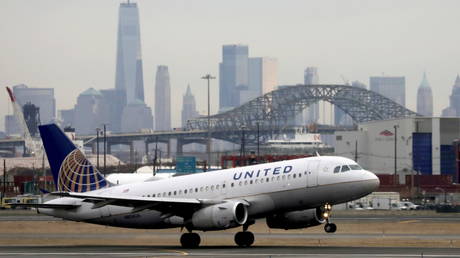
Some 600 United Airlines employees face dismissal after failing to comply with the company’s Covid-19 vaccination policy.
“This was an incredibly difficult decision but keeping our team safe has always been our first priority,” the Chicago-based airline’s chief executive Scott Kirby and president Brett Hart said in a memo to employees.
The company’s 67,000 US employees were ordered to provide proof of vaccination by last Monday. While the majority complied, 593 workers refused to be jabbed and failed to apply for the exemption on religious or medical grounds which the firm set as mandatory in the event of failing to vaccinate.
“Our rationale for requiring the vaccine for all United’s US-based employees was simple – to keep our people safe – and the truth is this: everyone is safer when everyone is vaccinated, and vaccine requirements work,” United said in the memo.
The company, however, will allow employees to keep their jobs if they have been vaccinated but failed to submit proof by the deadline, or if they will be jabbed before the formal decision on the dismissals comes through. This means unvaccinated workers have several weeks or even months under the union’s current dismissal rules to undergo inoculation if they wish to stay.
The airline announced earlier this month it would put employees who are exempt from the vaccine mandate on unpaid or medical leave from October 2. The plan was later scrapped after a lawsuit filed by six employees appealed the decision. Some 2,000 employees have so far requested the exemption.
United was the first US airline to impose a Covid-19 vaccine mandate on its staff in early August. Other US airlines have been uneager to follow suit, but moved to end pay protections for unvaccinated employees who test positive for the virus. Georgia-based Delta Airlines slapped a $200 monthly health insurance surcharge on staff who haven’t been vaccinated.
United is the fourth-largest airline by the number of passengers carried in the US, but has the second-largest fleet and serves the most destinations, according to pre-pandemic statistics. Like many other airlines, however, it was hit hard by pandemic-induced travel restrictions, having to furlough some 36,000 employees at the height of the crisis last year.