European gas prices have hit another record in Wednesday’s trading, exceeding $960 per 1,000 cubic meters, as EU countries continue to argue over boosting Russian gas supplies via the recently completed Nord Stream 2 pipeline.
The price of the October futures on the Dutch TTF exchange jumped by 20% in mere minutes, exceeding $875.84 by 8:00 GMT. Some time later, it exceeded $900 and, by 11:00 GMT, had reached $964.
Russian experts earlier this week predicted that gas prices could climb further, up to $1,000 under certain conditions. These include the situation in Asia’s gas market, the weather in Europe and the oncoming winter season, as well as the timing of the launch of Russia’s Nord Stream 2 pipeline. Low gas-storage volumes across the continent and unusually high demand for the current season also add to the prospect of new record highs on the European gas market.
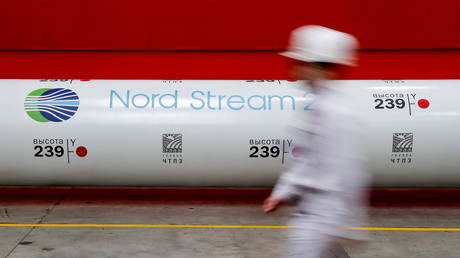
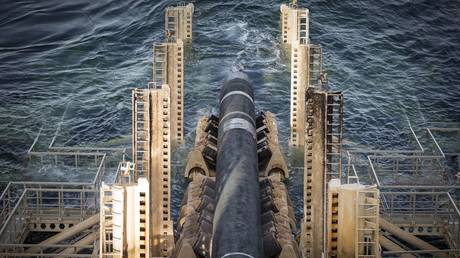
Despite the setbacks caused by relentless US sanctions, Russia’s newly-completed Nord Stream 2 pipeline could ease Europe’s gas shortages once it launches deliveries. Its daily capacity of gas supplies is comparable to the entire volume of liquefied gas that is now supplied to Europe. The 1,224 kilometer, $11-billion Nord Stream 2 project consists of two pipelines, collectively capable of delivering up to 55 billion cubic meters of natural gas annually from the Siberian fields in Russia directly to Europe via the Baltic Sea.
Russia’s Gazprom says it is ready to begin gas deliveries on October 1. All that remains is for the new pipeline to obtain all the required certification. However, this process could take up to four months, under EU rules.
Former Austrian minister of Foreign Affairs, Karin Kneissl, told RT that the current surge in gas prices could persuade regulators to speed up the certification process.
“The [gas] supply contracts are there. And we will see to what extent the German regulator will speed up the certification process for Nord Stream 2, which, construction-wise, is done. Some people say that it could take months. But maybe the current situation will speed things up,” Kneissl said.
Supplies of natural gas to Europe via the completed Nord Stream 2 pipeline will not start on October 1, according to the CEO of Russian energy major Gazprom, Alexey Miller.
Responding to media reports on Wednesday suggesting that deliveries via the pipeline could begin next month, he said: “No. Supplies will not start on October 1.”
Gasflow via Nord Stream 2 were expected to begin as early as October, with volumes exceeding expectations. Russia’s Gazprom said it is ready to begin gas deliveries once the new pipeline obtains the required EU certification. However, this process could take up to four months under EU rules.
The certification delay has sent European natural gas prices to record highs, exceeding $960 per 1,000 cubic meters as of Wednesday.
The European market is severely short of supplies due to increased demand amid the post-pandemic recovery and a drop in deliveries from its key supply source, Norway’s Troll gas field, due to unplanned outages. A recent accident at the Gazprom plant in Russia has also forced the company to cut its supply to European underground storage facilities.
According to Gazprom’s statement last week, gas supplies via the Nord Stream 2 pipeline could total 5.6 billion cubic meters this year, if the EU gives the green light.
The increase in US consumer prices eased in August, according to the Labor Department. Despite the positive data, the country is still facing its highest rate of inflation in 13 years.
Rachel Blevins and Brent Jabbour talk to Dean John Quelch of the Miami Herbert Business School about the latest figures to find out whether the inflation rate could reach the Federal Reserve’s traditional 2% annual target.
Despite the completion of Nord Stream 2, Europe should not expect the Russian pipeline to start deliveries this year due to bureaucracy within the EU, Russian Foreign Minister Sergey Lavrov warned on Wednesday.
“Now the process of obtaining the necessary permits from the German regulator is underway. The process is not fast. The beginning of 2022 has been indicated,” Lavrov told the press.
Experts say this could be the reason behind the current surge in gas prices, which have been smashing records for several days now. According to the press secretary of the German Federal Network Agency (BNetzA), Fita Wolf, Nord Stream 2’s certification may take several months, a prospect which practically forces market participants to raise prices.
To add to the problem, the pipeline’s main adversaries, Ukraine and the United States, have both vowed to complicate the certification procedure.
According to Lavrov, there will be many roadblocks before certification is finally granted.
“I have no doubt that attempts to attack this gas pipeline will continue,” the Russian foreign minister said.
Gas prices in Europe have risen 20% since the start of trading on Wednesday. The price of October futures on the Dutch TTF exchange exceeded $964 per 1,000 cubic meters by 11am GMT, ICE data shows.
The rise of natural gas prices could hurt the economic competitiveness of the European Union on a global scale, Ole Hansen, head of commodity strategy at Saxo Bank, told RIA Novosti.
European gas prices have been hitting record highs lately due to low storage volumes and the fast-approaching winter, as well as low supplies from Russia and uncertainty about the Nord Stream 2 gas pipeline.
Russia’s Gazprom said earlier it was ready to begin gas deliveries to Europe once the new pipeline obtains the required EU certification. But that process could take months due to squabbling among European countries about approving more imports from Russia.
The certification delay sent European prices to a multi-year high of almost $970 per 1,000 cubic meters on Wednesday.
According to Hansen, the surge in prices could lead to power outages in the EU this winter.
“If the price growth is not pegged down in the near future, then there’s a risk of a harsh winter with power outages and a decrease in the competitiveness of energy-intensive industries, which are under pressure from a sharp rise in gas and electricity prices,” he said. The expert added that the energy-intensive industries, which are located mainly in Germany and France, will suffer the most.