
UK car production drops to lowest in decades

It was a dismal year for the British auto industry, with the worst production numbers since 1956

Fewer than 860,000 vehicles rolled off British production lines last year, the lowest level in 65 years, as factories slowed down or stopped work due to a severe shortage of semiconductors. Other factors affecting production included widespread staff absences as workers were forced to go into isolation, the Society of Motor Manufacturers and Traders (SMTT) said.

According to the SMTT, total car production was 6.7% lower than in 2020 and 34% below pre-pandemic levels. Covid-19 disruptions triggered a global shortage of semiconductor chips, leading to an even worse 2021, it said. Semiconductors are a vital part of modern cars, with each vehicle typically having between 1,500 and 3,000 chips to operate.

The trade group’s chief executive Mike Hawes described 2021 as “a dismal year,” adding that “there’s no hiding it.” However, he suggested that despite the miserable year there is optimism, largely because of almost £5 billion in planned new investments by the automotive industry, many of them in electric vehicles or technology. 


READ MORE: Ford to become first US automaker to mandate vaccines for 30,000+ workers

Hawes said the industry had managed to cope with the extra costs of Brexit, but warned that it still faces a growing challenge from a spike in energy costs of up to 70%. According to him, the industry urgently needed “measures to mitigate the escalating energy costs which are threatening viability,” because higher costs “will flow through to prices,” adding to pressure on consumers.

For more stories on economy & finance visit RT’s business section
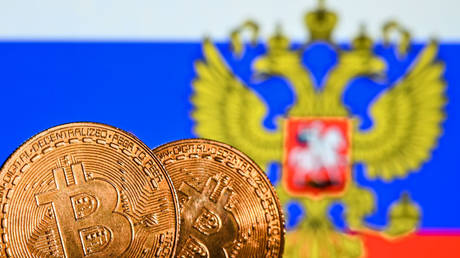
Major crypto exchange mulls Russia expansion despite looming ban

Binance says the move could boost its growth

The world’s largest cryptocurrency exchange, Binance, wants to expand to Russia despite a proposed crypto ban in the country.

According to Binance Eastern European Director Gleb Kostarev, expansion to Russia is strategically important for the growth of the crypto exchange.

Our goal is to obtain a license and conduct legal business where the regulation allows,” Kostarev told Reuters, noting that Binance is expecting to see a progressive regulatory approach from Russia that could also set a precedent for similar regulations in neighboring states.

Russia has been eager to regulate its growing crypto market. According to the central bank, the country’s annual volume of cryptocurrency transactions is near $5 billion.

Read more

RT
Russia’s finance ministry pans idea of crypto ban

The regulator, which has been increasingly critical of cryptocurrencies for the past several years, recently proposed a complete ban on crypto trading and mining in the country.

The proposal, however, has been met with opposition from both the public and other government ministries, who called for a more moderate approach, and regulation instead of prohibition. The Ministry of Finance said this week that regulations of this kind are already in the works, noting that crypto technologies “should get a chance to develop.

Kostarev called the ban proposal “harsh,” but noted that “for now, we consider this as an invitation to dialogue with the regulator.” He also said that the course Russia takes in regulating crypto may impact its neighbors.

In Ukraine, Kazakhstan, and Uzbekistan they are more loyal to cryptocurrencies and are taking steps towards liberalization, rather than restriction. But local regulators are taking these steps with an eye on Russia.”

Cryptocurrencies are for now largely allowed in Russia and can be used for financial transactions, but their use for purchasing goods or services is prohibited.

For more stories on economy & finance visit RT’s business section

Elon Musk offered teen cash to take down his Twitter account – media

The page uses public data to track the location of the Tesla CEO’s private jet

Tech news site Protocol reported on Wednesday that Tesla CEO Elon Musk has messaged the owner of a Twitter account that tracks his private jet, offering $5,000 if he takes the account offline.

The ‘Elon Musk’s Jet’ account shows the movements of the businessman’s private plane, using bots that monitor publicly available air traffic data.

According to Protocol, the owner of the account, 19-year-old Jack Sweeney, received a message in fall last year from Musk, saying “Can you take this down? It is a security risk.”

Sweeney reportedly replied that he could remove it, but said it would cost Musk “a Model 3 only joking unless?” Musk then replied: “I don’t love the idea of being shot by a nutcase” and offered Sweeney $5,000.

“Any chance to up that to $50k? It would be great support in college and would possibly allow me to get a car maybe even a Model 3,” Sweeney responded, as quoted by Protocol. The billionaire said he would think about it but has not been back in touch.


READ MORE: Tesla fights back against JPMorgan over Musk tweet

When Sweeney told Musk where he was aggregating the data from, Musk responded: “Air traffic control is so primitive.”

Earlier this month, Musk tweeted that social media accounts tracking his movements were “becoming a security issue.”

For more stories on economy & finance visit RT’s business section

Russia reveals record high stockpiles of gold

The country’s forex reserves continue to soar

Russia’s international reserves surged $1.4 billion in a week, hitting a new historical maximum of $639.6 billion as of January 21, data from the Bank of Russia shows.

The regulator says reserves rose 0.2% as a result of foreign exchange purchases under the fiscal rule that requires surplus revenue to be spent on forex but were partly offset by a negative market revaluation.

Russia’s international reserves, which are highly liquid foreign assets held by the Bank of Russia and the country’s government, consist of foreign currency funds, special drawing rights in the International Monetary Fund (IMF), and monetary gold.

The Central Bank has a target level for international reserves of $500 billion. Russia first surpassed this threshold first back in 2008 with $598 billion. In the following years, reserves plunged on several occasions, including to as low as $356 billion in 2015 following the 2014 oil price crisis, but have nearly doubled since then.

For more stories on economy & finance visit RT’s business section

US bans telecom giant over spying concerns

China Unicom has been forbidden from providing services in the US

US telecom regulator the Federal Communications Commission (FCC) announced on Thursday that it had voted unanimously to revoke authorization for China Unicom’s American unit to operate in the United States. The firm must now stop providing telecommunications services in the country within 60 days, the FCC said.

“Today we take another critical step to protect our communications networks from foreign national security threats,” FCC Chairwoman Jessica Rosenworcel said. “There has been mounting evidence – and with it, a growing concern – that Chinese state-owned carriers pose a real threat to the security of our telecommunications networks,” she added.

China Unicom said, as quoted by CNN, that it has complied with “relevant US laws and regulations” in the past two decades, and that the FCC has acted “without any justifiable grounds and without affording required due process.”

The telecom firm added that it would “act proactively to protect the rights and interests of the company and its customers.”


READ MORE: China claims to know true motive behind UK ban on Huawei

The US regulator’s move is the latest to target Chinese technology and telecoms firms over national security concerns.

In October, Washington barred China Telecom from operating in the country. Earlier in 2019, another Chinese state-owned telecommunications carrier, China Mobile, also had its US license revoked.

In recent years, Congress has instructed the FCC to embark on a program to “rip and replace” networking equipment that experts worry could allow foreign telecom firms to monitor sensitive US communications. The FCC has also sanctioned firms such as Huawei and ZTE, among others, so that their equipment cannot be used in US telecoms networks.

For more stories on economy & finance visit RT’s business section