The battery storage industry is getting billions poured into gigafactories, with new projects popping up left and right
A few years ago, battery energy storage began drawing attention as what one industry executive at the time called the Holy Grail of renewable energy. In the years since, EVs have stolen the spotlight but now battery storage is back, larger than life and, quite likely, twice as expensive.
The ongoing energy crunch in Europe is one good illustration of why, if we are going down the renewable energy path, we need to build battery storage – and a lot of it. One cause of the crunch, admitted unwillingly but still admitted, was lower than usual wind power output. With storage, at least some of that output might have been stored for later use.
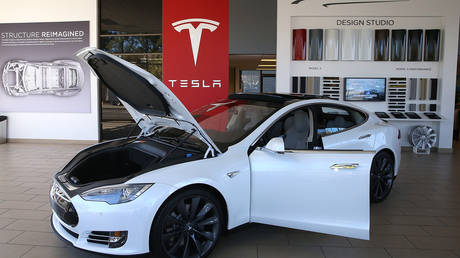
The Financial Times reported this month that the battery storage industry is getting billions poured into gigafactories, where battery cells for electric vehicles (EVs) and storage installations are made. According to the report, energy storage companies raised $5.5 billion in venture capital funds over the first nine months of 2021 across 59 deals. This compared with just $1.2 billion across 91 deals during the same period of 2020.
“Batteries will play an increasingly important role in allowing high levels of penetration of variable renewable energy like wind and solar on the grid,” the FT quoted Oxford Institute for Energy Studies research fellow Barbara Finamore as saying.
“The [investment] numbers are changing so fast, people cannot keep up with how many gigafactories are in the pipeline.”
The above smacks of a future bubble, but given the net-zero targets of the Paris Agreement, investors are excused for buying into this particular bubble. Among these targets, per the International Energy Agency, is selling only electric cars from 2035 onwards and having two-thirds of the global energy supply come from wind, solar, biomass, hydropower, and geothermal. This is one massive undertaking that cannot happen without equally massive storage.
In October last year, energy consultancy Wood Mackenzie forecast that battery storage would really take off after the worst of the pandemic passes.
“With the market recovering following the pandemic and a growing acceptance of energy storage as a mainstream power technology, the total energy storage market will double in size in 2021 to reach 56 GWh, with that number expected to increase by 17x in 2030,” Le Xu, senior analyst, Power and Renewables, wrote.
An expected increase is one thing. The cost of this expected increase and its usefulness is quite another matter. For starters, the Wood Mac forecast sees a doubling of global lithium-ion battery manufacturing capacity. This means a surge in demand for battery metals and minerals such as lithium, nickel, and manganese. For seconds, the world consumes huge amounts of energy every minute. Storage will need to become a lot more compact and cheaper to handle this consumption. And this will be tricky.
Lithium prices are on the climb as demand for the metal rises with battery demand projections and more gigafactories in the pipeline. But the lithium market is already in a deficit, which means even higher prices ahead.
Nickel demand is on its way to outpacing supply, according to Rystad Energy, with the market seen swinging into a deficit in two years. This means more upward cost pressure for batteries.
And the shortage of metals is not all. There is also the ESG aspect of their mining to consider – an aspect that has become essential for European governments, which are also the ones with the most ambitious renewable energy plans for the future. Europe, in other words, is picky about its, say, lithium and cobalt supply. It wants to make sure that it was mined ethically. And this automatically makes it expensive because it limits the places where these metals can be sourced, and puts constraints on the miners.
So, battery cells are only going to become more expensive at a time when they need to become cheaper, so energy and EVs become more affordable, and adoption increases. But this is not the biggest problem of energy storage. The biggest problem is that the amount of storage needed to be deployed in order to ensure energy supply security is truly insane.
Bjorn Lomborg, president of an environmental think-tank and a vocal critic of the renewable energy push in its current form, wrote on Twitter earlier this month that Asia consumes 25 GWh of electricity per minute. The continent has a battery storage capacity of 13 GWh, which is enough for 31 seconds of consumption. With plans in place to boost battery storage capacity 25 times, in 2030, Asia will have enough storage for about 10 minutes of consumption.
But perhaps some would say the whole continent of Asia is not a good example. After all, battery storage capacity there is not exactly equally distributed and aimed at securing the energy supply of the whole of Asia. So let’s take another example. Germany’s per-capita energy consumption for 2018 stood at 6.8 GWh. Germany’s population is over 83 million people. So, Germany alone will need more than the world’s total projected storage capacity for 2021 to secure its energy supply, assuming a 100-percent renewable grid, which is the purpose of the energy transition. It would need a lot more.
It is true that without energy storage, wind and solar are far from reaching their full potential and far from being reliable sources of electricity. Yet the factors determining the commercial viability of storage installations are such that the projections made by Wood Mac and virtually every other energy forecaster out there might end up feeding a bubble that will sooner or later burst.
Former president’s Digital World Acquisition sparked a retail trading frenzy
Shares in Digital World Acquisition Corporation (DWAC), the company connected to a planned social media app backed by former US president Donald Trump, have rallied to outperform every other special-purpose acquisition company (SPAC). Digital World currently ranks as the best-performing SPAC stock ever, according to SPAC Research.
The outstanding performance comes despite the regulatory risks facing the merger. The shares ended trading at $73.12 on Friday, way above their $10 initial public offering price. That infers a valuation on the combined entity of close to $13 billion, including debt.
Moreover, DWAC’s share performance has boosted the average trading price of all 114 SPACs that have announced deals that are yet to close. According to SPAC Research, the average SPAC (excluding DWAC) is currently trading at $9.88 a share, below the average trust value of about $10.05.
In October, Trump announced plans to launch a new media company that will “stand up to the tyranny of Big Tech.” Trump Media & Technology Group (TMTG) simultaneously inked an $875-million deal to merge with a SPAC company called Digital World Acquisition Corp.
SPAC deals, also known as reverse mergers, have become very popular in recent years, with celebrities, former politicians and athletes getting involved. SPACs raise money from the public and promise to use those funds to acquire private firms. It’s an increasingly popular way for private companies to go public.
However, SPACs regularly come under regulatory scrutiny. Digital World disclosed in December that federal regulators have opened investigations into the planned merger for potential violations of securities laws around disclosure.
App Store currently lists February 21 as the date that Trump’s new social media app, Truth Social, will be available to download.
Russian stocks and currency are retreating amid geopolitical uncertainty
The Russian stock market has dropped more than 4% on Monday, following two weeks of steady decline, while the national currency fell to its weakest in more than a year 78 rubles against the US dollar.
The plunge comes amid mounting geopolitical tensions stemming from claims that Russia is planning to attack Ukraine, actively spread by EU and US officials and fueled by major Western media outlets.
“We expect Russian equities to extend losses today due to an escalation in geopolitical tensions over the weekend,” analysts at Alfa Bank said, as quoted by AFP.
Renaissance Capital reportedly said in a note to clients that the ruble could fall by up to 20% to the dollar in the event of a military escalation.
The Central Bank of Russia announced on Monday that it plans to suspend foreign exchange purchases under fiscal rules to reduce pressure on the ruble. The regulator also said it has all the necessary tools to reduce threats of financial instability.
Western officials were expected to meet on Monday to try and coordinate retaliation measures and discuss new anti-Russian sanctions that should be imminently introduced if Moscow launches a military assault on Ukraine.
Media reports claim Russia has amassed over 100,000 troops on the border with Ukraine, with some Western officials believing that a military incursion is around the corner.
Britain and the US have ordered some staff to return home from their embassies in Ukraine with their families.
Russian authorities have repeatedly rejected accusations that Moscow is planning an invasion of Ukraine, which have been voiced by Washington and its allies since November last year, describing the claims as groundless attempts to instill “hysteria.”
US electric car manufacturer countersues banking giant over disputed bond contract
Tesla submitted a filing in Manhattan federal court on Monday, accusing JPMorgan of “bad faith and avarice” for demanding $162.2 million after the bank had unilaterally changed the terms of warrants it received when the electric carmaker sold convertible bonds back in 2014.
Warrants allow holders to purchase company stock at a set “strike” price and date.
“JPMorgan pressed its exorbitant demand as an act of retaliation against Tesla both for it having passed over JPMorgan in major business deals and out of senior JPMorgan executives’ animus toward Mr. Musk,” Tesla said, adding that by changing the terms the banking multinational “dealt itself a pure windfall” after receiving a “multibillion-dollar payout” from Tesla’s soaring share price.
Tesla’s countersuit escalates the conflict between the US’ biggest investment bank and the world’s most valuable automaker, which have hardly done any business with each other since the disputed contract.
The legal battle began last November, when JPMorgan took Tesla to court for “flagrantly” violating a stock warrants contract. The bank alleged that the car manufacturer sold warrants to JPMorgan in 2014, which were to be paid off if their strike price, or guaranteed fixed price, was below Tesla’s share price upon the warrants’ expiration in June and July 2021.
JPMorgan claimed that the tweet shared by Tesla’s eccentric CEO Elon Musk on August 7, 2018 made the automaker’s share price more volatile. Musk tweeted that he might take Tesla private and had “funding secured,” but backtracked his comments 17 days later. Tesla’s share price had risen nearly ten-fold by the warrants’ expiration date.
Musk’s tweets led to a civil lawsuit by the US Securities and Exchange Commission. The litigation resulted in Musk giving up Tesla’s chairmanship, and he and the company each being fined $20 million.
The world’s number one cryptocurrency, Bitcoin, has declined to nearly $33,000 on Monday, marking a daily drop of nearly 5%, according to data tracked by CoinDesk. The second most popular crypto, Ethereum, plunged 9.3% to $2,209 in a 24-hour span.
Earlier in the day, both tokens fell to their lowest since July, each dropping more than 50% from their all-time highs.
The major sell-off wiped nearly $130 billion off the value of the entire cryptocurrency market, and spread across the stocks, which extended losses recorded earlier this year, posting the worst week since March 2020.
Riskier assets like technology stocks and digital currencies have seen a heavy sell-off due to increased geopolitical risks related to the conflict between Russia and Ukraine, as well as the latest push by the US Federal Reserve for tightening monetary policy at a faster pace than expected.
Moreover, investors are assessing the impact of further regulatory steps towards the cryptocurrency market across the world. Last week, the Central Bank of Russia’s proposed ban on the use and mining of digital currencies. Last year, the Chinese authorities prohibited cryptocurrency mining in the Sichuan Valley, triggering an adverse impact on the market.
“Bitcoin and crypto have been reacting much more violently, given the nature of the asset class, and we’re likely to test $30,000-$32,000 given current sentiment and momentum,” Vijay Ayyar, vice president of corporate development and international expansion, told CNBC.